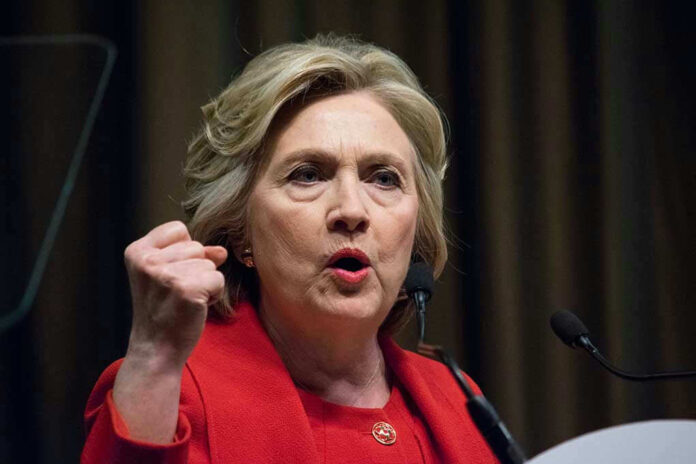
Bill and Hillary Clinton face contempt of Congress for not confirming their attendance at depositions related to the Jeffrey Epstein investigation, sparking a political showdown.
Story Highlights
- The House Oversight Committee has subpoenaed the Clintons to testify about their ties to Epstein.
- The Clintons have not confirmed their attendance for the scheduled depositions.
- Contempt of Congress proceedings are threatened if they fail to appear.
- This situation underscores growing political tensions and the use of congressional subpoena powers.
Clintons Subpoenaed in Epstein Investigation
The House Oversight and Government Reform Committee, led by Chairman James Comer (R-KY), has issued subpoenas to Bill and Hillary Clinton to testify about their interactions with Jeffrey Epstein and Ghislaine Maxwell. This action is part of a broader investigation into the horrific crimes committed by Epstein and Maxwell, which has captivated public attention and triggered multiple inquiries into high-profile connections. The Clintons are scheduled for depositions on January 13 and 14, 2026.
Despite the subpoenas, neither Bill nor Hillary Clinton has confirmed their attendance. Their attorney, David Kendall, previously cited a funeral as the reason for missing the original deposition dates in December 2025. Kendall also proposed written answers instead of in-person testimony, which the committee rejected. The lack of confirmation has led Comer to threaten contempt of Congress proceedings, a seldom-used but powerful congressional tool that can have serious implications.
Historical Context and Political Implications
This investigation comes after years of speculation and controversy surrounding Epstein’s network and its possible ties to prominent figures. Bill Clinton has been linked to Epstein through documented flights on Epstein’s private jet and appearances in photographs, though he has denied any knowledge of Epstein’s crimes. The Oversight Committee’s actions are seen as part of a broader effort to scrutinize how law enforcement handled Epstein’s case and whether powerful individuals received special treatment.
The use of contempt powers in this context is significant. Historically, Congress has used such powers sparingly, but recent high-profile cases involving figures like Steve Bannon and Peter Navarro have shown that contempt can lead to jail time if prosecuted by the Department of Justice. This unfolding situation with the Clintons highlights ongoing political tensions and the increasing frequency of subpoena confrontations in today’s political climate.
Potential Outcomes and Broader Impact
If the Clintons do not appear for their depositions, the committee may proceed with contempt charges, potentially leading to legal and political repercussions. A contempt vote would be a significant blow to the Clintons’ reputations, further fueling narratives about secrecy and non-cooperation. On the other hand, if they comply, the depositions could provide new insights into their interactions with Epstein and Maxwell, potentially shaping future media and investigative focus.
This situation also raises questions about congressional authority and the balance of power between branches of government. The Department of Justice’s decision on whether to prosecute any contempt referral will be crucial in determining the real legal risk to the Clintons and may either reinforce congressional authority or highlight its limits.
Sources:
Oversight committee threatens Clintons with contempt if they don’t show up for Epstein hearing
House Oversight GOP threatens to hold Clintons in contempt
Chairman Comer: Clintons must appear for depositions or face contempt of Congress