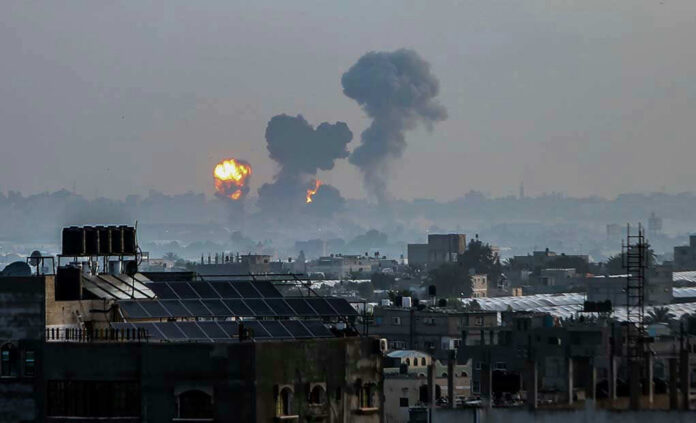
Iran’s missile strike on the world’s largest LNG complex in Qatar shows how fast a regional war can jump from “over there” headlines to the kind of energy shock that hits American families at the pump.
Quick Take
- Iran fired ballistic missiles at Qatar’s Ras Laffan industrial city, and at least one strike ignited a fire at the LNG hub.
- Qatar said most incoming missiles were intercepted; authorities reported no casualties and said the blaze was contained.
- Reports conflict on the scale of the attack and damage, with some describing minor debris-related fires and others citing substantial facility damage.
- The incident escalates pressure on Gulf energy infrastructure as the U.S.-Israel campaign against Iran continues under President Trump.
Missiles Hit Qatar’s Ras Laffan as a Neutral Gulf State Gets Dragged In
Iran launched ballistic missiles at Qatar, targeting Ras Laffan industrial city, a centerpiece of global liquefied natural gas production. Reporting indicates several missiles were intercepted, but at least one struck and sparked a fire at the facility. Qatar’s civil defense said the blaze was controlled and that no casualties were reported, while QatarEnergy confirmed damage and accounted for personnel. Qatar’s foreign ministry called the strike a dangerous escalation and a violation of sovereignty.
Accounts differ on the volume of fire and what exactly caused the flames. Some coverage describes a limited incident tied to debris from intercepted missiles in an industrial zone, while other reporting specifies a direct hit on Ras Laffan itself and describes the damage as substantial. The gap matters because it affects how markets, insurers, and governments evaluate risk. For now, the consistent facts are interception efforts, a contained fire, and no reported injuries.
Energy Infrastructure Becomes the Battlefield—and the Whole World Pays
Ras Laffan is not a symbolic target; it is a practical one, tied directly to global energy supply and pricing. Any disruption to LNG output or exports can ripple into international fuel costs, industrial inputs, and household expenses. That reality is why strikes near major energy hubs tend to trigger immediate anxiety in markets, even when fires are extinguished quickly. With QatarEnergy assessing damage, the key open question is whether operations will be constrained.
Regional escalation also changes the security calculus for critical infrastructure. Qatar hosts the U.S. Al Udeid base while also positioning itself as a mediator, which makes it a flashpoint when Iran signals it may treat Gulf assets as extensions of U.S. power. Gulf governments have urged de-escalation and warned against targeting non-combatants, but the incident underscores that “neutral” status does not guarantee safety when missiles are in the air.
Conflicting Reports Highlight a Fog-of-War Problem for Citizens and Policymakers
Multiple outlets and official statements align on core points—explosions were heard, interceptions occurred, and emergency services responded—yet they diverge on the number of incoming weapons and the degree of damage. One set of reports emphasizes a limited fire caused by falling debris after interceptions, while another frames the event as a direct strike on the LNG complex. Until QatarEnergy and Qatari authorities release fuller technical assessments, outside observers should treat exact counts and damage estimates as provisional.
What This Means for the U.S. Under Trump: Security First, But Energy Reality Still Bites
The Trump administration’s posture—backing sustained pressure on Iran while signaling openness to talks—meets a hard test when attacks touch global energy choke points. Americans who endured the Biden-era inflation cycle already understand how quickly energy prices seep into groceries, shipping, and family budgets. Even without a domestic supply disruption, global price spikes can punish consumers. If escalation persists, the policy challenge will be protecting U.S. interests without letting foreign shocks destabilize the cost of living.
New: Iran Lights a Fuse and a Key Industrial Site in Qatar Goes Up in Flameshttps://t.co/yPIxcrJEw1
— RedState (@RedState) March 18, 2026
Qatar’s response also matters for broader deterrence. Authorities emphasized interception success and contained damage, likely to reassure both citizens and markets, but they also framed the strike as a sovereignty violation with consequences. Gulf unity against attacks on civilian and neutral infrastructure could harden if Iran continues testing boundaries. For Americans, the lesson is plain: when adversaries expand targets to include energy lifelines, the downstream effects do not stay overseas.
Sources:
Iran Hits World’s Largest LNG Complex in Qatar with Ballistic Missiles
Qatar announces fire in industrial area after missile interception
Fire breaks out at Qatar’s industrial area after missile interception
Fire breaks out at Qatar’s industrial area after missile interception