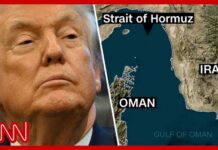
Trump just signaled that America’s Cuba blockade has real limits—by letting a Russian oil tanker sail through anyway.
Story Snapshot
- President Trump said he has “no problem” with Russia sending a tanker of oil to Cuba, arguing it doesn’t meaningfully help Vladimir Putin.
- A Russian tanker carrying about 730,000 barrels of crude is nearing Cuba’s Matanzas terminal and is expected to dock around March 31.
- The Trump administration imposed an oil blockade on Cuba in January 2026, and U.S. cutters reportedly monitored the vessel without receiving orders to intercept.
- Cuba’s fuel shortages have driven blackouts and economic strain; the shipment is described as a short-term “lifeline” of roughly 2–3 weeks.
Trump’s Remark Draws a New Line: Blockade Policy vs. Humanitarian Reality
President Donald Trump told reporters he has “no problem” with Russia sending oil to Cuba, brushing off the idea that it materially benefits President Vladimir Putin. Trump framed the shipment as humanitarian, emphasizing Cuba’s shortages and the immediate needs of civilians for basics like heat and power. The comment matters because it effectively narrows the practical reach of Washington’s January 2026 oil blockade—at least in this specific case.
The reported shipment is not small: about 730,000 barrels of crude headed for Cuba’s Matanzas terminal. Still, Trump’s argument centers on scale and leverage, suggesting “one boatload” is a limited concession compared with the risk of escalation if the U.S. attempted a direct stop. With America already consumed by war pressures elsewhere, voters who supported restraint are watching whether enforcement choices match the tough rhetoric that launched the blockade.
What Actually Happened at Sea: Monitoring Without Interception
Reporting indicates the Russian tanker traveled across the Atlantic while U.S. assets tracked the movement, but the Coast Guard did not receive an order to intercept. That distinction is key: a blockade only works when it is enforced consistently, and selective non-enforcement quickly becomes a signal to adversaries and allies alike. The administration has not publicly clarified whether this is a one-time exception or an implicit shift in how the blockade will be applied going forward.
The timeline also shows why Moscow chose this moment. Russia’s Foreign Ministry publicly backed Cuba against U.S. pressure in mid-March, and the tanker’s arrival late March puts a real test in front of Washington. For Cuban officials, the ship is immediate relief amid shrinking reserves; for Russia, it is a way to sustain an old Cold War-era relationship and demonstrate that U.S. pressure has gaps—without needing a major military confrontation.
Cuba’s Energy Breakdown Creates Leverage—and a Propaganda Opportunity
Cuba’s fuel crunch has been described as severe enough to cause blackouts, gasoline shortages, and broader economic strain, with the tanker providing only a short window of relief. That context explains why Trump emphasized survival needs rather than ideology. At the same time, humanitarian carve-outs can be weaponized by hostile regimes. If Havana uses the shipment to stabilize internal control while blaming U.S. sanctions for ongoing hardship, Washington loses narrative ground even if civilians benefit.
For conservatives who have long opposed pro-communist appeasement, the politics are complicated. A blockade is supposed to impose consequences on a hostile government, not punish ordinary people. But once exemptions become visible, enforcement becomes harder—and credibility becomes easier to attack. The strongest criticism isn’t that Trump showed compassion; it’s that Americans still don’t know what the consistent rule is, or how future tankers will be handled.
Why This Hits a Nerve in 2026: “No More Wars” Voters Want Predictable Policy
Trump’s choice to avoid a direct stop may be read as conflict-avoidance—something many MAGA voters demanded after decades of globalist intervention and costly “nation-building.” Yet it also lands in a moment when the base is split over America’s role in the Iran war and what support for allies should look like when energy prices and household costs are already elevated. Any foreign-policy move that looks improvisational feeds distrust, even among supporters.
Constitutionally, the bigger issue is less about the tanker itself and more about how quickly foreign crises can expand government power at home. When sanctions, blockades, and emergency enforcement become routine, oversight and clear public standards matter. If the administration wants public confidence, it will have to explain what threshold triggers interception, what exceptions exist for humanitarian need, and how it avoids drifting into another open-ended confrontation.
𝐓𝐫𝐮𝐦𝐩 𝐬𝐚𝐲𝐬 𝐡𝐞 𝐡𝐚𝐬 "𝐧𝐨 𝐩𝐫𝐨𝐛𝐥𝐞𝐦" 𝐰𝐢𝐭𝐡 𝐑𝐮𝐬𝐬𝐢𝐚𝐧 𝐭𝐚𝐧𝐤𝐞𝐫 𝐛𝐫𝐢𝐧𝐠𝐢𝐧𝐠 𝐨𝐢𝐥 𝐭𝐨 𝐂𝐮𝐛𝐚: President Trump stated he has "no problem" with a Russian oil tanker, the Anatoly Kolodkin, delivering approximately 730,000 barrels of oil to Cuba, a… pic.twitter.com/A3XBZuiBuO
— Ranked News (@RankedNews) March 30, 2026
For now, the facts available show a pragmatic, limited green light: a Russian ship is expected to dock, Cuba gets temporary relief, and Washington avoids a direct maritime clash. The unanswered question—especially for voters tired of chaos abroad and inflation at home—is whether this is disciplined realism or the first visible crack in a blockade that was sold as a hard line.
Sources:
Russian tanker nears Cuba with much-needed oil as Trump softens tone
US allows Russian oil tanker to break blockade, travel to Cuba