A U.S. military campaign that once focused on intercepting drug shipments is now sinking suspected smuggling boats with lethal strikes—and the reported death toll is climbing into the hundreds.
Quick Take
- U.S. Southern Command says a recent strike on a “low-profile vessel” in the eastern Pacific killed three alleged narco-traffickers operating on known drug routes.
- The operation is part of an expanded campaign that has reportedly hit dozens of vessels since early September 2025, with cumulative deaths reported in widely varying totals.
- President Donald Trump publicly endorsed the strikes, tying them to the fentanyl crisis and framing targets as “narco-terrorists.”
- Conflicting reports on dates, totals, and survivors highlight how little independently verifiable detail is available beyond official statements and released video.
What SOUTHCOM says happened in the latest eastern Pacific strike
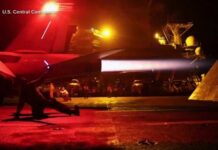
U.S. Southern Command reported that U.S. forces carried out a “lethal kinetic strike” against a low-profile vessel in the eastern Pacific Ocean, describing it as part of a narcotics trafficking operation along known maritime routes. SOUTHCOM said three males were killed and portrayed the men as “narco-terrorists” linked to designated terrorist organizations. Unclassified video released by the command shows the vessel engulfed in flames, reinforcing that the strikes are meant to be seen.
Public reporting around the same incident diverges on the basic timeline, with different outlets describing the strike as occurring on different days of the week. That mismatch may reflect publication timing, multiple strikes close together, or incomplete public detail from the government. What remains consistent across accounts is the operational pattern: U.S. forces are targeting suspected smuggling boats in international waters, and the government is presenting the action as direct disruption of cartel supply lines.
A campaign that escalated from interdiction to lethal force
For decades, the U.S. has run counter-narcotics patrols through SOUTHCOM, traditionally emphasizing interdiction, seizure, and arrests with regional partners. Since early September 2025, the current campaign has featured repeated lethal strikes in the eastern Pacific and Caribbean Sea against vessels U.S. officials associate with drug trafficking. Recent reporting describes a cluster of operations over several days, including multiple deadly strikes and at least one search for survivors that was later suspended.
The scale of the campaign is also disputed, even among mainstream reports: the total number of strikes is variously described in the 40s to 50s, while the cumulative death toll has been reported anywhere from the high 140s to the high 170s—along with claims that the latest incidents bring totals higher still. Those differences matter because they shape how Americans evaluate proportionality, effectiveness, and oversight when force is used far from U.S. shores.
Trump’s political framing: fentanyl, terror designations, and deterrence
President Trump has publicly endorsed the campaign, linking the strikes to the domestic fentanyl catastrophe and arguing that traffickers are committing violence and terrorism. That messaging fits the administration’s broader “America First” posture: prioritize the protection of American communities and treat cross-border criminal networks as national security threats. For many conservative voters, that approach answers long-running frustration that elites talk tough while overdose deaths and cartel power keep rising.
At the same time, the public record summarized in available reporting relies heavily on government statements and short video clips, not independent documentation of cargo, targeting criteria, or the identities of those onboard. Labeling traffickers as members of “designated terrorist organizations” raises the stakes because it can broaden the perceived legal and military framework for action. Without more disclosed evidence, outside observers cannot fully evaluate how consistently that label is applied across cases.
The unresolved questions: effectiveness, legality, and public trust
Supporters of the strikes point to an intuitive logic: destroying boats on known trafficking routes should reduce supply, raise costs for cartels, and deter repeat runs. Critics, including many civil-liberties-minded Americans across the political spectrum, question whether lethal force in international waters risks turning counter-narcotics into a shadow war with limited transparency. The reporting also notes contradictory accounts about survivors in at least one incident, underscoring uncertainty when events unfold far offshore.
U.S. strike hits alleged drug boat, killing 3 and bringing death toll up to at least 181 https://t.co/CHVscfvcom
— The Washington Times (@WashTimes) April 20, 2026
Politically, the episode lands in a moment when trust in federal institutions is brittle. Conservatives often see renewed enforcement as overdue after years of porous borders and weak deterrence, while liberals worry about mission creep and humanitarian standards. Both sides, however, can recognize the same problem: major life-and-death decisions are being communicated in fragments, with inconsistent totals and limited public evidence. If Washington wants credibility, clearer metrics and oversight will matter.
Sources:
US strikes alleged drug boat in eastern Pacific, killing 3
3 killed latest U.S. strike alleged drug boat eastern Pacific