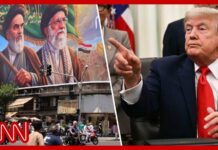
Trump just kept a ceasefire alive with Iran while ordering U.S. forces to maintain a blockade—an uneasy pause that could snap back into war the moment Tehran refuses to deal.
Quick Take
- President Trump extended a two-week U.S.-Iran ceasefire “indefinitely,” but tied it to Iran submitting a unified proposal for talks.
- Iran refused to send a delegation to Pakistan for a second round of negotiations, calling talks illegitimate under “threats” and blockade pressure.
- The U.S. posture remains coercive: the ceasefire pauses strikes, but military readiness and a reported Hormuz-focused blockade continue.
- Pakistan’s leadership pushed for the extension and remains central as host and mediator, highlighting how regional players are trying to prevent escalation.
Ceasefire Extended, Pressure Maintained
President Donald Trump announced that the ceasefire with Iran would continue even after Iran declined to attend planned follow-up peace talks in Pakistan. The extension is described as indefinite but conditional: Trump’s message framed the pause as lasting until Iran provides a unified proposal and discussions are concluded. At the same time, Trump instructed U.S. forces to keep a blockade and remain ready for action, signaling a strategy of leverage rather than withdrawal.
That combination—ceasefire plus blockade—matters because it keeps the temperature down without surrendering control of the battlefield. Supporters view it as forcing Tehran to choose between diplomacy and economic pain. Critics portray it as proof Iran can defy Washington and still avoid immediate consequences. The available reporting does not resolve which framing is more accurate, but it clearly shows the U.S. is pausing offensives while sustaining coercive pressure.
Pakistan Emerges as a High-Stakes Middleman
Pakistan’s role is one of the most distinctive elements of this episode. Reporting indicates Pakistan’s prime minister and army chief urged Trump to extend the ceasefire, and Pakistan has hosted the talks effort. That places Islamabad in the uncomfortable position of balancing regional stability, domestic politics, and relationships with Washington and nearby powers. If Pakistan can keep both sides at the table, it gains diplomatic credibility; if talks collapse into renewed strikes, it absorbs blowback from a conflict on its doorstep.
For American readers, Pakistan’s involvement is also a reminder that U.S. foreign policy rarely operates in a clean, bilateral lane. Washington can apply military and economic pressure, but negotiation venues, mediators, and regional incentives shape outcomes in ways the U.S. cannot fully control. That reality cuts against the public’s desire for straightforward wins and reinforces the broader frustration that complex conflicts can outlast election cycles, administrations, and headlines.
Nuclear Demands and “Talks Under Threat”
The first round of talks in Pakistan reportedly lasted about 21 hours and ended without agreement, with Iran refusing to abandon its nuclear program as a central sticking point. Vice President JD Vance led the U.S. side and left without a deal, later arguing that no agreement would be worse for Iran. Iranian voices, including figures tied to hardline security circles, stressed they would not negotiate under threats and demanded the “enemy” accept Iran’s conditions.
Those positions explain why the ceasefire is fragile even if it lasts longer than expected. Washington’s “pause with pressure” approach assumes economic and military leverage can force movement on nuclear issues. Tehran’s “no talks under duress” posture treats the blockade itself as disqualifying. The research also notes claims of Iranian internal divisions that could complicate any “unified proposal,” but the public evidence available from the cited reporting is limited on how deep those divisions run.
Energy Risk, Public Skepticism, and the Limits of Washington
This conflict has already been tied to disruption around the Strait of Hormuz and volatility in oil prices, with obvious downstream effects for U.S. household budgets and global markets. When energy chokepoints wobble, inflation pressures can reappear quickly, and voters who remember recent price spikes tend to react fast. That’s why the blockade element is not a technical footnote; it sits at the intersection of national security and the cost of living.
BREAKING. President Trump Announces the Cease Fire Remains Despite Iranian Refusal to Attend Talkshttps://t.co/fqiLfAdKGV
— RedState (@RedState) April 21, 2026
Politically, the episode also lands in a country where many voters—right and left—believe federal institutions struggle to deliver clear results. Trump’s move can be read as restraint that avoids a wider war, or as an unresolved standoff that drags on while elites argue over messaging. What is clear from the reporting is that the administration is trying to keep military leverage intact while leaving a door open to talks, with the next step dependent on whether Iran actually shows up with a proposal.
Sources:
trump-rejects-efforts-to-launch-iran-ceasefire-talks-sources-say
us-and-iran-end-ceasefire-talks-and-vance-heads-home-without-an-agreement