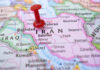
One small Iranian island is emerging as the Trump administration’s most consequential pressure point—because it could cut off the regime’s oil cash without touching Iran’s cities.
Story Snapshot
- Reports say Trump administration officials have discussed special operations options focused on Iran’s Kharg Island, the main hub for Iranian crude exports.
- Kharg Island is widely described as handling about 90% of Iran’s crude oil exports, with a theoretical capacity near 7 million barrels per day.
- Analysts say the island was deliberately spared in prior U.S.-Israel strikes due to fear of global oil price spikes and broader escalation.
- Supporters argue taking or disabling the terminal would slash regime revenue tied to the Revolutionary Guard; critics warn infrastructure damage could linger for years.
Why Kharg Island Sits at the Center of Iran’s Oil Machine
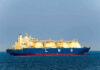
Kharg Island’s importance is not symbolic—it is structural. Reporting on the facility describes it as the outlet for roughly 90% of Iran’s crude exports, a level of concentration that makes it a classic “choke point” in modern energy warfare. The island’s deep-water piers were built to load very large tankers, a key advantage because much of Iran’s coastline is too shallow for major vessels. That geography is why Kharg remains uniquely valuable.
The history matters because it shows both resilience and vulnerability. During the Iran-Iraq War, Iraqi forces repeatedly bombarded Kharg’s infrastructure, yet Iran still found ways to export oil, indicating redundancy and improvisation. Today, however, the island’s role appears even more concentrated as Iran’s economy relies heavily on energy exports. Multiple reports also emphasize that China is the primary buyer of Iranian crude despite U.S. sanctions, meaning any disruption could quickly become a U.S.-China geopolitical stress test.
What the Trump Team Is Reportedly Considering—and What’s Still Unknown
Accounts citing Axios reporting say Trump administration officials have discussed options that include seizing Kharg Island and its oil infrastructure or conducting commando-style raids linked to broader objectives in the conflict, including securing enriched uranium stockpiles. One report also says President Trump has expressed “serious interest” in dispatching ground troops to Iran. Operational specifics are not public, and reporting does not provide a firm timeline, leaving the scope and readiness of any plan unclear.
Even so, the strategic shift—if it happens—would be real. Prior U.S. administrations reportedly treated attacks on Kharg as a “red line,” largely because the island is tied directly to global energy prices, not merely military targets. Analysts cited across reporting say Kharg was excluded from a prior U.S.-Israel strike list during a “12-day war,” pointing to deliberate restraint. That restraint is now part of the story: it suggests leaders viewed Kharg as escalatory or economically destabilizing, even amid heavy fighting.
The Strategic Argument: Starve the Regime’s Revenue Without Nation-Building
Supporters of targeting or controlling Kharg argue the logic is straightforward: Iran’s export revenue sustains regime priorities, and limiting that revenue can reduce Iran’s capacity to finance military operations. Commentary cited in reporting includes the argument that seizing and controlling the island would tighten the screws by controlling the regime’s key income stream. Energy-focused coverage also ties the island’s oil flow to revenue benefiting the Islamic Revolutionary Guard Corps, reinforcing why Kharg is treated as more than a commercial facility.
From a constitutional, limited-government perspective at home, the public will still demand clarity on mission scope, authorization, and end state. The research available describes discussions and interest, not a finalized operation. That distinction matters for Americans who watched recent decades of open-ended foreign commitments sold with vague goals. If Kharg becomes a focal point, the central questions will be whether the objective is temporary disruption, long-term control, or leverage for negotiation—and how leaders plan to avoid an expanded regional war.
The Counterargument: Oil Shock, Escalation, and Long-Term Damage
Warnings in the reporting focus on blowback: oil-price spikes, market instability, and the long shadow of wrecked infrastructure. Analysts caution that destroying the terminal could send global prices soaring and punish ordinary consumers far from the battlefield. A separate concern is that if the current regime were to change in the future, a ruined export system could cripple any successor government for years, complicating reconstruction and creating prolonged economic hardship inside Iran. Those are strategic costs, not humanitarian slogans.
🇺🇸🇮🇷 BREAKING: US Eyes Kharg Island — Iran’s Oil Lifeline Could Be Crippled
US officials are reportedly considering plans to seize Kharg Island, Iran’s primary oil export hub in the Persian Gulf, handling over 90 % of the country’s crude oil exports through its deep-water… pic.twitter.com/9jurxv5SQ2
— Defence Index (@Defence_Index) March 8, 2026
The bottom line from the available reporting is that Kharg Island is being discussed precisely because it is both potent and risky. It offers a pathway to hit the regime’s revenue at its source, but it also touches global energy markets and invites escalation in a region where miscalculation can spread fast. With key details still undisclosed and no direct Iranian official response cited in the provided research, the public is left weighing leverage versus volatility—two realities that rarely coexist peacefully.
Sources:
https://www.ynetnews.com/article/syvuw8okwl
https://www.chosun.com/english/world-en/2026/03/09/MYXCDRCH2ZA3VLJXXP4NUNK2ZI/
https://www.eenews.net/articles/the-oil-island-that-could-break-iran/