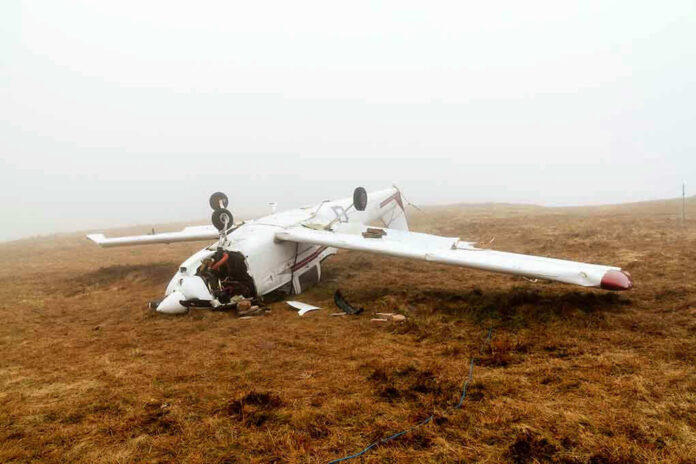
A general aviation accident raises questions about pilot judgment and safety regulations.
Story Snapshot
- A private pilot’s last words before a fatal crash highlight ongoing safety concerns in general aviation.
- NTSB reports cite loss of control on approach as a key factor in the accident.
- The tragedy underscores the importance of rigorous pilot training and decision-making.
- Media coverage focuses on the emotional impact and technical findings from the NTSB.
Tragic Loss of Control in General Aviation
A recent National Transportation Safety Board (NTSB) report has drawn attention to a tragic incident involving a private pilot and his wife, Thomas Perkins and his wife Agatha. The pilot, flying a small aircraft, reassured his wife that they “should be okay” moments before uttering an “unintelligible exclamation” just before the crash. This accident, resulting in the loss of both lives, highlights the persistent issue of loss of control during approach in general aviation.
The NTSB’s investigation pointed to challenging weather conditions and potential pilot error as contributing factors. This incident is a stark reminder of the higher accident rates in general aviation compared to commercial airlines, often linked to decision-making and weather-related challenges.
Impact of the NTSB Findings
The NTSB report’s release brought renewed scrutiny to pilot training and certification processes. Many general aviation accidents, like this one, involve pilots with basic or instrument training who may not be fully prepared for challenging flying conditions. The emphasis on the pilot’s reassuring words and the subsequent tragic outcome has resonated with the public, raising questions about pilot readiness and the effectiveness of current training programs.
In response to such incidents, the NTSB and FAA have historically focused on improving safety standards and training protocols. This includes promoting scenario-based training and the adoption of advanced safety technologies like whole-airframe parachutes and angle-of-attack indicators.
Family and Community Reactions
The emotional toll on the family and local aviation community has been significant. As the investigation unfolded, families and communities gathered to remember the victims and seek understanding and closure. The media’s portrayal of the pilot’s last words has further amplified the emotional impact, drawing public attention to the broader safety issues in general aviation.
Moving forward, the aviation industry continues to grapple with balancing technological advancements with the need for robust pilot training. While some advocate for more technology-driven solutions, others emphasize the importance of foundational flying skills and decision-making capabilities. As these discussions evolve, the lessons learned from this tragedy will hopefully drive meaningful improvements in general aviation safety.
Sources:
Pilot Said He ‘Should Be Okay,’ Then Made ‘Unintelligible …