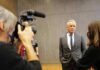
Alex Soros went public fuming that Europe and Canada weren’t protesting U.S.-Israeli strikes on Iran—only to discover the anti-Trump outrage machine doesn’t automatically translate into a global consensus.
Quick Take
- Alex Soros criticized Western allies for not mobilizing against recent U.S. and Israeli strikes on Iran, praising Spain’s posture while scolding others.
- Available reporting shows heightened regional tension, including U.S. embassy drawdowns in Beirut and warnings from Lebanese officials about escalation risks.
- Claims about broad global popularity (or unpopularity) of the strikes are not backed by polling data in the provided research.
- The most verifiable facts center on regional security moves and diplomatic precautions, not on sweeping claims about international public opinion.
Soros’s Complaint Puts the Spotlight on a Real Divide
Alex Soros, chair of the Open Society Foundations, used social media to question why more Europeans and Canadians were not protesting U.S. and Israeli strikes against Iran. In the same commentary, he signaled that Spain was “becoming the leader of the free world” for its stance, implicitly urging other Western democracies to follow suit. The episode matters because it highlights a familiar split: activist messaging versus hard-nosed security realities.
Silly commies …
Alex Soros Learns the HARD WAY That He and Dems Are Reading the Room COMPLETELY Wrong on Iran Strikes https://t.co/eF8Tuk3VGx pic.twitter.com/PARmTAmn8T
— Twitchy Team (@TwitchyTeam) March 2, 2026
The Twitchy report describes heavy pushback, with critics arguing Iran is a tyrannical regime and that reflexive opposition to strikes blurs moral lines. Without independent polling in the source set, the “reading the room” framing remains a political interpretation rather than a documented fact pattern.
What the Reliable Reporting Actually Shows: Escalation Precautions
While social media arguments churned, regional indicators pointed to elevated risk. Reporting in late February 2026 described Lebanon’s foreign minister warning that the United States might carry out new strikes against Iran if tensions worsened, with Iranian military drills underway alongside Russia. The same reporting indicated a second U.S. aircraft carrier moving toward the Middle East, a signal that Washington was positioning for deterrence—or rapid response—if events escalated.
That same late-February reporting also described U.S. diplomatic precautions in Beirut. The U.S. State Department ordered nonessential diplomats and their families to leave the U.S. Embassy in Beirut amid rising tensions tied to Iran. Lebanese officials, facing the ever-present risk of proxy conflict, were also described as urging Hezbollah to avoid being pulled into a U.S.-Iran confrontation, citing fears of civilian harm and wider regional fallout.
Missing Pieces: No Polling, Few Official Statements, Limited Strike Details
The research set contains notable gaps that should temper confident claims from either side. No polling data is provided showing how Europeans, Canadians, or broader international publics view the strikes. No official statements from European governments or Canada are included to confirm whether they supported, opposed, or simply avoided public confrontation with Washington. Details on strike targets, scale, casualties, or strategic objectives are also absent, limiting what can be concluded.
Those omissions matter because they separate commentary from verifiable reporting. If a public figure argues the world is “with” or “against” the Trump administration on Iran, the evidence should include surveys, government communiqués, and basic operational facts. Instead, the clearest documentation in the provided material relates to threat posture—carriers moving, embassy drawdowns, and Lebanese warnings—suggesting policymakers were treating the moment as serious regardless of online narratives.
Why This Resonates Domestically: Activism Versus Constitutional Realism
For many conservative voters, the Soros episode lands in a familiar place: elite activist networks attempting to steer U.S. policy through media pressure rather than through democratic accountability. The research does not establish wrongdoing, but it does show a prominent progressive funder publicly lobbying for international agitation against Trump’s Iran policy. Americans who prioritize limited government and national sovereignty tend to reject foreign-policy decision-making by transnational pressure campaigns.
At the same time, the most grounded reporting in the source set underscores an uncomfortable truth: the Middle East does not pause for Western political theater. Lebanon’s warnings, U.S. embassy steps, and the risk of proxy escalation all point to high stakes that go well beyond a viral post. Until more facts are available—official allied positions, strike details, and measurable public opinion—claims that anyone “read the room” correctly should be treated as argument, not proof.
Sources:
Alex Soros is big mad that more Europeans and Canadians aren’t big mad at Trump for Iran strikes
Alex Soros fumes at left-wing climate group over Palestine obsession: ‘What the hell’
Lebanon urging Hezbollah militant group to avoid getting involved in U.S.-Iran conflict