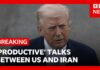
President Trump’s Iran operation is colliding head-on with the very promise that helped power his movement: no more open-ended Middle East wars.
Story Snapshot
- Operation Epic Fury began in late March 2026 with U.S. action against Iran alongside regional partners including Israel and Saudi Arabia.
- The administration says the mission targets Iran’s nuclear program, ballistic missiles, proxy networks, and naval forces, but it has not defined clear exit criteria.
- Trump projected a 4–5 week window while also saying the U.S. can extend the campaign far longer, fueling “mission creep” fears among voters.
- Four U.S. service members were reported killed in Kuwait as the operation began, intensifying domestic scrutiny.
- Conflicting rhetoric about a potential “forever” fight is splitting MAGA-aligned voters who supported Trump to avoid new wars.
Operation Epic Fury: Objectives Are Clear, End-State Is Not
President Trump authorized Operation Epic Fury in late March 2026, launching a U.S. military campaign against Iran with regional cooperation that the administration has described as including Israel and Saudi Arabia. The White House has framed the strikes as focused on dismantling Iran’s nuclear infrastructure, ballistic missile capacity, proxy terror networks, and naval forces. Those objectives are specific, but the administration has not publicly laid out measurable end-state conditions that would clearly trigger de-escalation.
President Trump’s public messaging has emphasized that the operation will not become a drawn-out conflict, including a projection that fighting could last roughly four to five weeks. At the same time, he has indicated the United States can sustain the campaign far longer if needed. Defense Secretary Pete Hegseth has publicly argued the mission is not another Iraq-style occupation, while still declining to commit to a firm timeline, leaving voters to fill in the blanks.
Contradictory “Forever War” Messaging Fuels Voter Distrust
Late March statements attributed to Trump on Truth Social added a new complication: language suggesting wars can be fought “forever” and that U.S. munitions are essentially unlimited. Critics seized on those comments because they cut against the administration’s reassurance message about a limited operation. Even many pro-Trump conservatives who support strong deterrence hear “forever” and think of the post-9/11 era—years of deployments, unclear wins, and Washington insisting things were “almost done.”
Some analysts have challenged the “virtually unlimited” framing on practical grounds, pointing to prior warnings from senior military leaders about munitions constraints and the industrial realities of sustaining high-tempo operations. That matters domestically because the conservative base has been vocal for years about reckless spending, debt, and a federal government that never seems to find an endpoint once it expands a mission. When the White House message shifts between “weeks” and “as long as it takes,” skepticism grows.
Casualties and Constitutional Questions Intensify Pressure at Home
Early reporting during the opening days of U.S.-Israeli operations indicated four American soldiers were killed in Kuwait, a reminder that even “limited” campaigns can quickly carry a real human cost. As casualties mount or appear likely to rise, public patience typically narrows—especially among voters who backed Trump believing he would prioritize U.S. border security, energy affordability, and rebuilding at home over another generational conflict abroad.
The political fault line inside the right is less about whether Iran is dangerous and more about what the Constitution requires and what Congress should do before the nation is pulled deeper into war. The research provided does not detail a new authorization for force from Congress tied specifically to this operation, and that absence—if it persists—keeps questions alive about war powers and accountability. For constitutional conservatives, clarity on authority and scope is not optional.
Israel, Regional Alliances, and a MAGA Base Asking Hard Questions
The White House has emphasized partnership with Israel and Saudi Arabia as part of the regional posture against Iran. Strategically, that coordination signals an effort to counter Iranian missiles and proxy forces while reducing the burden on U.S. troops. Politically, however, the alliance layer complicates the domestic debate because it can blur whether Washington is acting strictly on direct U.S. threat assessments or being drawn into broader regional objectives that may not be tightly limited.
Trump’s supporters are not a monolith on Israel or intervention, and the split is now out in the open. Many still back decisive action to stop a nuclear-armed Iran; others are demanding proof the mission is finite, legally grounded, and tied to concrete U.S. interests rather than nation-building. If the administration wants to keep its coalition intact, the fastest way is simple: define the endpoint, define the metrics, and level with the public about costs, timelines, and tradeoffs.
Sources:
https://www.wusf.org/2026-03-02/trump-defends-iran-strikes-offers-objectives-for-military-operation
https://responsiblestatecraft.org/trump-stockpiles-iran/