Border questioning is not a sideshow in modern counterintelligence; it is often the front line, and false statements at that edge can be the decisive charge when conduct skirts classified lines but betrays directed collection.
The Short Version
- Federal agents allege Chinese national Weiheng Zeng took taskings from a China-linked handler to photograph specific aircraft and cargo areas, then lied to U.S. border officials about it.
- According to reporting on a federal complaint, Zeng initially claimed hobbyist “plane spotting,” later acknowledging paid assignments with precise targets and locations.
- The publicly charged offense centers on false statements to federal officers—a common prosecutorial path when conduct resembles intelligence collection without an espionage statute hook.
- The case sits in a broader pattern: many China-linked incidents involve directed tasking and non-traditional collectors, with most activity aimed at technology and logistics rather than spy-movie secrets.
What the government alleges: directed taskings, then deception at the border
Reporting on the federal complaint describes a straightforward sequence. Zeng, a Chinese national studying in Canada, crossed into the United States and was later questioned by U.S. personnel about photographs taken at or near sensitive logistics facilities associated with airports. He initially told agents the images were for an aviation fan or flight-tracking community—classic “plane spotting.” Subsequent interviews, however, shifted materially: he allegedly admitted a contact in China had assigned him specific aircraft and locations to photograph and paid small sums per accepted image, with instructions to send the files and then destroy them. The complaint, as described in these accounts, charges him not with espionage but with lying to federal officials—an offense that turns on knowingly false statements about material facts during an inquiry.
Two details make the allegations operational rather than casual. First, tasking specificity: references to exact tail numbers, named facilities, and particular vantage points suggest a collection requirement, not a general aviation interest. Second, tradecraft-lite: small per-photo payments routed in yuan to a Bank of China account and instructions to delete images are consistent with low-grade clandestine discipline—minimal but purposeful. While an arrest or complaint is not a conviction, the narrative across outlets is internally consistent on these points and draws directly from the government’s filing.
Why false-statements charges so often anchor “edge of espionage” cases
U.S. prosecutors frequently reach first for 18 U.S.C. § 1001—false statements—when the suspected activity resembles intelligence collection but the available evidence does not yet satisfy the elements of espionage, economic espionage, or unauthorized access statutes. The Justice Manual explicitly contemplates false responses to routine administrative inquiries, including statements to border or immigration personnel, as chargeable if knowingly false and material to the inquiry. At ports of entry and exit, that bar matters: customs and border interviews probe travel purpose, contacts, and activities; deception there can be independently criminal even absent classified targets or restricted-area intrusion. It is a structural feature of modern counterintelligence: collection is often diffuse and deniable, but lying to federal agents is binary.
From a risk lens, airport-adjacent logistics—cargo ramps, specialized freighter operations, and tail-number-linked routings—can be operationally revealing. Freight flows, charter lift, and unusual aircraft appearances betray tempo, partners, and contingency capacity. A tasking set that prioritizes FedEx facilities and aircraft identifiers matches the type of logistics intelligence that sits between commercial and military equities yet remains strategically valuable.
How we got here: the PRC’s use of non-traditional collectors
Across two decades of documented incidents in the United States, Chinese intelligence and influence activities have consistently leveraged non-traditional collectors—students, business travelers, researchers, and hobbyists—alongside formal intelligence officers. Surveys and case compilations indicate that roughly half of publicly known U.S. cases involve Chinese state or military personnel, while a substantial share involve private citizens operating at the direction of, or in support of, state-linked entities. The Department of Justice has likewise emphasized the predominance of China-linked defendants in economic espionage and trade secret theft matters, underscoring the breadth of the collection ecosystem beyond classic spies.
This context does not transform every Chinese student into a suspect; it does shape investigative posture when facts echo recurrent patterns: precise tasking, low-dollar compensation, logistics or technology focus, and evidence hygiene (delete the files). That is the pattern the complaint against Zeng, as described in public reporting, appears to track. The emphasis on false statements rather than espionage here mirrors other cases at the “grey edge” of intelligence activity, where prosecutable lies at the border are the cleanest path to accountability while broader intent and directionality are still being mapped.
Competing narratives and what actually holds up
There is a humanly plausible alternative explanation at first glance: legitimate plane spotters congregate near airports, exchange tail numbers, and share images on enthusiast sites. Zeng reportedly led with precisely that story. But the government’s account—reflected consistently across multiple outlets—has him later acknowledging directed assignments, payments per accepted photograph, and instructions to destroy evidence, which are all difficult to reconcile with casual hobbyism. In weighing these accounts, the directed-tasking narrative carries the more specific, falsifiable features; the generic hobby narrative does not. Absent a defense-side rebuttal grounded in comparable detail—names, records, or communications that reframe the alleged “handler” as an innocuous enthusiast organizer—the government’s version currently stands as the stronger explanation of the same facts.
One caveat belongs in any fair analysis: a complaint distills the government’s best case at an early point, and statements attributed to a subject in custodial or high-pressure settings become litigated later on. Still, the standard for public understanding is not proof beyond a reasonable doubt—it is coherence and evidentiary weight. On that measure, the directed-photo-missions account is more than atmospherics; it is a structured set of actions consistent with intelligence-adjacent collection.
Implications: airports, logistics intelligence, and practical takeaways
The Zeng case—if proved—illustrates how civil aviation infrastructure becomes an attractive target for deniable collection. Cargo carriers, charter flights, and specific tail numbers can reveal surge capacity, sanctioned trade workarounds, and sensitive supply movements. Because much of this information is technically observable from public vantage points, it tempts low-risk tasking to non-official collectors. For U.S. operators and airport authorities, mitigation is not to criminalize photography but to harden patterns: reduce the intelligence value of what can be inferred from open observation by tightening opsec around unusual routings and ramp operations, and by coordinating with local law enforcement when repeated, targeted observation crosses from curiosity into pattern-of-life collection.
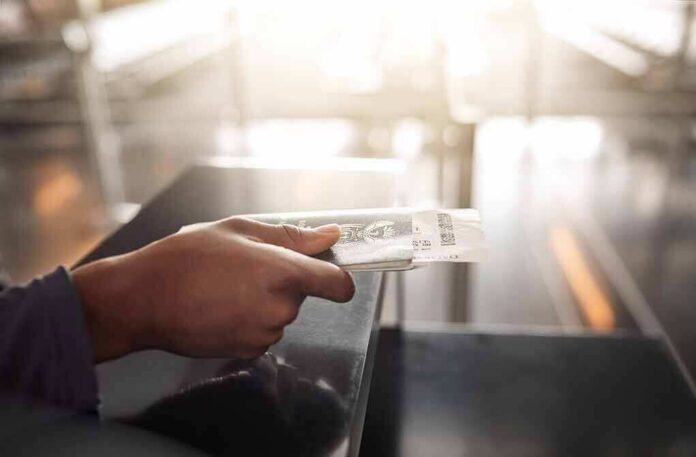
For travelers—regardless of nationality—the case is a reminder that answers at the border must be truthful and complete. Hobbyist explanations collapse quickly if messages, payments, or instructions tell a different story. For investigators, the lesson is perennial: tasking specificity and post-collection instructions are probative; they separate casual interest from directed work. And for policymakers, the broader pattern calls for precision—aggressive counterintelligence against directed activity without casting routine student travel as presumptively suspect, which would be both unjust and counterproductive.
🇨🇳 national Weiheng Zeng, an undergraduate student at 🇨🇦 University of Waterloo, photographed facilities near O’Hare International Airport in Chicago under the direction of a suspected Chinese intelligence officer and sent the photos to the officer via a Huawei phone with… pic.twitter.com/KlUmEG2EcH
— Byron Wan (@Byron_Wan) August 31, 2026
Bottom line
When alleged conduct looks like collection and the subject lies about it at the port of entry, the government does not need a James Bond indictment to act. On the public record to date, the case against Zeng is not about a camera; it is about direction, intent, and deception—and the way small, specific tasks against critical logistics can add up to meaningful intelligence.
Sources:
zerohedge.com, ntd.com, avweb.com, 404media.co, bloomberg.com, justice.gov
© fixthisnation.com 2026. All rights reserved.