When a homicide bursts into public view with shocking physical evidence, the first wave of facts can be both blunt and narrow: arrest-warrant details, a witness account, and the immediate crime-scene findings. The Smyrna, Georgia case—an 18-year-old arrested after a neighbor saw him drop a plastic tub containing a dismembered torso—shows how early, well-corroborated particulars establish the backbone of a case even as the deeper forensic and legal work begins.
At a Glance
- Police say a witness saw 18-year-old Kingston Bradley carrying a plastic tub with a body, then dropping it and fleeing at a Smyrna apartment complex.
- Investigators found a dismembered human torso inside the tub; Bradley was arrested and charged with concealing the death of another.
- Reporters on scene described a bleach odor in the suspect’s apartment and a bloody saw recovered by investigators, consistent with active forensic processing.
- This is a textbook example of how early homicide narratives rely on warrant summaries and immediate observations while lab and autopsy work follows.
What Police Say Happened in Smyrna
According to contemporaneous reporting drawn from an arrest warrant and police statements, a neighbor at the Park Valley Apartments in Smyrna observed an individual later identified as 18-year-old Kingston Bradley carrying a heavy plastic storage tub around 8:00–8:30 p.m. When he noticed the witness, he allegedly dropped the container on a dirt walkway and ran toward a nearby apartment. Responding officers found the tub and, inside it, a dismembered human torso. Bradley was arrested and charged with concealing the death of another and held without bond as a homicide investigation unfolded.
Local coverage characterizes the discovery as an outgrowth of a missing-person call at the complex and describes the initial hours of the investigation: police establishing a scene perimeter, canvassing neighbors, and expanding the search to nearby wooded areas. Neighbors told reporters they saw a man carrying the tub and heard a commotion earlier that evening; Atlanta television coverage also reported that investigators noted a strong bleach odor in the suspect’s apartment and recovered a bloody saw, details consistent with active forensic assessment of tools and cleanup attempts.
Why Early Details Take This Shape
In violent-death cases, the public record in the first 24–72 hours is often dominated by what can be documented immediately: the scene, a witness statement, and the arrest-warrant narrative, which is designed to establish probable cause, not to litigate the entirety of the case. Federal court guidance for journalists explicitly frames warrants as an early window into an investigation—informative, but preliminary relative to the fuller evidentiary picture that emerges through lab analysis, autopsy results, and subsequent court filings.
Homicide practice reflects that cadence. Agencies emphasize securing the scene, locating witnesses, and initiating coordination with the medical examiner and crime lab within minutes to hours; the deeper, methodical work of trace analysis, DNA processing, and reconstruction proceeds on a longer clock. Many departments still work to a practical “72-hour rule,” a recognition that early momentum—scene integrity, rapid interviews, preservation of transient evidence—shapes the solvability of a case even though definitive forensic outputs arrive later.
The Core Evidence Reported So Far
Three pillars support the public narrative in this case. First, the eyewitness account of Bradley carrying, then dropping, the tub that investigators say held a torso; warrants and on-the-record local reporting describe this sequence in detail and place the suspect at the scene immediately before flight. Second, the physical evidence of the torso itself—an objective, high-consequence fact that anchors the allegation of a violent death. Third, the early forensic observations reported by local outlets: a pronounced bleach odor in the suspect’s apartment and a saw with apparent blood, both of which are the kinds of items labs test for biological material and tool-mark correlations in dismemberment investigations.
Charging decisions follow the evidence that is legally ready. In Georgia, “concealing the death of another” is a felony frequently used early when investigators can document a body and conduct pointing to concealment, pending further lab and autopsy results that may support additional counts. That sequencing is neither unusual nor tentative; it reflects prosecutorial prudence about filing charges that the immediate record can sustain while reserving the option to supersede as more comes back from the lab and the medical examiner.
How Investigators Typically Build a Case from Here
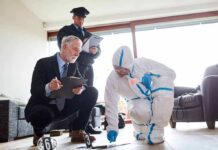
From a technical standpoint, next-phase work usually centers on identification, cause and manner of death, and linkage. Identification leverages fingerprints, DNA profiling, dental records, and, when necessary, forensic anthropology for skeletal features. Cause and manner rely on autopsy findings, toxicology, and scene integration. Linkage includes DNA and serology on tools and surfaces, latent prints, digital forensics (phones, location data, messaging), and witness timelines that tether the suspect to material acts—possession of remains, transport, cleanup, procurement of tools or chemicals—across a precise window of time.
In dismemberment cases, tool-mark analysis can be probative: forensic examiners compare cut characteristics on bone to suspected implements, while trace evidence—microscopic metal transfer, wood or plastic particulates from a specific saw blade—may narrow the tool match. Chemical odor observations such as bleach prompt luminol or BlueStar screening, followed by confirmatory tests for blood and species origin. Each of these processes has defined limits and error rates, which is why investigators integrate multiple modalities to strengthen inferences rather than over-relying on any single test.
🚨 This case out of Smyrna, Georgia is developing, and the arrest warrant is…a lot.
Police investigating a missing person found the dismembered torso of a woman inside a plastic storage tub Wednesday night.
According to the warrant, a witness saw 18-year-old Kingston Lammar… pic.twitter.com/kEjesaqJqK
— Clinical Menace (@clinicalmenace_) September 25, 2026
What Responsible Coverage Looks Like While the Case Advances
The Smyrna investigation illustrates a pattern seen in many violent deaths: the first facts that reach the public are sturdy but partial. That is not a flaw in the system; it is the system working in sequence. Journalistic best practice in this window is straightforward—report what is established on the record, avoid rumor, distinguish between scene observations and lab-confirmed results, and resist the temptation to backfill motive before the evidence can carry it. The federal courts’ guide for reporters and long-standing homicide-investigation manuals both counsel this disciplined approach, precisely because it preserves both investigative integrity and public understanding.
For readers following such cases, the signal is in the consistency and specificity of early facts across independent outlets and official documents. Here, the eyewitness account, the recovered torso, the arrest at the scene, and the immediate charge align across local reporting and police statements. The work now moves to the lab bench and the charging desk, which is how a focused early narrative—built on what is unambiguously in hand—matures into a prosecutable case or, at minimum, a coherent evidentiary record.
Sources:
nypost.com, mysuncoast.com, newsbreak.com, fox5atlanta.com, wsbradio.com, ajc.com, wrdw.com, smyrnaga.gov
© fixthisnation.com 2026. All rights reserved.