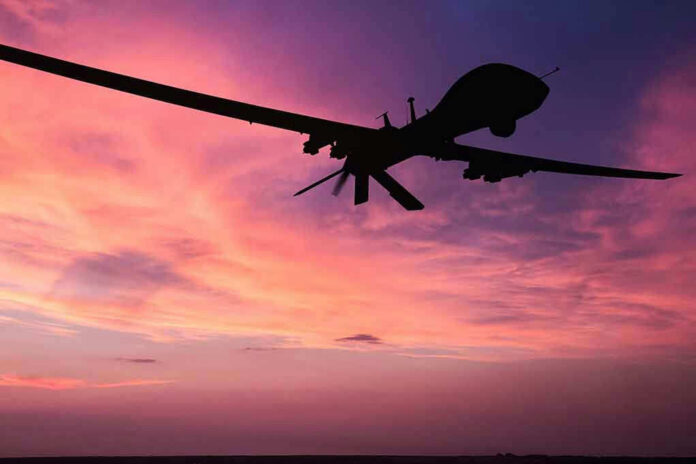
Ukraine and Romania have signed a statement of intent to jointly produce drones, marking a significant shift in Eastern European defense cooperation that strengthens NATO’s eastern flank while potentially establishing a new regional defense manufacturing hub.
Story Snapshot
- Ukraine and Romania formalized plans for joint drone production through a statement of intent signed in March 2026
- The agreement builds on a decade of deepening military cooperation, including Romania’s transfer of Patriot systems and training programs
- Romania aims to produce drones for domestic use while exploring European Union export opportunities
- The partnership leverages Ukraine’s combat-tested drone expertise gained from countering Russian aggression since 2022
Strategic Alliance Against Russian Aggression
Romania and Ukraine signed a statement of intent in March 2026 to establish joint drone production capabilities, according to Romanian Foreign Ministry announcements. The agreement represents a practical evolution of the countries’ 2020 military-technical cooperation framework, which enabled joint research, equipment purchases, and repairs. This partnership directly addresses threats from Russian aggression, positioning Romania just 200 kilometers from Russia’s illegally annexed Crimean territory. The collaboration demonstrates how nations on NATO’s eastern flank are taking defense production into their own hands rather than waiting for distant bureaucrats to act.
Combat-Tested Expertise Meets Manufacturing Capacity
Ukraine brings invaluable battlefield experience to this partnership, having developed and deployed drones extensively against Russian forces since the 2022 full-scale invasion. Romanian officials indicated the joint production aims to serve both domestic defense needs and potential European Union export markets. Romania’s defense budget reached €19 billion in 2024, exceeding NATO’s 2% GDP target, demonstrating serious commitment to military modernization. The partnership makes strategic sense—Ukraine possesses combat-proven designs while Romania offers manufacturing infrastructure and NATO integration. This isn’t globalist dependency; it’s allies pooling strengths to counter a genuine threat.
Building on Proven Military Cooperation
The drone production agreement extends Romania’s substantial military support for Ukraine, including the October 2024 transfer of a Patriot air defense system—Romania’s last operational system—to help counter 3,000 monthly Russian bomb strikes. Romania has also provided APRA-40 launchers, TAB-71 armored vehicles, artillery systems, and established training programs for Ukrainian pilots and marines at Air Base 71. A July 2024 ten-year security pact formalized these ties. Romania operates as NATO’s second-largest aid hub for Ukraine after Poland, with 75,000 troops defending the eastern flank. This cooperation overcame historical tensions over territorial disputes and minority rights issues that previously strained relations.
Regional Defense Manufacturing Hub Emerges
The Romania-Ukraine drone partnership fits within a broader Central and Eastern European defense-industrial awakening, alongside similar cooperation with Poland and Lithuania. Experts emphasize Romania’s role as Ukraine’s “staunchest ally,” with quiet but substantial aid deliveries and training programs signaling deep integration. The agreement positions Romania as a key logistics and manufacturing hub for Black Sea security, potentially benefiting Moldova as well. Unlike failed joint ventures of the past, this collaboration addresses immediate defense needs with proven technology. For American conservatives watching European allies finally shoulder defense burdens, this represents exactly the kind of self-reliance that reduces pressure on U.S. taxpayers while strengthening legitimate alliances against authoritarian expansion.
Protecting Sovereignty Through Self-Reliance
Joint drone production serves multiple conservative principles: national sovereignty through defense preparedness, allied burden-sharing within NATO, and economic development through defense manufacturing. Romania’s caution about investments, learned from past failures, suggests a business-minded approach rather than wasteful spending. The partnership creates jobs and capabilities within allied nations rather than enriching distant contractors. Ukraine’s combat experience provides real-world testing that no amount of peacetime theorizing can match. As both nations face Russian threats—Ukraine directly through invasion, Romania through proximity and hybrid warfare—this cooperation represents common-sense deterrence. Americans who value strong borders and national defense should appreciate allies taking concrete steps to defend their own territory.
Sources:
Romania and Ukraine: NATO Allies Strengthening Black Sea Cooperation – RFE/RL
Ukraine-Poland-Romania Alliance: Military NATO European Union – Long Brief
Romania-Ukraine Relations – GIS Reports
U.S. Security Cooperation with Romania – U.S. State Department
Moldova, Romania and Ukraine’s Trilateral Effort for Black Sea Security – German Marshall Fund