The naming fight around Abdul El-Sayed is not really about syllables; it is about whether a campaign can hide an identity cue inside a supposedly routine choice of formality. In this case, the public record supports two things at once: Tim Scott denied any Islamophobic intent, but the surrounding messaging made the full-name emphasis look deliberate enough to invite that interpretation.
Key Points
- Tim Scott said the ads were about El-Sayed’s record and positions, not his religion.
- CNN’s Manu Raju explicitly asked whether the full-name usage was meant to signal “he’s Muslim,” making the naming choice itself part of the controversy.
- The broader NRSC messaging tied El-Sayed to Hamas, Hasan Piker, and “dangerous” politics, which gives Scott a substantive policy rationale even as the naming choice remained loaded.
- El-Sayed and sympathetic observers read the full-name emphasis as part of a broader pattern of identity-coded attack politics.
Why the Full Name Became the Story
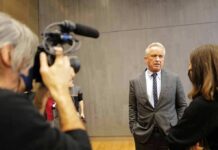
Campaigns do not usually fight over a candidate’s full legal name unless the name is carrying extra meaning. That is what made this episode so combustible: Republicans were not merely criticizing Abdul El-Sayed’s policy positions; they were repeatedly using Abdulrahman Mohamed El-Sayed in attack messaging, and CNN’s Manu Raju directly asked Scott whether the effect was to tell voters, “hint hint, he’s Muslim?” That question was not a digression. It identified the central ambiguity in modern negative advertising: a piece of copy can be defensible on its face and still be designed to activate a cultural association that the sponsor will later deny.
Scott’s reply was straightforward. He rejected the Islamophobia allegation and said, “Not at all,” insisting that the ads were meant to focus on what El-Sayed “stands for.” He added a concrete attack line of his own: that El-Sayed’s prior comments and associations made him “the most dangerous candidate” and that Republicans were trying to hold him to his words, not to his religion. That matters, because it supplies a substantive political explanation. The ads were not built out of nothing; they were embedded in a broader campaign argument about Hamas, defunding the police, and El-Sayed’s ideological alignment.
What Scott’s Defense Actually Proves
Scott’s defense proves intent only in the narrowest sense: he publicly claimed the ads were about policy, not identity. It does not prove that the full-name emphasis was innocuous. His answer left open the more important question of why the campaign chose the extended name at all, especially when the shorter name El-Sayed uses publicly was already available and was the version CNN pressed him to use. Scott tried to normalize the practice by saying he himself is called “Timothy Eugene” and accepts it as ordinary. That is a rhetorical defense, not an operational explanation. It answers, “Can a legal name be used?” rather than, “Why this name, in this context, and why now?”
The distinction matters. In campaign communication, the difference between a neutral identifier and an identity-coded signal often lives in accumulation, not in any single phrase. Here, the accumulation included full-name emphasis, an attack frame that linked El-Sayed to Islamist fear cues, and public repetition of the same controversy across multiple outlets. That does not amount to documentary proof of dog-whistle intent. It does, however, make Scott’s “just policy” explanation incomplete as a full account of the messaging choice.
Why Critics Saw an Identity Signal
The strongest reason critics reacted the way they did is historical memory. American politics has a long record of campaigns using formal or extended names to imply foreignness, religious difference, or disqualifying cultural distance without saying the quiet part out loud. This dispute sits squarely in that tradition. The Independent and other coverage framed the question that way, and El-Sayed himself said Republicans were echoing what had been done to Barack Obama by emphasizing the full name. Once that comparison enters the conversation, the naming choice stops reading like clerical precision and starts reading like a cue.
That said, criticism here is still inferential. The public record supplied in this package does not include an internal NRSC memo, ad script, audience test, or consultant email proving that the full name was selected specifically to evoke Muslim identity. The evidence supports suspicion, pattern recognition, and a plausible reading of the message architecture. It does not support certainty about hidden intent. That is the hard line in this case: the dog-whistle interpretation is credible because of context, not because a smoking gun has been produced.
The Real Political Mechanism: Deniability
This controversy is a textbook example of deniable signaling. A campaign can use a formal name, pair it with charged accusations, and then retreat to the literal truth that the name is legally correct. That is why these fights endure. The speaker preserves a plausible public defense, while critics are left arguing that meaning is carried by context rather than by dictionary definition. Political messaging researchers have long understood this logic, and the El-Sayed episode fits it neatly: the message was not merely “here is this candidate”; it was “here is this candidate, framed through danger, association, and outsider coding.”
Scott’s substantive critique of El-Sayed was not fabricated. According to the interview summaries, he pointed to El-Sayed’s past support for defunding the police, his call to abolish ICE, and his alleged sympathy for Hamas and Hasan Piker as reasons Republicans believed they could attack him aggressively. Those are recognizable campaign issues in the modern GOP arsenal. But once the campaign chose to foreground the candidate’s full legal name repeatedly, it blurred the line between a policy contrast and an identity tell. The more a campaign leans on that blur, the less convincing it becomes when it claims the blur was accidental.
CNN is melting down over the GOP using Abdulrahman Mohamed El Sayed's full name, worrying Michigan voters will see he's a Muslim
CNN: Your ad uses his FULL name. He goes by Abdul El Sayed. Are you saying, hint hint, he's Muslim?!
TIM SCOTT: We're saying he says he's the most… pic.twitter.com/wscJlG7iUj
— Trumpusa1 (@Trumpusa1A1) August 11, 2026
What This Episode Means Beyond One Senate Race
The lesson is not that every use of a full legal name is sinister. It is that in polarized politics, naming is never just naming when the target belongs to a group that has historically been marked as foreign, suspicious, or disloyal. The El-Sayed case shows how a campaign can stay one step inside formal innocence while still communicating much more than its defenders admit. That is why CNN’s line of questioning landed: it translated a familiar public unease into direct language and forced Scott to choose between a categorical denial and an explanation that never quite explained the naming choice itself.
So the most defensible reading is also the least theatrical. Scott’s public defense should be taken seriously insofar as it identifies genuine policy attacks in the ads. But the broader messaging pattern makes the full-name emphasis look purposeful and identity-adjacent, even if the available record stops short of proving explicit religious intent. In political practice, that is often enough. A campaign does not need to say the forbidden thing if it can make the audience hear it for itself.
Sources:
twitchy.com, thehill.com, youtube.com, independent.co.uk, instagram.com, facebook.com, washingtonexaminer.com, yahoo.com
© fixthisnation.com 2026. All rights reserved.