After 13 years of unanswered questions and finger-pointing, the U.S. just put a Benghazi suspect on American soil—signaling that terrorists who target Americans can still be hunted down and hauled into court.
Story Snapshot
- Attorney General Pam Bondi announced the arrest and extradition of Zubayr al-Bakoush, accused of participating in the 2012 Benghazi terror attack.
- Al-Bakoush arrived at Andrews Air Force Base around 3:00 a.m. ET on February 6, 2026, and was expected to appear in federal court in Washington, D.C.
- Federal prosecutors unsealed a long-dormant case first filed under seal in 2015, charging murder, attempted murder, terrorism support offenses, and arson-related counts.
- The Benghazi attack killed four Americans—Ambassador Chris Stevens, Sean Smith, and CIA contractors Tyrone Woods and Glen Doherty—after militants hit a U.S. facility and a nearby CIA annex.
Bondi’s DOJ Unseals a 2015 Case and Brings a Suspect to Washington
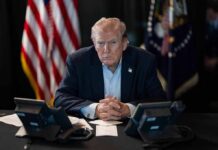
Attorney General Pam Bondi announced on February 6, 2026, that the Justice Department arrested and extradited Zubayr al-Bakoush, a suspect tied to the September 11, 2012, terrorist attack in Benghazi, Libya. Officials said al-Bakoush was taken into custody overseas and delivered to the United States, arriving at Andrews Air Force Base at about 3:00 a.m. ET. Bondi appeared alongside FBI Director Kash Patel and U.S. Attorney Jeanine Pirro as the indictment was unsealed.
Prosecutors described the filing as a major step in a case that had been sealed since 2015. Reporting on the announcement indicated some uncertainty about the exact number of counts—some outlets described an eight-count indictment while others described seven—an issue that should be clarified by the court docket. The reported charges include the murders of Ambassador Chris Stevens and Sean Smith, attempted murder of an agent who survived, conspiracy, material support-type offenses, and arson connected to the attack and resulting fires.
What Investigators Allege Happened During the 2012 Assault
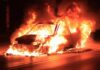
The Benghazi attack unfolded on the night of September 11, 2012, when roughly 20 armed militants associated with Ansar al-Sharia breached the main gate of the U.S. diplomatic compound. Investigators have said the attackers set fires that ultimately killed Stevens and Smith. Authorities allege al-Bakoush entered the mission after the fires began, conducted surveillance, and attempted to access vehicles on the compound—details that frame him as a participant rather than a bystander.
Later that night, the violence extended to a CIA annex about a mile away. A mortar attack killed CIA contractors Tyrone Woods and Glen Doherty, turning a security breakdown into a national trauma. While early public narratives in 2012 centered on protests and an anti-Islam video, subsequent investigations described the incident as a premeditated terrorist assault. That distinction matters because it shapes the legal approach, the intelligence lessons, and the public’s expectation that the U.S. will pursue perpetrators across borders.
Prior Benghazi Cases Show the Long, Uneven Road to Accountability
The new arrest fits into a pattern of sporadic progress rather than a single clean breakthrough. U.S. forces previously captured Ahmed Abu Khatallah in 2014; he was convicted on non-murder charges and later resentenced to 28 years in 2024. Another suspect, Mustafa al-Imam, was captured in 2017 and sentenced to 19 years. Al-Bakoush’s case appears different mainly because the complaint was sealed for years, and this is the first widely reported Benghazi-related arrest since 2017.
Former FBI Assistant Director Steven Jensen, speaking in coverage of the arrest, characterized the development as part of a sequence of Benghazi cases rather than a sudden pivot. That perspective aligns with what the public can verify: multiple administrations pursued suspects using a mix of intelligence work, international cooperation, and extraterritorial arrests. The new administration’s public message—“you can run, but you cannot hide”—emphasizes persistence, while the case file itself shows how long terrorism prosecutions can sit in the system before an arrest becomes possible.
What This Means for Americans Still Demanding Straight Answers
Jeanine Pirro said more suspects remain at large, and officials framed the arrest as a promise kept to families who have waited more than a decade for results. The capture location was not disclosed, a common operational choice in counterterrorism cases, but it also limits independent verification of how cooperation was obtained. For a country exhausted by years of soft-on-crime rhetoric and bureaucratic excuses, the practical takeaway is simple: a living suspect is now in U.S. custody, and a courtroom will force specifics.
Politically, Benghazi has never been just a foreign-policy story. It has symbolized what happens when government institutions fail to protect Americans and then struggle to speak plainly about what occurred. The best check on partisan spin is due process: formal charges, evidence, sworn testimony, and cross-examination. If prosecutors can prove the case, the result will reinforce a core conservative principle—accountability under law—while underscoring that American citizenship should never come with an expiration date on justice.
Sources:
Suspect in 2012 Benghazi attack arrested, DOJ says
Justice Department: Bondi, Patel, Pirro announce arrest in Benghazi case