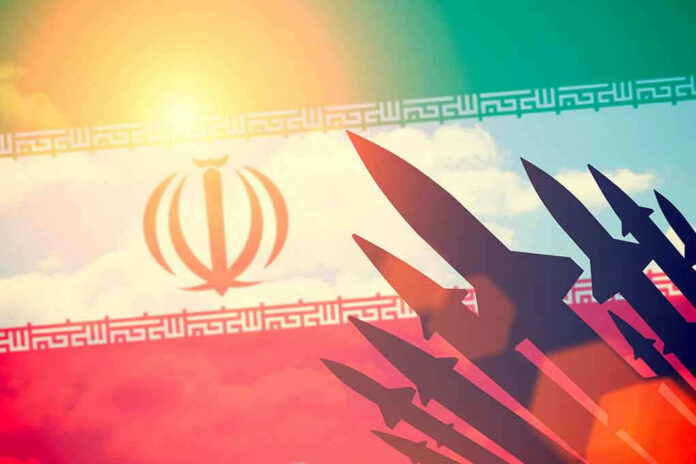
Iran shattered a fragile ceasefire by firing ballistic missiles at Israel — and Israel’s air defenses were ready.
Story Snapshot
- Iran launched approximately 10 ballistic missiles at northern Israel, marking the first direct attack since an April ceasefire, with Israeli defenses intercepting most of them.
- Iran framed the strikes as retaliation for Israeli attacks on Beirut, but firing ballistic missiles at a neighboring country’s territory remains an act of military aggression regardless of justification.
- Israeli Defense Forces reported no immediate injuries or structural damage from the initial salvo, crediting their reinforced defensive posture and interception systems.
- The escalation is part of a broader, intensifying conflict in which Iran has fired over 370 ballistic missiles at Israel across four days of open warfare.
Ceasefire Collapses as Iran Fires on Northern Israel
Iran launched roughly 10 ballistic missiles at northern Israel, breaking the first period of relative calm since an April ceasefire. Israeli air defenses intercepted the incoming projectiles, and initial reports confirmed no injuries or structural damage from that salvo. The Israeli military stated that missiles were either intercepted or struck open areas, crediting a reinforced defensive posture that had been maintained since the ceasefire ended.
Iran’s Islamic Revolutionary Guard Corps — the ideologically driven military branch that answers directly to the supreme leader — claimed the strikes were retaliation for Israeli attacks on Beirut earlier the same day. Tehran has repeatedly used the “retaliation” framing to justify missile launches, but firing ballistic missiles at a sovereign nation’s territory is an act of war by any conventional definition, regardless of the stated rationale.
Air Defenses Prove Their Worth — But the Threat Is Real
Israel’s layered missile defense network performed as designed during the initial attack, intercepting incoming projectiles before they could cause casualties. The Israeli military confirmed two missiles were shot down in the first documented exchange since the April ceasefire, and the broader salvo of approximately 10 missiles produced no confirmed direct impacts on populated structures. That outcome reflects years of investment in multi-tiered interception systems built precisely for this threat.
The broader conflict picture is far more sobering. Over four days of open warfare, Iran fired more than 370 ballistic missiles at Israel, with approximately 30 penetrating Israeli air defenses and striking Israeli territory — including impacts reported in Tel Aviv, Petah Tikva, and Bnei Barak. At least eight Israelis were killed and hundreds injured during that broader exchange, according to reporting from the Long War Journal. The single intercepted salvo was a tactical success; the cumulative campaign represents a sustained Iranian offensive.
Iran’s Missile Arsenal and Regional Ambitions
Iran has built one of the largest ballistic missile arsenals in the Middle East, with Israeli officials estimating Tehran retained roughly 1,500 missiles and 200 launchers even after significant attrition from the current conflict. Iran has deployed its missiles in combat on multiple occasions, including strikes on Iraqi bases hosting American forces in 2020. The regime views its missile program as a primary deterrent and power-projection tool across the region.
Iran launched missiles at Israel, marking the first attack since a fragile ceasefire in April, complicating efforts to broker a deal to end the conflict.https://t.co/X8MLU9yxd0 pic.twitter.com/z33VVCkjSW
— Gulf News (@gulf_news) June 7, 2026
The latest strikes follow a familiar pattern: Iran uses military action by Israel or its allies as a pretext to launch offensive missiles, then claims defensive justification in state media. For Americans watching this unfold, the pattern should be familiar — an adversarial regime with a long record of sponsoring terrorism and threatening U.S. allies is now engaged in open missile warfare against Israel. The Trump administration’s posture toward Iran, including economic pressure and demonstrated willingness to act militarily, remains the most credible deterrent available to prevent this conflict from expanding further.
Sources:
[1] Web – Iran Fires Ballistic Missiles at Israel; IDF Intercepts
[2] Web – Two Iranian ballistic missiles shot down, in first attack since April …
[3] Web – Iran fired around 10 ballistic missiles at north; no reports of …
[4] Web – Iran launches missiles at northern Israel in first since April after …
[5] Web – Iran fires ballistic missiles at Israel, air defenses intercept …
[6] YouTube – Iran Launches Ballistic Missiles At Israel in Retaliatory Attack
[7] Web – More than 30 Iranian ballistic missiles strike Israel in 4 days of war …
[8] Web – October 2024 Iranian strikes on Israel – Wikipedia
[9] YouTube – Iran Hits Israel LIVE: Ballistic Missiles FIRED, Sirens In Tel Aviv …
[10] YouTube – US-Iran War: Iran Launches Multiple Ballistic Missiles at Israel
[11] YouTube – Iran Strikes Israel: Tehran’ Biggest MISSILE Attack On US …
[12] Web – What missiles did Iran use in its attack on Israel? – The New Arab
[13] YouTube – Iran’s missile capabilities against Israel ‘significantly degraded …
[14] Web – Table of Iran’s Missile Arsenal | Iran Watch
[15] Web – Missiles of Iran | Missile Threat – CSIS
© fixthisnation.com 2026. All rights reserved.