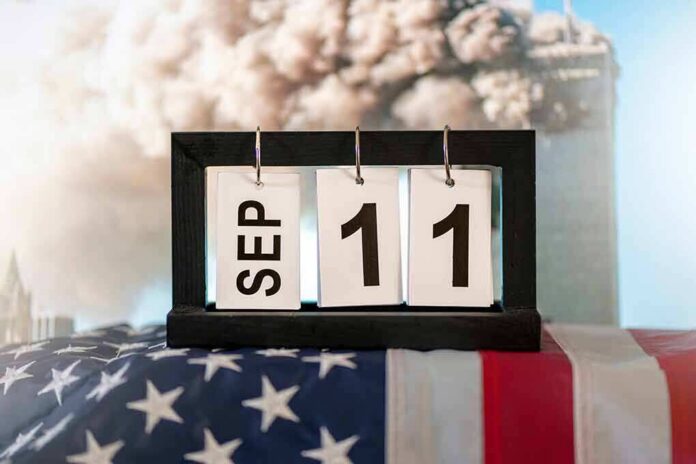
Symbols around 9/11 are never just ceremony; they are proxies for judgment, memory, and legitimacy—so when a mayor’s ceremonial pen from a 9/11 order lands in the hand of a lawyer who once represented an al‑Qaeda detainee, the uproar isn’t about stationery, it’s about what—and whom—our public rituals are seen to honor.
The Short Version
- The city confirms a 9/11 remembrance executive-order signing at City Hall; the ceremonial pen was handed to the mayor’s chief counsel, Ramzi Kassem.
- Coverage tied the gesture to Kassem’s prior representation of Guantánamo detainee Ahmed al‑Darbi, intensifying criticism already brewing from some 9/11 families.
- City Hall says Kassem’s team drafted the orders—an ordinary role for a general counsel—offering a benign procedural explanation.
- The record contains no direct evidence of provocative intent; the fight centers on symbolism and association, not a stated motive.
What Happened: The Ceremony, the Pen, and the On-Camera Handoff
New York City marked an oncoming 9/11 anniversary with a City Hall signing of two executive orders: the first creates an annual Day of Remembrance and Service on September 11, with moments of silence and other commemorative observances; the second addresses continuity-of-government preparedness. The mayor’s office published a transcript framing the event in those terms. After the signing, the ceremonial pen used for the 9/11 order was passed to Police Commissioner Jessica Tisch and then to the mayor’s chief counsel, Ramzi Kassem. The mayor’s office acknowledges Kassem’s presence and role in the underlying policy work.
The image of that handoff—described by contemporaneous reporting as awkward and symbolically charged—became the fulcrum of controversy. In an environment already strained by petitions and statements from some 9/11 families urging the mayor to skip anniversary ceremonies, the moment read to critics as a tacit tribute to the wrong person at the wrong time.
Why It Sparked: The Power—and Peril—of Symbolic Association
Public memory rituals rely on scrupulous symbolic hygiene: who stands where, who speaks when, who receives a token of the moment. Those decisions are read as endorsements, even when they are procedural. Here, the associative chain was quick and emotionally legible: Kassem once represented Ahmed al‑Darbi at Guantánamo; al‑Darbi has been described in press accounts as an al‑Qaeda operative; therefore, handing him a 9/11 ceremonial pen appears to invert the moral hierarchy of the day. That is the critic’s syllogism, and it resonates because 9/11 remains a sacred civic narrative in New York.
The complication is evidentiary. City Hall’s public record emphasizes remembrance and preparedness and offers a workaday rationale for Kassem’s presence—his office helped write the orders. There is no documentary proof in the record that the pen gesture was intended as provocation; the case against it is one of optics and inference, not motive. That doesn’t make the offense felt by families any less real, but it does define what can and cannot be claimed with confidence.
Who Is Ramzi Kassem In This Context? Role, Past Clients, and Professional Lines
Kassem serves as the city’s chief counsel in this episode, which puts him squarely in the lane of drafting and vetting executive orders—a routine function for that office. Critics point to his earlier legal representation of al‑Darbi to argue the pen handoff was tone‑deaf at best. Supporters counter that representing unpopular clients is the ordinary business of a defense lawyer; professional ethics require able representation regardless of a client’s alleged crimes. Both claims can be true at once: his past docket is relevant to how the public reads the symbol, but it does not, on its own, evidence the administration’s endorsement of any client’s conduct.
It is also worth distinguishing what is well‑sourced from what is asserted at a remove. Press accounts link al‑Darbi to al‑Qaeda and circulate further, more inflammatory relationship claims through secondary reporting. Those secondary links are not stabilized here by underlying case files in the provided record. The criticism that rides on those extensions is therefore rhetorically powerful but evidentially contingent.
The Preexisting Headwinds: Why This Landed in a Storm
Long before the pen moment, petitions and statements from some 9/11 families cast the mayor as an unwelcome presence at anniversary ceremonies. In that climate, a gesture that might have passed without comment in a neutral year was bound to be read adversarially. It is a recurring feature of 9/11 memory politics that small ceremonial choices become lightning rods—consider the longstanding fights over memorial design and placement—because they stand in for larger arguments about meaning, belonging, and respect. The pen became such a stand‑in.
City Hall’s counter‑position remained steady: the mayor would “proudly honor” families, survivors, and first responders at the commemoration, and the orders’ text institutionalized remembrance and service. The administration’s official framing supplies a benign narrative, which, absent contrary documentation, is the only on‑record intent available.
How To Weigh Intent Without Documents: An Expert’s Framework
When motives are contested and documents are scarce, the disciplined approach is to separate three layers. First, the verified act: the signing, the pen handoff to Kassem, and his role as counsel on the orders are supported by city and contemporaneous press records. Second, the contextual environment: sustained criticism from some 9/11 families created a receptive audience for symbolic offense. Third, the inferred meaning: while many found the gesture galling, there is no direct proof in the record that the mayor sought to signal anything beyond ordinary internal recognition of legal staff work. Each layer can be true without collapsing into the claim of deliberate provocation.
This is not hair‑splitting; it is how durable public understanding is built. If future FOIL disclosures, event rundowns, or sworn statements revealed pre‑planning around the pen’s recipient for communications effect, the inference would harden into evidence. Conversely, a run‑of‑show that treats pen distribution as routine would support the procedural account. Until then, we are adjudicating optics.
After signing 9/11 executive orders, Mamdani handed the ceremonial pen to his chief counsel, Ramzi Kassem, who previously represented an al-Qaeda-linked terrorist involved in a 2002 attack. pic.twitter.com/LRgoSlye39
— Breaking911 (@Breaking911) September 6, 2026
What It Means Going Forward: Practice for High-Stakes Civic Rituals
Three practical lessons emerge. First, in sacred civic space, process is message: if staff recognition is intended, do it offstage or after the commemorative segment, not with artifacts tied to the remembrance itself. Second, anticipate associative readings; when a senior aide’s past docket includes work that will predictably trigger grief or anger in a memorial context, structure the ceremony to avoid putting that aide at the symbolic center. Third, publish the run‑of‑show and rationale for ceremonial choices in real time; transparency blunts the power of inference in polarized media ecosystems.
Sources:
thegatewaypundit.com, nypost.com, amny.com, zoa.org, cnn.com
© fixthisnation.com 2026. All rights reserved.