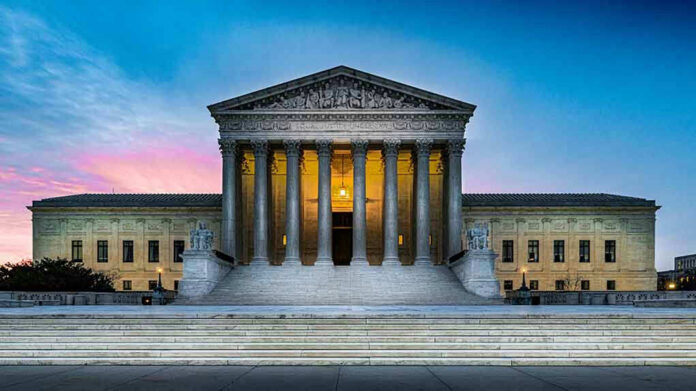
The Supreme Court just stripped President Trump of critical tariff powers in a 6-3 ruling that three conservative justices warn will dangerously handcuff America’s commander-in-chief when confronting foreign economic threats.
Story Snapshot
- Supreme Court struck down Trump’s emergency tariffs in 6-3 decision, blocking tens of billions in protective duties
- Justices Kavanaugh, Thomas, and Alito issued stark dissent warning majority opinion undermines presidential power to defend against foreign adversaries
- Majority ruled Trump exceeded authority under IEEPA, but dissenters argue tariffs are traditional regulatory tools presidents must control
- Ruling forces government to refund billions to importers while leaving Trump with limited alternative pathways to protect American workers
Court Blocks Trump’s Economic Defense Strategy
On February 20, 2026, the Supreme Court invalidated President Trump’s comprehensive tariff program imposed under the International Emergency Economic Powers Act. The ruling struck down Trump’s Liberation Day tariffs, announced April 2, 2025, which included a baseline 10 percent duty on most imports and higher rates on nations refusing fair trade agreements. Chief Justice John Roberts authored the majority opinion, asserting IEEPA does not authorize tariff authority and invoking the major questions doctrine to require explicit congressional authorization for economic decisions of this magnitude. The decision immediately invalidates emergency tariffs protecting American industries and forces refunds of duties already collected.
Three Justices Issue Constitutional Warning
Justice Brett Kavanaugh penned a forceful dissent joined by Justices Clarence Thomas and Samuel Alito, warning the majority’s interpretation dangerously constrains presidential power during national emergencies. Kavanaugh argued tariffs constitute traditional and common tools to regulate importation, falling squarely within IEEPA’s regulatory authority granted to protect America from foreign threats. The dissent directly challenged Roberts’ distinction between regulatory and taxing powers, noting tariffs have historically served both functions. This represents a critical divide among conservative justices about executive authority to defend economic sovereignty without navigating bureaucratic congressional approval processes that can paralyze response to urgent threats like China’s trade manipulation or fentanyl trafficking.
Kavanaugh offered a measured assessment suggesting the practical impact may prove limited because numerous other federal statutes authorize presidential tariff authority. He noted these alternative pathways might justify most or all tariffs at issue in this case. However, legal analysts confirm these alternatives—including Section 301 of the Trade Act and Section 232 of the Trade Adjustment Act—impose significantly stricter limitations, generally capping rates at 15 percent for maximum 150-day periods. This constraint fundamentally undermines the sustained economic pressure required to force adversarial nations into fair trade agreements protecting American manufacturing jobs and national security interests.
Majority Opinion Prioritizes Process Over Protection
Roberts’ majority opinion, joined by Justices Gorsuch, Barrett, Sotomayor, Kagan, and Brown Jackson, insisted the government cannot identify any statute where regulatory power includes taxing authority. The majority emphasized the Constitution assigns tariff power to Congress, requiring clear delegation before presidents can act. This textbook judicial activism substitutes the Court’s policy preferences for executive judgment on national security threats. Trump’s administration argued persistent trade deficits and cross-border fentanyl flows constituted legitimate national emergencies, yet six justices deemed themselves better positioned than the elected president to assess these dangers. The decision mirrors the Court’s blocking of Biden’s student loan forgiveness, showing even this conservative majority will constrain executive power when constitutional boundaries are implicated.
Economic and Strategic Consequences Mount
The ruling immediately costs the federal government tens of billions in tariff revenue that could fund border security and military readiness. Companies will file massive refund claims through the U.S. Court of International Trade, transferring taxpayer resources to corporations that benefited from unfair foreign competition. Import-dependent sectors like pharmaceuticals spent the past year restructuring around tariff regimes; this abrupt reversal creates business uncertainty while emboldening foreign adversaries who recognize America’s trade tools have been judicially neutered. The decision establishes precedent limiting all future presidents’ ability to invoke emergency powers for economic policy, regardless of threat severity.
Trump’s administration retains narrow pathways under alternative statutes, but these offer insufficient leverage to counter China’s systematic intellectual property theft or currency manipulation. The 15 percent cap and 150-day limit prevent sustained pressure campaigns that historically forced adversaries to negotiate. This judicial straitjacket arrives precisely when American workers need protection from globalist trade policies that hemorrhaged manufacturing jobs for decades. Three justices recognized this danger; unfortunately, six chose constitutional formalism over practical defense of American economic sovereignty and worker prosperity.
Sources:
Supreme Court strikes down tariffs – SCOTUSblog
Supreme Court Tariffs Ruling Trump – TIME
U.S. Supreme Court Invalidates IEEPA as Authority to Impose Tariffs – Thompson Hine
Supreme Court Case 24-1287 – Justia
Trump Tariffs Supreme Court – CalMatters
Supreme Court Steps In, Trump’s Tariffs Thrown Out – FiercePharma