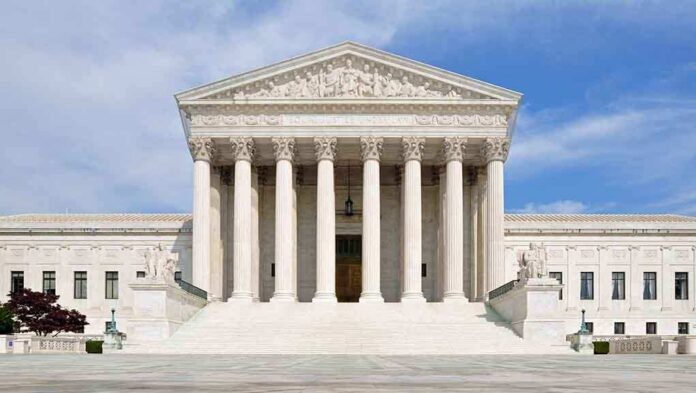
In a pair of 6-3 rulings, the Supreme Court backed border control and executive authority, dealing a setback to open-borders activism.
Story Snapshot
- The Court said migrants turned away at ports have not “arrived” and cannot claim asylum before entry [11].
- Justices upheld ending Temporary Protected Status for Haitians and Syrians, shielding those decisions from most lawsuits [4].
- Both opinions reversed lower courts and affirmed the administration’s power to manage the border [4].
- Liberal dissents blasted the rulings, but the majority relied on the statute’s plain text [12].
What The Court Actually Decided In Two Cases
On June 25, 2026, the Supreme Court decided Mullin v. Al Otro Lado and Mullin v. Doe. In the first, the Court held that people stopped at the border have not “arrived in” the United States and cannot demand asylum processing before entry. In the second, the Court ruled that the Department of Homeland Security can end Temporary Protected Status for Haitians and Syrians and that courts cannot review those discretionary terminations unless a constitutional claim is at stake [4].
Justice Samuel Alito wrote that “arrives in” means physical entry. The opinion rejected arguments that standing at a port of entry counts as legal arrival. That aligns with common sense and the statute’s plain words, the Court said. The ruling also allowed Customs and Border Protection to manage intake based on capacity, often called “metering,” which began late in the prior administration and expanded later, and had been blocked by lower courts [11].
Why These Rulings Matter For Border Security
These decisions restore clarity at the line. Agents can control the flow, inspect people who actually cross, and protect ports from chaos. The asylum ruling removes a legal loophole that encouraged crowds to surge the gate, then sue. The Temporary Protected Status decision restores Congress’s design: elected leaders set the statute, the executive carries it out, and courts do not second-guess discretionary calls that the law bars them from reviewing, absent a real constitutional claim [4].
The combined effect reduces courtroom policy-making and shifts decisions back to the political branches. That matters when cartels and smugglers test our limits every day. It also helps our overrun immigration courts by cutting off mass, class-action style challenges that stall enforcement. Analysts note this follows a long trend of the Court deferring to the executive when Congress leaves gaps in immigration law, as seen in other major cases over the past two decades [10].
What Critics Say—and What The Record Shows
Liberal justices and activists called the rulings “egregiously wrong,” and claimed racial bias drove the Temporary Protected Status terminations. The majority did not find a basis to sustain those claims here. The key point is legal: Congress wrote a bar on judicial review for Temporary Protected Status “determinations,” which includes ending that status. The Court applied that bar and declined to invent a new path around the statute’s words [4].
Big Supreme Court win for Trump on immigration, affecting over 1 million migrants. The 6-3 ruling lets him end TPS and tighten asylum rules at the border. Deportations and new limits are coming. More details in the article below. https://t.co/lLaEuExHI2 pic.twitter.com/gFDrnS5aGK
— mei (@jun580830) June 26, 2026
Some media insist these rulings “gut” asylum and “strip” protections. The record is different. Asylum remains in law for those who enter and qualify. Temporary Protected Status still exists. The rulings say the executive can end that status when conditions change, and courts cannot relitigate every step unless a constitutional issue is proven. That is separation of powers at work, not cruelty. It closes loopholes that fueled illegal entry and forum shopping in the courts [12].
What Changes Next On The Ground
Border officials can set intake based on space, staffing, and safety while focusing on those who actually cross. That should reduce crushes at bridges and cut cartel pressure tactics. The administration can also reexamine past injunctions on Temporary Protected Status for other countries and apply the same legal standard. Expect a pivot from endless lawsuits to policy execution, with Congress holding the pen if it wants different rules in the future [4].
For families, communities, and taxpayers, the rulings promise fewer mixed signals. Clear rules deter unlawful entry and reward legal paths. They also protect limited shelter, court time, and local services from being overwhelmed. That is not anti-immigrant. It is pro-law, pro-border, and pro-fairness to every person who follows the rules. The Court read the law as written. Now the work moves to enforcement and, if needed, to Congress to clarify the statutes [11].
How Conservatives Should Read The Win
These rulings defend the rule of law, national sovereignty, and the basic duty to control our border. They check judicial activism that turned policy fights into nationwide injunctions. They also affirm that words matter—“arrives in” means entry, not a line outside the door. The path ahead is steady enforcement, targeted resources, and real debate in Congress, not policy by lawsuit. That is a win for the Constitution and for common sense at the border [10].
Sources:
[4] Web – Supreme Court delivers dual blows to immigrants in big win for Trump’s …
[10] Web – Trump secures major immigration wins at Supreme Court – WAMC
[11] Web – Supreme Court: TPS Ends for Migrants as Donald Trump Celebrates Win
[12] Web – How the Supreme Court is Shaping Immigration Policy
© fixthisnation.com 2026. All rights reserved.