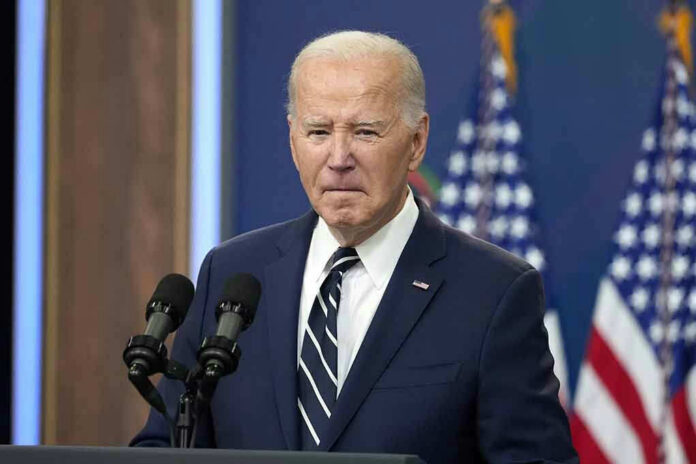
Jay Clayton’s confirmation hearing turned one simple question—“Was Joe Biden fairly elected?”—into a stress test of truth, loyalty, and political courage on live television.
Story Snapshot
- Clayton said Joe Biden was certified president and “fairly and duly elected under our process”
- He refused to plainly say “Joe Biden won,” clashing with Democrats pressing for a clear answer
- He insisted he is “not an election denier” while dodging some fraud questions
- Conservatives online blasted him as caving to Democrats and unfit for the job
Clayton says Biden was certified and fairly elected
Jay Clayton, President Donald Trump’s nominee for Director of National Intelligence, walked into the Senate Intelligence Committee with one job: prove he can keep America safe without becoming Trump’s political bodyguard. He quickly faced the question every Trump-era nominee now knows is coming: what do you say about the 2020 election. When Senator Mark Warner pressed him, Clayton answered that “Joe Biden was certified as the president of the United States” and that he believed Biden had the most electoral votes. He later went further, agreeing that Biden was “fairly and duly elected under our process” when asked directly in a tense exchange captured on video. Those words matter. They line up with what multiple courts, state officials, and federal agencies have said for years: there was no evidence of widespread voter fraud that changed the 2020 result. For many Americans, including plenty of conservatives who value the rule of law, that is simply stating the obvious.
Yet in Washington, saying the obvious can be dangerous when it crosses Donald Trump’s narrative. Clayton tried to thread a needle. He affirmed the official certification, used the language of fairness, and said, “I’m not an election denier”. At the end of the hearing he reminded senators, “I’ve acknowledged, senator, that Joe Biden was president”. On paper, those lines should calm anyone worried that the nation’s top intelligence officer would buy into conspiracy theories. But the way he delivered them—carefully, with lawyer-style phrasing—set up the clash that came next.
Ossoff demands a simple answer: who won in 2020?
Georgia Senator Jon Ossoff turned the hearing from slow burn to live drama. He asked Clayton the clearest question possible: “Who won the 2020 presidential election?”. Ossoff expected a one-word answer. Clayton refused to give it. He pointed back to his earlier comments about certification and court rulings, then told Ossoff, “I have answered the question”. When Ossoff tried again, Clayton brushed off the exchange as “theater,” suggesting the senator was chasing a viral moment instead of serious oversight. Ossoff did not back down. He called Clayton’s refusal “humiliating” and said the nominee was indulging Trump’s “delusions” by ducking a basic fact. That clip raced across cable news and social media and quickly became the defining image of the hearing. From a common sense conservative view, this is where many people split. Some see Ossoff’s line of questioning as pure politics. Others see Clayton’s dodge as proof he cared more about Trump’s feelings than straight talk to the Senate.
The clash was not just about one election. It was about who a Director of National Intelligence serves. Senators from both parties pushed Clayton to promise that he would give honest assessments, even if they angered Trump. A person in that seat must tell hard truths about Russia, China, Iran, and more. If he cannot say “Biden won” under oath, Democrats argue, how will he stand up to a president who demands loyalty over facts. Clayton tried to answer by stressing his long legal career and saying he respects the law and the Constitution. But he would not give the sound bite Democrats wanted. That choice may have helped him with some Republican senators in the room, but it cost him any hope of broad bipartisan trust.
Republican tightrope and conservative backlash
Clayton’s careful language fits a wider pattern for Trump-era nominees. Many Republicans now live on a narrow political ledge: they know the election was certified and upheld in court, but they also know Trump still tells supporters he truly won. Saying “Biden was fairly elected” risks a backlash from a base that hears that as betrayal. Staying vague risks looking weak or dishonest to everyone else. Analysts who watched this hearing noted that Trump nominees often follow the same script: accept certification, reject the “election denier” label, and then refuse to say the simple sentence “Biden won”. That is not courage. That is survival.
The reaction on the right was swift. Conservative commentators and viral posts blasted Clayton as “cowering to Democrats” for using the phrase “fairly and duly elected” to describe Biden’s win, even though he avoided the word “won” itself. To many grassroots conservatives, especially those active on X and YouTube, any public validation of the 2020 result feels like crossing a line. Some called Clayton a “loser” and demanded Trump pull the nomination at once, arguing that anyone who backs the official story on 2020 cannot be trusted to defend Americans from the weaponized bureaucracy and political spying they fear most. That anger speaks to a deeper split on the right between rule-of-law conservatives and Trump-first populists.
Election integrity questions now standard confirmation weapons
The Clayton hearing also shows how election questions have become a standard weapon in confirmation fights. In recent years, nominees for intelligence, justice, and law enforcement roles are almost guaranteed to face questions about election integrity and certification processes. Senators now use these moments to test whether a nominee will respect official results or bend to partisan pressure. The Senate’s “advice and consent” role exists to screen out people who might abuse power. In that sense, asking a future intelligence chief where he stands on a contested election is not theater; it is core job screening.
At the same time, hearings have grown slower, harsher, and more theatrical for decades. Nominees walk in knowing clips will be sliced and shared online in minutes. Clayton’s refusal to cooperate with Ossoff’s demand for a plain “Biden won” line shows how aware he was of that reality. He wanted to leave just enough room to survive in Trump’s world while still nodding to legal facts. Many Americans watching at home, especially older conservatives, see this and shake their heads. They remember a time when top national security officials spoke bluntly about reality. Now, even an uncontested election result becomes a word game.
Sources:
thegatewaypundit.com, theguardian.com, youtube.com, fox5atlanta.com, theepochtimes.com, nydailynews.com, pbs.org, c-span.org, cnn.com, signalscv.com, washingtonpost.com, democracydocket.com, ballotpedia.org, heritage.org, presidentialtransition.org, regulatorystudies.columbian.gwu.edu
© fixthisnation.com 2026. All rights reserved.