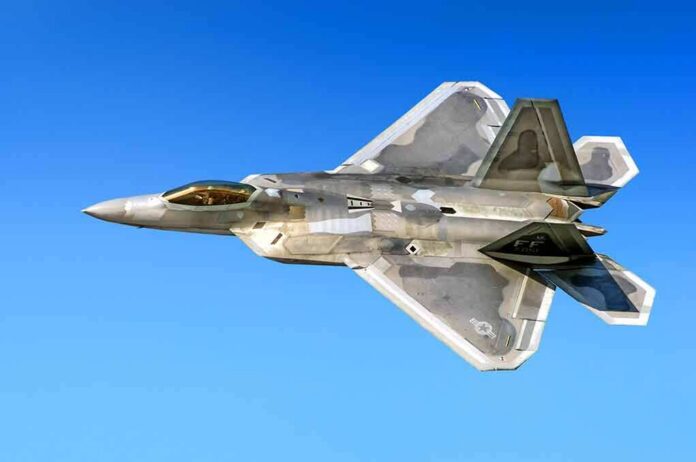
A $100-million-plus Marine stealth fighter ended up in pieces and on fire at Miramar—yet its pilot walked away alive.
Story Snapshot
- Marine Corps F-35B Lightning II crashed around 10 a.m. at Marine Corps Air Station Miramar near San Diego.
- The pilot ejected, was recovered on base, and taken to a local hospital in stable condition.
- The crash sparked a brush fire and left the advanced jet burned and broken near the runway.
- The Marine Corps labeled the event a “Class A mishap,” and a full investigation into the cause is underway.
Stealth fighter goes down on a clear morning at Miramar
A United States Marine Corps F-35B Lightning II crashed late Friday morning at Marine Corps Air Station Miramar, the sprawling base just north of San Diego that many still think of as “Fightertown USA.” Local and national outlets agree the jet went down around 10 a.m. Pacific time during flight operations on or near the main flight line, not in a remote test range or over open ocean. The jet was assigned to 3rd Marine Aircraft Wing’s Marine Aircraft Group 11, a front-line aviation unit based at Miramar.
Authorities on base quickly described the event as an “aircraft mishap” involving an F-35B, and they confirmed emergency crews rolled out almost immediately. Reporters and residents saw thick smoke rising from the air station, and helicopter footage soon showed charred ground, scorched brush, and what appeared to be the shattered remains of the fighter in a field off the runway. A fire on base followed the impact, but crews contained it before it spread toward nearby roads or buildings.
Pilot ejects and survives a Class A mishap
The most important fact, and the one the Marine Corps repeated fast, was that the pilot survived. A base spokesman said the pilot ejected from the F-35B and was transported to a local medical facility in stable condition for evaluation and treatment of non-life-threatening injuries. Marine officials later underscored this in an updated statement, saying the pilot was expected to live after ejecting and that doctors were treating the injuries as non-life-threatening.
Miramar public affairs also confirmed the crash met the service’s highest accident category. A Marine statement cited by national outlets called it a “Class A mishap” involving a Marine Corps F-35B in the vicinity of MCAS Miramar. That label normally means the aircraft was destroyed or damage topped a multimillion-dollar threshold. Common sense says that category fits what viewers saw: a fifth-generation stealth jet broken into major pieces, burned, and left in a blackened field.
Witness accounts, video, and what we still do not know
Local television crews spoke with people on or near the base who said they saw the pilot’s parachute and watched the ejection sequence as the jet skidded and its tail dropped too low. Live and recorded video showed fire crews surrounding the wreckage, spraying foam and water over scorched dirt as smoke poured into the air. Social media lit up with short clips and zoomed-in stills, which shaped the first hours of public reaction long before any deep technical details came out.
BREAKING | F-35 Fighter Jet Crashes at MCAS Miramar
A U.S. Marine Corps F-35B Lightning II crashed Friday morning at Marine Corps Air Station Miramar in San Diego, sparking a fire that sent heavy black smoke into the sky.
Military officials say the pilot safely ejected before… pic.twitter.com/GpWkASQN0r
— Citizen (@CitizenApp) August 1, 2026
On the hard facts, however, reporters and the Marine Corps drew a clear line. Every major outlet covering the crash noted that the cause was not yet known and remained under investigation. There is no public mishap board report, no released flight data, and no maintenance record in view yet. That means no one outside the investigation team can honestly say whether this was pilot error, mechanical failure, software trouble, or something else. For conservatives who care about accountability, that restraint matters more than hot takes.
High-tech jets, human pilots, and the cost of keeping an edge
This F-35B crash fits a pattern that has quietly repeated across modern military aviation. When a top-tier fighter goes down, the first official word is short: confirmation of a mishap, basic location, the aircraft type, and whether the pilot survived. Images of flames and wreckage fill the gap while investigators gather data. A “Class A mishap” label tells taxpayers the loss is serious, but it arrives long before a root-cause answer they can judge.
That tension is especially sharp with aircraft like the F-35B, a vertical-landing stealth jet that costs well over $100 million and sits at the heart of American air power. Supporters argue that pushing the edge of technology comes with risk, and serious accidents will happen even with strong training and maintenance. Skeptics ask why such expensive systems still see repeat mishaps and demand clearer answers on reliability, software, and oversight. Both impulses line up with common-sense conservative values: protect the nation, but do not write blank checks without transparency.
What to watch for as the investigation unfolds
For now, the Miramar crash story is simple and serious. A Marine Corps F-35B Lightning II crashed on or near the runway around 10 a.m. The pilot ejected, was recovered, and is in stable condition. The aircraft is effectively a total loss, the ground was left scorched, and the service labeled the event a Class A mishap. Everything beyond that—why it happened, whether procedures were followed, and what changes may result—will depend on a detailed report the public has not yet seen.
When that report emerges, it will test how well the military balances safety, secrecy, and stewardship of taxpayer money. If investigators find clear mechanical or design flaws and the service addresses them plainly, that builds trust. If the findings stay buried under vague language and redactions, it feeds doubt at a time when Americans already question big programs that seem too expensive and too protected from scrutiny. A cutting-edge jet burned on a clear morning in California; the real measure of the system is what we learn from it and how honestly those lessons are shared.
Sources:
foxnews.com, usatoday.com, cbs8.com, spectrumlocalnews.com, fox5sandiego.com, stripes.com, facebook.com, x.com
© fixthisnation.com 2026. All rights reserved.