A military base fire that kills and injures soldiers on home soil is rare enough that even a government built around disciplined, careful public communication will tell you plainly what it knows — and just as plainly what it does not yet know, because the machinery of casualty notification is slower, and more deliberate, than the news cycle surrounding it.
Key Points
- Defence Minister David McGuinty confirmed both fatalities and injuries from an incident that triggered a major fire at Canadian Forces Base Wainwright, Alberta, on October 17, 2026.
- The fire began on the base’s training range around 4 p.m. and spread beyond the boundary fence into the surrounding municipality, driven by high winds.
- The RCMP is investigating alongside the Canadian Armed Forces and the Department of National Defence; the cause of the fire, including whether weapons or ammunition were involved, has not been disclosed.
- No casualty count, names, ranks, or confirmation that every victim was military personnel has been released, consistent with standard next-of-kin notification procedure.
- The episode echoes a documented pattern in Canadian military-incident reporting, including the 1974 Valcartier grenade explosion, where early official statements were narrow and the full account emerged only after a formal inquiry.
What Happened at CFB Wainwright
On the afternoon of October 17, 2026, an incident on the training range at Canadian Forces Base Wainwright — roughly two hours east of Edmonton — set off a major fire. Minister McGuinty, speaking at a news conference in Ottawa, confirmed the core fact that matters most: “I’m saddened to share that there have been both fatalities and injuries as a result of an incident on the base”. That sentence, repeated across Canadian and international outlets, is the backbone of everything verified about the event. CTV News and others described it as an explosion and fire, though McGuinty’s own wording referred more cautiously to “an incident”.
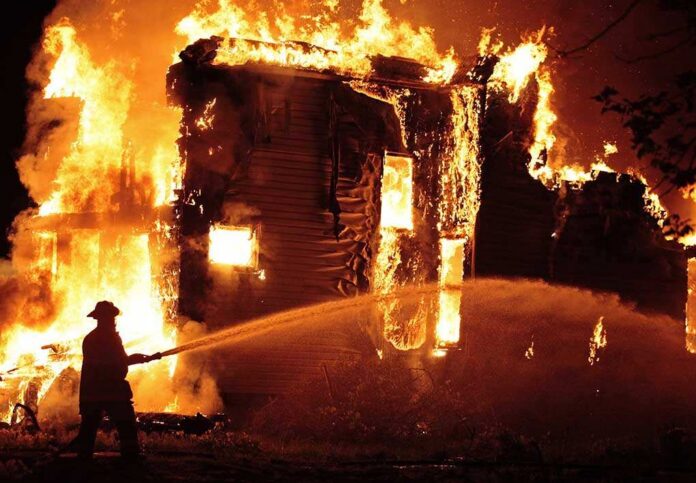
The Municipal District of Wainwright reported that the fire crossed the base’s perimeter fence and advanced rapidly because of high winds, prompting a multi-jurisdiction firefighting response south of Township Road 440. Local authorities had not issued an evacuation order as of the evening update but warned conditions could change quickly. The Wainwright Health Center asked the public to avoid the facility except for critical needs, a request consistent with a hospital managing an active influx of casualties rather than routine traffic.
Why the Government Confirmed Casualties but Not Numbers
McGuinty’s refusal to put a figure on the dead and injured is not evasion; it reflects how Canada’s military casualty reporting system is designed to work. Defence Administrative Orders and Directives require that a Casualty Report be filed “by the fastest possible means” to the Canadian Forces Integrated Command Centre, but that internal report is distinct from, and precedes, any public release. Names are withheld until families have been notified — a sequencing that exists specifically to prevent relatives from learning of a death through a news broadcast. That is why the minister could confirm the fact of fatalities while declining, repeatedly, to say how many, and why no official source had released ranks, units, or identities within the first day of coverage.
The same caution applied to the cause. McGuinty said officials were still working through what occurred and would not confirm whether weapons or ammunition were involved, describing the situation as “very, very active and delicate” while the fire was “still being monitored very closely.” That phrase describes operational conditions on the ground — firefighters, investigators, and medical teams still working the scene — not a finding about mechanism or scale. The RCMP’s formal involvement signals that this is being treated with the rigor of a criminal-capable investigation, not merely an accident report, regardless of what the eventual cause turns out to be.
A Pattern With Precedent
This sequence — a grave initial statement followed by a methodical, multi-week investigative process — has a direct Canadian antecedent. On July 30, 1974, a live grenade exploded during an ordnance safety course at a summer cadet camp at Canadian Forces Base Valcartier, killing six cadets and injuring dozens more. The Canadian Forces convened a Board of Inquiry, Quebec’s provincial police opened a parallel investigation, and a coroner’s inquest followed; the eventual finding attributed the tragedy to minor negligence distributed among several personnel and civilian employees. That case illustrates both how long full accountability can take to surface and how little the earliest public statements typically resemble the final technical record. It is a useful frame for Wainwright, not a prediction of its outcome — the cause, scale, and findings here remain to be established through the same kind of process.
Alberta MP Dane Lloyd was reported to have described “significant casualties” based on information he had received, a characterization offered before McGuinty’s formal confirmation and without an accompanying figure. That gap between an unofficial scale descriptor and a minister’s deliberately bounded public statement is itself a familiar feature of the first hours after any military mass-casualty event: informal accounts often outrun the official record, not because they are necessarily wrong, but because they are not bound by the same notification and verification protocols.
Developing Situation
Fatalities and injuries after explosion and fire at Canadian Forces Base Wainwright in Alberta 🇨🇦https://t.co/SmkB0RMA4j
— Franklin White Author (@FrankWAuthor) October 18, 2026
What Comes Next
Three things typically follow an incident of this kind, and Wainwright is likely to produce all three. First, a formal casualty accounting from the Department of National Defence once next-of-kin notification is complete — identifying how many died, how many were injured, and their service status. Second, a joint RCMP-DND investigative finding addressing the fire’s origin, including whether munitions, fuel, or equipment failure were involved, and whether the casualties resulted from the initial incident, the fire itself, or the emergency response. Third, likely scrutiny of range-safety protocols at CFB Wainwright, a large and active training facility, in the way the Valcartier case eventually produced scrutiny of ordnance-handling procedures. None of that changes what is already established: people died and were injured in a major fire at a Canadian military base, the base and surrounding municipality mounted an extensive emergency response, and the investigation into cause and scale is ongoing.
Sources:
thegatewaypundit.com, nationalobserver.com, cnn.com, canada.ca
© fixthisnation.com 2026. All rights reserved.