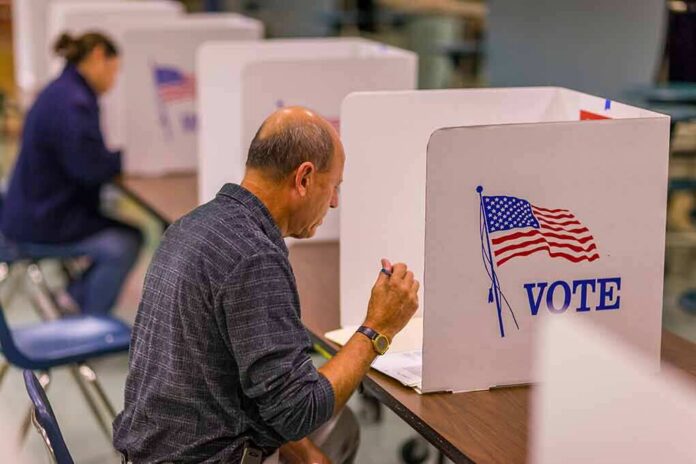
Ballot confusion is not an abstraction in modern elections; it is a tactic campaigns sometimes try to engineer, and Alaska’s “two Dan Sullivans” episode shows how the law, election design, and hardball strategy collide when a name on paper can distort voter intent.
The Short Version
- Reporting attributes a coordinated effort by Democratic operatives to recruit a second “Dan Sullivan” for Alaska’s Senate ballot, supported by interviews and described documents; the Peltola campaign and the DSCC deny involvement.
- Federal prosecutors intervened pre-certification, seeking to segregate ballots for the non-incumbent Sullivan to assess potential confusion; a federal judge later dismissed the DOJ suit.
- Same‑name candidacies occupy a gray zone: legal to appear if qualified, but ethically fraught when recruitment aims to mislead; courts generally police confusion via ballot design, not by banning qualified candidates.
- The open question is impact: how many voters, if any, were actually misled and whether the margin mattered; the record to date does not quantify that effect.
What actually happened: the allegation, the denials, and the legal posture
The core allegation is straightforward: Democratic operatives aligned with Mary Peltola’s Senate bid and national party strategists sought a namesake challenger—Daniel J. Sullivan—to appear alongside incumbent Senator Dan Sullivan on Alaska’s ballot. Coverage summarizing The New York Times’ investigation references a dozen sources and describes text messages and documents concerning recruitment, including involvement by campaign aides, lawyers, and DSCC personnel. The factual plausibility is not in dispute: Daniel J. Sullivan lawfully qualified for the ballot via Alaska’s top‑four primary, creating the real possibility of name‑driven confusion in a ranked‑choice environment.
Two institutions responded. First, the Department of Justice sought an injunction to delay certification if necessary and to segregate ballots ranking the non‑incumbent Sullivan so investigators could test whether voters meant to support the sitting senator. Second, the campaign and party organizations named in the reporting issued categorical denials. Peltola said she knew only of herself and the incumbent on the ballot and was “not interested in tricking voters,” while her campaign and the DSCC said they had no involvement with either Sullivan campaign; Daniel J. Sullivan likewise denied running at Democrats’ behest. A federal court then dismissed DOJ’s suit, limiting immediate federal remedies and underscoring that ballot qualification alone is not unlawful, even amid alleged strategic motives.
Mechanism: why same-name gambits can work in Alaska’s system
Alaska’s top‑four primary followed by ranked‑choice general election heightens the leverage of minor or late‑entering candidates. Under ranked-choice, early-round misinterpretation—confusing a namesake for an incumbent—can alter transfer patterns even if the spoiler candidate is eliminated later. Because Alaska lists candidate names without party primaries as sorting devices, ballot cues like “incumbent,” residence, or occupation become crucial to mitigate mistaken selections. Courts historically treat these issues as matters of ballot design and voter information rather than grounds to strike qualified candidates; they prefer additive clarifiers to exclusionary remedies.
That judicial instinct—fix confusion with clearer labels, not by policing motive—explains both the DOJ’s narrow request to segregate ballots and the court’s reluctance to recast election administration wholesale. States are given latitude to manage names, nicknames, and descriptive identifiers to reduce error, but federal law rarely compels disqualification simply because two lawful candidates share a name. As a result, any remedy typically aims at diagnosing confusion and clarifying ballots, not punishing political rough‑and‑tumble absent bribery or fraud.
Evidence and its limits: what is strong, what is missing
The public record has three strong planks. First, the reporting is detailed: it portrays multiple actors—campaign aides, counsel, DSCC officials—rather than a lone anonymous critic, and references texts and documents supporting the recruitment narrative. Second, the DOJ took the matter seriously enough to seek judicial relief pre‑certification, a high bar in the midst of an election. Third, Daniel J. Sullivan’s lawful presence on the ballot made the alleged scheme operational, not hypothetical; his candidacy advanced past the primary, and Alaska’s courts addressed eligibility disputes in a published order.
The record also has limits. The available reporting does not publish a full corpus of messages with metadata nor establish payments or inducements that would satisfy elements of a criminal offense; legal analysts have emphasized that ballot‑stacking without bribery or falsified documents is generally not chargeable election fraud. Denials from Peltola, the DSCC, and Daniel J. Sullivan create a live factual dispute; resolving it credibly would require authenticated communications, sworn testimony, and financial records if any inducement is alleged. Finally, the pivotal empirical variable—how many voters actually miscast their ballots due to confusion—remains unquantified in the public domain, and the court’s dismissal of DOJ’s suit constrains immediate discovery leverage.
The law’s long view: courts favor clarity over exclusion
American election law has grappled with same‑name confusion for decades. The typical remedy is to reduce ambiguity—allowing limited occupational or locational descriptors next to names—rather than to remove qualified candidates. Minnesota’s Foley v. Donovan approved measured descriptors where surname similarity risks confusion, reflecting a broader judicial preference for information over restriction. More recent ballot‑name cases similarly uphold state interests in clarity—fairness and simplicity—when evaluating what identifiers appear, not whether a candidate of the same name may run at all.
That posture aligns with the Alaska episode’s legal trajectory: eligibility was adjudicated within state processes, DOJ’s extraordinary federal ask was pared back by the court, and the center of gravity returned to election design and post‑election analysis rather than criminalization of tactical recruitment per se. Courts are wary of turning motive into a disqualifier; they police concrete deceptions—false filings, payments for sham candidacies—more readily than strategic opportunism executed through otherwise lawful entries on the ballot.
https://twitter.com/FloppingAces/status/2117772096168407456
What matters going forward: design, disclosure, and measurement
Three practical steps determine whether episodes like Alaska’s become cautionary tales or recurring features. First, ballot design: states should use unambiguous cues—incumbency markers, city of residence, or occupation within tight word limits—to reduce confusion without advantaging any contender. Courts have long affirmed such neutral clarity tools. Second, rapid disclosure: when credible allegations of engineered confusion surface, election officials can publish plain‑language voter guides and sample ballots explaining identical or similar names, minimizing error while avoiding partisan entanglement. Third, measurement: if litigation or audits proceed, ballot‑level data, voter affidavits, and statistically rigorous post‑election surveys can estimate miscast intent, informing any targeted remedies or future rulemaking.
Sources:
redstate.com, cnbc.com, abc7ny.com, adn.com, usnews.com, alaskapublic.org, us.cnn.com, nbcnews.com, supreme.justia.com
© fixthisnation.com 2026. All rights reserved.