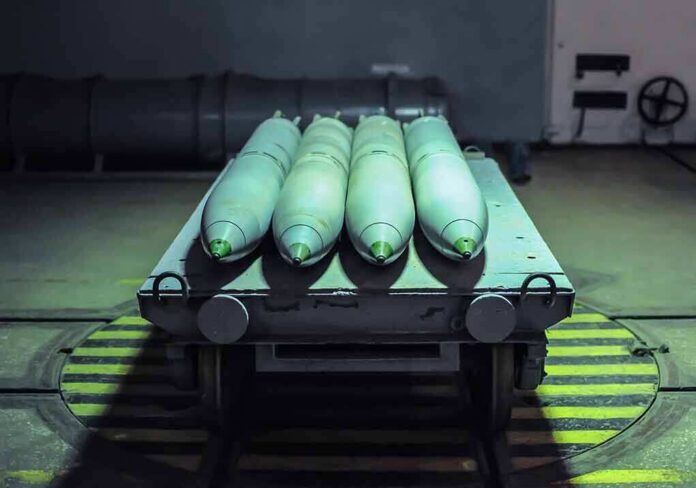
Emergency environmental law is built for ugly tradeoffs: sometimes the least-bad option is a controlled release of risk now to prevent a worse, uncontrolled event later; the Army’s plan to detonate deteriorating lead azide in Iowa sits squarely in that lane, with unusually detailed emergency authority on one side and unresolved questions about alternatives, plume toxics, and timing on the other.
The Short Version
- EPA issued an emergency hazardous-waste permit after determining degraded lead azide posed an “imminent and substantial” threat; the plan explicitly allowed in-place intentional detonation with tight operational conditions.
- A federal appellate administrative stay froze reliance on the permit; the government argued the Army could still proceed under separate emergency exclusions, a live legal dispute at the time.
- Controls included pre/during/post sampling, cleanup, public notifications, and a wind-speed limit; what remains public does not yet show post-action verification data or the full modeling basis.
- Environmental groups and Iowa health guidance warn of airborne lead and surface deposition, and cite chemical neutralization as a credible alternative; the record accessible to the public does not fully reveal the Army’s comparative analysis.
What was actually authorized, and why the legal architecture matters
The Environmental Protection Agency’s Region 7 granted an Emergency Hazardous Waste Management Facility Permit to the Iowa Army Ammunition Plant effective November 13, 2026. The permit classified the stockpile as both reactive and toxic for lead and rested on EPA’s determination that the degraded lead azide presented an imminent and substantial endangerment to human health or the environment—a threshold that unlocks emergency treatment tools under RCRA. Critically, the permit did not greenlight an unregulated blast; it authorized storage and treatment by in-place, intentional detonation at a location outside the facility’s standard RCRA permit, and layered on sampling, monitoring, notification, cleanup, and reporting obligations. EPA’s site profile ties the permit directly to the explosion hazard of the deteriorated material.
Those emergency mechanics turned consequential when the Eighth Circuit issued an administrative stay, pausing EPA’s permit as litigation moved on an accelerated timetable. The Department of Justice then told the court the Army could invoke independent emergency exclusions permitting treatment without a permit when there is an immediate threat to human health, public safety, property, or the environment. That emergency-authority theory is recognized in EPA’s rules but, at the time, had not been adjudicated in this dispute—hence the legal knife’s edge: permit stayed on one track, emergency exclusions asserted on another.
The operational picture: quantity, condition, and controls—and what’s missing
EPA identifies 68 drums of degraded lead azide at the Middletown installation, roughly five tons—a scale large enough that handling risk matters as much as detonation risk. Lead azide is a primary explosive used as a detonator; when it crystallizes or becomes contaminated, it can turn friction- and shock-sensitive, complicating any movement or recontainerization. EPA’s public materials describe operational constraints, including a surface-level wind-speed cap of 15 miles per hour and required air and surface sampling before, during, and after the action. They also require notice to potentially affected communities and post-event cleanup and reporting. What the public docket does not yet show are completed sampling results, dispersion measurements, or independent audits demonstrating whether the chosen controls achieved their protective aims—data that, if released, would move this argument from model to measurement.
Even with the emergency permit in hand, timing shifted repeatedly as the Army recalibrated to weather and to court actions. That fluidity is consistent with real-world ordnance operations—meteorology and material condition genuinely matter—but it also strained public trust and coordination, especially as officials discussed proceeding under emergency exclusions while the permit was stayed. The communications whipsaw became its own risk: communities prepare better when schedules and criteria are stable.
The core technical disagreement: detonation now versus neutralization or delay
Strip the rhetoric and the dispute reduces to a familiar emergency-management calculus: is a controlled detonation, with engineered controls and a weather window, safer overall than continued storage, movement for treatment, or on-site chemical neutralization given the drums’ condition and the time required to execute alternatives. EPA’s permit decision and government filings say yes, urging action to eliminate an explosion hazard they judged imminent and substantial. The opposing view—advanced by environmental groups and echoed in press accounts—argues that established sulfur-reduction neutralization technologies exist, that open-air detonation risks dispersing lead dust and potentially toxic gases such as hydrazoic acid, and that the Army did not adequately demonstrate why neutralization was infeasible at this scale and condition.
State public-health guidance lends weight to specific exposure pathways: a detonation can produce a dust plume with lead-containing particles that travel beyond the installation and settle on soil, structures, and play spaces. Inhalation and incidental ingestion are the obvious routes, and for lead, the toxicology is unforgiving—no safe level has been identified, with young children and pregnant women particularly vulnerable. That does not, by itself, prove detonation is the wrong choice; it underscores why the sampling plan, detection limits, and cleanup thresholds matter and why public communication must be crisp and practical when authorities ask residents to mitigate exposure.
How to judge the Army’s case on the evidence the public can actually see
On the merits of authority, the Army’s position is strong: EPA documented the emergency permit, specified treatment as in-place intentional detonation, and imposed operational and verification conditions. A federal emergency-permit framework exists precisely for unstable, time-sensitive hazards like degraded primary explosives. That is the backbone fact set, and it is not speculative. On the merits of urgency and optimal method, the public record is less complete. The permit and site profile validate the threat and the controls; they do not, in the versions released, expose the underlying inspection reports, stability testing, or a full alternatives analysis quantifying the relative accident probabilities and execution timelines for chemical neutralization or continued storage. The Army and DOJ say those analyses were done; litigants and residents say they have not seen enough to trust them. Both statements can be true at once.
The appellate stay sharpened that credibility gap. When a court pauses a permit, then the government signals it may proceed anyway under a separate emergency exclusion, communities understandably ask to see the engineering and health basis in detail—plume model assumptions, meteorology, exclusion zones, sampling grids, laboratory detection limits, and cleanup criteria. Until that technical substrate is visible, the dispute will be argued via competing risk narratives instead of shared numbers.
The U.S. Army's plan to conduct a controlled detonation of nearly five tons of lead azide at a military ammunition plant in Iowa has been moved to Wednesday.https://t.co/Q1MNTvEpEs
— World News Tonight (@ABCWorldNews) November 23, 2026
What would resolve the argument—and what to watch the next time this happens
Three disclosures would move this case from assertion to demonstration. First, the technical basis for the imminent-threat determination: drum-by-drum condition assessments, stability tests, and any evidence of crystallization, sensitization, or heat-generation that raised the explosion probability above background. Second, a documented alternatives analysis: for each option—detonation, on-site neutralization, repack and move, continued storage—quantify execution time, required handling steps, personnel exposure, credible failure modes, and offsite consequence modeling. Third, the measurement record: pre- and post-detonation sampling locations, chain-of-custody, lab results, detection limits, background baselines, and cleanup endpoints, with an independent technical review. Those are standard artifacts in hazardous-waste emergencies; producing them publicly, even in redacted form, is how agencies convert skepticism into informed consent.
Sources:
military.com, epa.gov, hhs.iowa.gov, apnews.com, response.epa.gov, desmoinesregister.com
© fixthisnation.com 2026. All rights reserved.