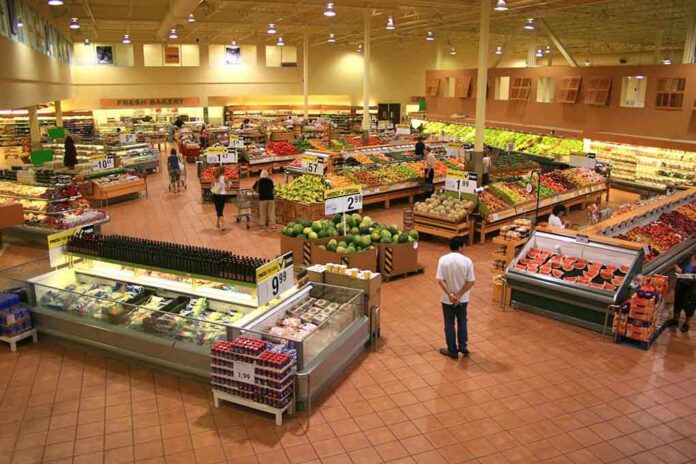
The promise of 30% cheaper groceries at city-backed stores rests on a simple arithmetic truth: if operators pay normal wholesale costs and run normal stores, that gap must be financed somewhere — and the city’s own materials and contemporaneous reporting indicate the “somewhere” is public subsidy for a defined core basket.
The Short Version
- The proposal is a public-option model: publicly supplied facilities, privately managed stores, and city-mandated discounts on a core basket.
- The 30% markdown is universal and recurring, set monthly against “typical retail” and covering all produce, meat, seafood, and key staples.
- Industry margins near 2% make a durable 30% retail discount arithmetically unsupportable without outside financing; reporting points to city “affordability” payments to cover core-basket deficits.
- The policy’s real tests are unit economics, auditability of the price benchmark, supplier contracts, and whether benefits outweigh competitive harm to thin-margin local grocers.
What the city has actually put on the table
Set aside the noise and start with the official architecture. City Hall announced that five municipal grocery stores will sell a “core basket” — all fresh produce, meat, seafood, and roughly twenty other essential categories — at prices 30% below typical retail. Prices for that core basket are fixed once a month, “no exceptions, no gimmicks,” and the discount applies to all shoppers, with no income screening. The first site is slated to open in a city-supplied location, and the operating model pairs public facilities with private managers; the reported capital budget across the initial five sites is approximately $70 million. The administration also estimates household savings around $90 per month from using the discounted basket. These are specific, on-the-record commitments, not campaign slogans.
Equally important is what is not specified in the official releases: no unit-economics breakdown, no supplier terms, no expected shrink (spoilage and theft) assumptions, no multiyear operating budget, and no disclosure of how “typical retail” will be measured and audited across neighborhoods, package sizes, and grades. Those omissions do not invalidate the concept, but they do define the feasibility questions that matter for taxpayers and for competitors.
The arithmetic that drives the debate
Modern supermarkets typically earn net margins on the order of 1% to 3%. That figure is not controversial in the trade literature or mainstream analysis. If the city requires private operators to sell large, high-volume categories 30% below prevailing retail, the implied shortfall overwhelms normal profits — by a factor of roughly fourteen if one uses a 2% margin as the comparator. You do not fill that chasm with operational tidiness; you need outside money. That is why the single strongest piece of counter-evidence is not rhetoric but procurement language and economist assessment pointing to operating-deficit support for the discounted core basket and the basic math of thin-margin retail.
In plain language: eliminating profit cannot deliver a 30% consumer price cut when profit is 2%. Unless wholesale prices are somehow 30% lower than private competitors’ costs — an outcome that would require extraordinary, disclosed supplier arrangements — the discount must be financed. Commentary sometimes calls that a “taxpayer checkout,” which is polemical but directionally consistent with the mechanism described in reporting about “affordability” payments to cover mandated markdowns on the core basket.
How the model is supposed to work — and where the pressure points are
The city’s approach is a public-option retail platform: use public capital to reduce fixed costs (build-out, rent, taxes), set affordability rules for a defined set of goods, and rely on private operators for merchandising, labor scheduling, shrink control, and day-to-day execution. Constraining the discount to a core basket while allowing other items to float at market prices gives operators a potential cross-subsidy and caps the public exposure to the highest-need categories. Universal eligibility simplifies administration and avoids stigma at checkout, but it spreads subsidies across all incomes and invites criticism on targeting efficiency. The $70 million capital outlay lowers hurdle rates but does not answer the recurring-cost question at the heart of a standing 30% markdown.
Four operational levers determine whether this can function without runaway subsidies. First, procurement: can operators lock in wholesale prices and volumes that materially undercut private chains without sacrificing quality or availability? Second, shrink: produce and meat are high-waste categories; even small increases in spoilage or theft quickly erase paper savings. Third, mix management: limiting the discount to a core basket helps, but if shoppers shift heavily into that basket, cross-subsidy from market-priced items may prove illusory. Fourth, throughput and location: five sites across a city of millions concentrates demand and travel costs; queues, stockouts, and political backlash from neighborhoods left out are not abstractions but design constraints.
Benchmarking “30% below typical retail” demands audit-grade clarity
The credibility of any price promise depends on the benchmark. “Typical retail” is a term of art that can hide more than it reveals if not made explicit: identical SKUs or functional equivalents, matched package sizes, quality grades, and a defined geographic sample, with a stated treatment of promotions and loyalty-only discounts. Without this, the 30% claim will float — and so will the budget exposure. A reproducible, third-party audited index monthly comparing identical UPCs across a preregistered basket and retailers is not a compliance luxury; it is the guardrail for both consumer trust and fiscal control.
Distributional trade-offs and competitive effects
Universal discounts are easy to use but hard to defend on equity grounds. When public dollars finance cheaper filet mignon for high earners as well as chicken thighs for food-insecure households, the distributional math invites challenge. The countervailing argument is pragmatic: simplicity drives adoption and lowers administrative friction, and the core basket is designed to concentrate value in healthier staples. Still, the presence of a publicly backed competitor — however framed — will be felt most acutely by bodegas and independent markets operating on razor-thin margins in the same trade areas, a concern documented by trade groups and local coalitions representing immigrant-owned businesses.
Zohran Mamdani Was Pressed on the Math Behind His City-Run Grocery Stores. It Did Not Go Well. https://t.co/hKBV5RY7Ga
— Arthur Rosenfield (@FutureThinkNYC) November 20, 2026
What would settle the economics — and earn public confidence
The plan’s core ambition is not incoherent; it is incomplete. To move from announcement to durable public service, the administration should publish, before opening doors, a five-year, store-level pro forma: revenue by category, expected gross margins, labor, utilities, shrink, security, distribution, depreciation, and the formula for any “affordability” payments tied to the core basket. Alongside, release executed supplier agreements or at least the bid terms demonstrating volume-price feasibility; detail the benchmark methodology for “typical retail” and commit to an independent monthly audit; and pre-register an evaluation design that measures realized household savings, travel costs, stockouts, and small-business spillovers across the surrounding retail ecosystem. These are standard instruments for capital programs of this size and would discipline both advocates’ claims and critics’ forecasts.
Bottom line
On the facts we have, two statements can be held simultaneously. First, the city’s proposal clearly defines what will be cheaper, by how much, how often prices will be set, and that eligibility is universal — and it has a concrete implementation pathway using public sites and private operators. Second, the weight of industry economics and reported procurement language indicates the 30% markdown cannot be financed through ordinary operations; the difference will be covered by the city for the core basket, whether labeled subsidies or “affordability” payments. The public-policy question, then, is not whether arithmetic applies, but whether the public benefits — lower prices on healthy staples, improved access where private markets underperform — justify the costs and competitive disruptions that arithmetic implies.
Sources:
southshorepress.com, sacbee.com, fortune.com, nyc.gov, zot.news, 6sqft.com
© fixthisnation.com 2026. All rights reserved.