When political talk shows collapse complex foreign-policy debates into a single loyalty test, the silence that follows can be weaponized more effectively than any answer—and that dynamic, not a hidden allegiance, is what the evidence in this case actually establishes.
At a Glance
- The on-air exchange documented a candidate’s refusal to answer a “pro-Hamas” question after multiple direct prompts; it did not prove support for Hamas.
- The question blurred categories—Hamas’s leadership, the October 7 attacks, and broader stances on Israel/Palestine—without pinning down a single proposition.
- The candidate’s stated platform centers on sanctions against Israel and an equal-rights framework, positions frequently recast as a Hamas test in polarized media.
- This episode exemplifies a recurring interview pattern: compress a complex policy agenda into a moral binary, then treat a non-answer as confession.
What the interview undeniably established—and what it did not
The broadcast record is straightforward on the narrow point: Martha MacCallum asked Ahmed Moor several times whether he is “pro-Hamas” and specifically whether he is “pro-Hamas leadership in Gaza,” linking the question to the October 7 attacks and civilian deaths. Moor declined to answer directly, calling the prompt a “bad-faith question.” That refusal persisted despite repeated invitations to affirm or deny, and it allowed the host—and subsequent headlines—to frame the moment as a conspicuous omission.
What the footage does not supply is the conclusion some readers infer from the clip. Nowhere in the exchange does Moor endorse Hamas or condone the October 7 attacks. The tape gives you non-answering—no more, no less. The distinction matters because “pro-Hamas” can denote at least three different claims (support for Hamas’s political leadership, support for its military actions, or alignment with broader Palestinian rights activists who oppose Israeli policy); the segment toggled among those referents without anchoring a precise proposition. A non-answer to a shifting label remains a non-answer, not evidence of the strongest, most damaging interpretation.
How positions on Israel and Palestine get compressed into a single label
Moor’s public platform, as reported across several outlets, centers on ending U.S. military aid to Israel, imposing comprehensive sanctions modeled on anti-apartheid South Africa, and pursuing a single democratic polity with equal rights for all residents between the river and the sea. He describes Israeli governance as apartheid and argues the United States is implicated through funding and protection; he also states that he supports equal rights for both Palestinians and Israelis. In one interview, when pressed to categorize Hamas militants as war criminals, he responded with a general rule—anyone who commits war crimes is a war criminal—rather than staking out a Hamas-specific condemnation.
Those policy stances are controversial and place Moor at odds with a bipartisan Washington consensus on security cooperation with Israel. But controversy and categorical alignment with Hamas are different claims. The pattern visible in this coverage is what media scholars call framing by label substitution: positions about sanctions, aid, or a one-state rights framework are recast as a test of whether a politician is “pro-Hamas,” and the refusal to play on those terms is then offered as proof of guilt. That mechanism—rather than new facts about Moor’s actual ties or sympathies—drives the viral afterlife of the clip.
Mechanism of the interview “gotcha”: why the binary works on television
Television interviews reward moral clarity delivered in seconds. A host can define the stakes by invoking a searing event (the October 7 massacres) and then demand a binary answer to a capacious label. If the guest accepts the frame, the label follows them; if the guest rejects the premise and pivots to policy, the refusal itself becomes the story. This is not unique to this conflict, but the emotional charge of October 7—reiterated on-air and in prior segments—intensifies the effect: viewers already primed to see the attack as a moral bright line will treat any hesitation as disqualifying, even when the hesitation is about the label’s coherence rather than the morality of killing civilians.
That format stacks the deck. It erases distinctions between condemning terrorism, opposing a state’s policies, and debating U.S. arms transfers; it also relocates the burden of proof. Instead of presenting evidence that a candidate is “very pro-Hamas,” the interviewer asks the candidate to disprove a category that was not carefully defined in the first place. When the guest declines to stipulate, the absence is treated as presence. The clip does the rest.
The evidentiary ledger: what’s in the public record
On the affirmative side: MacCallum did, in fact, ask Moor multiple unambiguous questions about whether he supported Hamas, including Hamas leadership in Gaza, while invoking the October 7 deaths; Moor declined to answer and called the question bad faith. On the countervailing side: Moor’s documented positions emphasize equal rights, sanctions, and ending U.S. military aid; secondary reporting attributes to his campaign a rejection of the “pro-Hamas” label and a condemnation of violence against civilians. None of the materials surveyed provides an explicit endorsement of Hamas or documentary ties to Hamas-linked entities.
Two implications follow. First, the strongest claim the clip supports is about media performance and candidate strategy, not about hidden allegiance: Moor chose not to answer a fraught label on a hostile set, and that choice carried political costs. Second, transforming that silence into proof of support requires additional evidence—financial links, organizational affiliation, explicit statements—which the available record does not furnish.
Why the distinction matters for voters and campaigns
Voters deserve clarity on two separable questions: where a candidate stands on the deliberate targeting of civilians and hostage-taking, and where a candidate stands on U.S. policy toward Israel and Palestinians—aid, sanctions, and end-state visions. Candidates can answer the first with direct moral language unentangled from policy critique; they can answer the second with detailed prescriptions. Conflating the two—on air or on the stump—obscures both moral accountability and policy competence. For campaigns, the lesson is tactical: if you intend to keep the conversation on policy, preempt the loyalty test. State the bright-line moral position in your own words, then turn to the policy case; do not let a capacious label become the only noun in the room.
For viewers, the discipline is interpretive. Ask whether a clip shows new facts or simply a successful imposition of a frame. If it is the latter, the silence you are seeing may be strategic, poorly judged, or both—but it is not, by itself, a confession. The costs of getting this wrong are not abstract. In hyperpolarized environments, reputational shortcuts metastasize into legislation, blacklists, and chilled debate. Precision about what the evidence actually shows is the antidote.
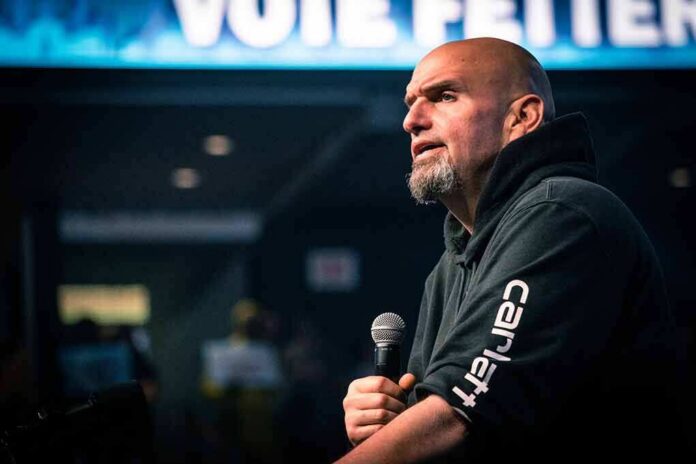
🎥 Fox News anchor Martha MacCallum opened her interview with Ahmed Moor, a Palestinian American Democratic socialist challenging Sen. John Fetterman (D-Pa.) in the 2028 primary, by asking whether he's "very pro-Hamas." She then pressed him on it twice more. Moor, who was born in…
— Drop Site (@DropSiteNews) November 17, 2026
How to read the next viral confrontation on this topic
Apply four filters. First, definition: what, exactly, does the label require the guest to endorse or reject—leadership, tactics, ideology, or something else. Second, evidence: does the segment present independent proof of alignment, or merely insist that the guest disprove it. Third, separation: can the guest condemn attacks on civilians and separately defend a contentious policy agenda without the two being collapsed. Fourth, reciprocity: would you accept the same standard if the labels were reversed or applied to a cause you support. Those questions do not settle the underlying disputes over Israel-Palestine policy, but they do keep viral moments from substituting for argument.
Sources:
mediaite.com, foxnews.com, realclearpolitics.com, jta.org, vinnews.com
© fixthisnation.com 2026. All rights reserved.