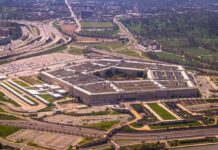
When a combatant commander flies to the White House to brief the President on strike options, Washington has moved from rhetoric to real planning; it signals contingency plans are not just on paper but positioned for decision.
The Short Version
- CENTCOM commander Adm. Brad Cooper briefed President Trump at the White House on military options for Iran, alongside Defense Secretary Pete Hegseth and Joint Chiefs Chairman Gen. Dan Caine.
- Reporting points to concrete operational topics: the ongoing naval blockade, target sets in Iran, and preparations for a short, intense campaign if ordered.
- Officials discussed potential timing and categories of targets, including infrastructure and nuclear-related sites, while diplomacy continued in parallel.
- No final decision was reported at the time; the process reflected active planning and signaling rather than a publicly announced execute order.
What Happened: A Rare In-Person Briefing With Operational Substance
President Trump received an in-person briefing at the White House from Adm. Brad Cooper, the commander overseeing U.S. forces in the Middle East, focused on military options concerning Iran. Defense Secretary Pete Hegseth and Joint Chiefs Chairman Gen. Dan Caine joined the session—an alignment of principals that underscores the gravity and specificity of the discussion. Multiple outlets described a menu of options that moved beyond generic posturing into concrete operational planning, including management of the naval blockade and scenarios for major combat operations if ordered. The reporting tracks with a standard decision cycle: present feasible, acceptable, and suitable options; clarify objectives and risks; and ensure forces and logistics are positioned to execute on short notice.
Several accounts added potential timing and target categories to the picture. U.S. officials warned Gulf partners to prepare for a short, intense campaign, with potential focus on infrastructure and nuclear-associated sites; discussion of post-election timing appeared in coverage summarizing those warnings. Such specificity is characteristic of mature contingency planning: target systems are grouped into campaign effects (degrading missile and drone arsenals, shaping air defenses, striking command-and-control), and sequencing is mapped to compress timelines and complicate adversary response.
How Washington Makes These Decisions: The Mechanics Behind the Brief
Senior-level option briefs follow a well-worn playbook. The combatant command authors military plans that translate policy aims into operational objectives—what to hit, in what order, with what forces—and frames risks, branches, and sequels. The Chairman of the Joint Chiefs validates feasibility and joint integration; the Secretary of Defense vets legal authorities, readiness, and alliance posture; the National Security Council coordinates interagency equities. When a President hears directly from a regional commander at the White House, it typically means the plan’s details—force packages, target sets, assessments of Iranian responses—are ready for presidential guidance.
The War Powers framework shapes, but does not freeze, this process. Presidents maintain Article II authority for limited uses of force in defense of U.S. interests, while the War Powers Resolution requires consultation and notification when introducing forces into hostilities, with time-limited operations absent explicit congressional authorization. The U.S.–Iran file has repeatedly operated in this legal space: active planning and signaling alongside diplomacy, with consultation obligations triggered if hostilities are reintroduced or expanded.
Why Iran Planning Often Walks in Parallel Tracks: Deterrence and Diplomacy
The reported mix—preparing intense, time-bound military options while pursuing negotiations—fits a four-decade pattern with Iran. The United States has leveraged visible readiness and precision strike capacity to deter or punish Iranian aggression while seeking diplomatic outcomes that cap escalation risks. Analysts of U.S.–Iran dynamics emphasize that both sides tend to calibrate actions around thresholds that avoid open-ended war, but the gray zone between limited strikes and broader conflict is perilous; misperception and compressed decision timelines can cause rapid escalation.
Experience since the mid-2020s reinforced two lessons. First, limited, high-tempo campaigns can achieve operational effects faster than many predicted, disrupting air defenses, missile networks, or maritime threats without immediately triggering region-wide war. Second, coercive episodes do not erase Iran’s capacity for adaptation; its missile and drone production, proxy networks, and cyber capabilities can regenerate and diversify, requiring sustained pressure or complementary diplomacy to lock in gains. The dual-track approach—force and negotiation—recognizes both realities.
The Options Likely on the Table: Target Systems, Timelines, and Risks
Although deliberations remain classified, the reporting allows a disciplined inference about the contours of the briefed options. A short-duration campaign against Iranian infrastructure and nuclear-related sites would likely be paired with strikes on enabling systems: integrated air defenses, command nodes, ballistic and cruise missile launch complexes, UAV production and storage, and key logistics hubs. Maritime components would reinforce the naval blockade, protect shipping, and interdict threats to the Strait of Hormuz. Time-compressed execution—measured in days, not weeks—aims to gain operational surprise, limit Iranian decision cycles, and minimize exposure of forward bases.
The risk ledger is equally clear. Iran’s horizontal escalation playbook targets oil infrastructure, regional partners, and U.S. facilities through proxies; even a short U.S. campaign must posture air and missile defenses regionally and coordinate with Gulf partners to protect energy nodes and critical infrastructure. Economic ripple effects—especially energy price shocks—are inherent in any Hormuz-adjacent confrontation. That is why allied warnings and partner coordination, as reporting suggests, often precede or accompany consideration of major options.
#BreakingNews :President Donald Trump met with his national security team Thursday to discuss whether to resume military operations against Iran, senior officials confirmed to Fox News.
— Mohammad Danish (@MohDanish5) November 6, 2026
Where the Decision Space Stood: Active Planning, No Public Execute Order
The accounts concur on one limiting fact: at the time of the meeting, President Trump had not made a final decision to resume major combat operations. That caveat is not hesitation; it is the normal state of play in serious contingency planning. The system primes forces, briefs the Commander in Chief, and clarifies thresholds—triggers, off-ramps, and conditions under which options are executed or held. Reports of continued diplomatic engagement alongside readiness measures underscore that the administration kept both levers within reach.
What It Means Going Forward: Decision Discipline and Strategic Signaling
For readers tracking the signal in the noise, the presence of CENTCOM’s commander, the defense secretary, and the chairman at a White House options brief is the meaningful indicator. It confirms that military planning for Iran is both active and sufficiently refined to support near-term presidential choice. It also communicates resolve to allies and adversaries alike: Washington is prepared to act quickly if conditions warrant, and it is shaping the battlespace—operationally and diplomatically—to constrain escalation. In U.S.–Iran crises, that combination is not a curiosity; it is the core of how deterrence is built and how conflict, when it comes, is kept from spiraling.
Sources:
facebook.com, timesofisrael.com, timesofindia.indiatimes.com, yahoo.com, washingtoninstitute.org, congress.gov, greenwichtime.com, newarab.com
© fixthisnation.com 2026. All rights reserved.