Florida’s decision to evict automated license-plate readers from state highway land is less a skirmish over one brand of camera than a line in the sand about scale: when investigative tools become ambient infrastructure, the privacy calculus changes — and the state chose to reset it.
At a Glance
- Florida’s transportation department revoked permits for automated license-plate readers (ALPRs) on state highway rights-of-way and ordered removal within 30 days, halting new approvals on those corridors.
- The action targets where these systems may sit — state-controlled land — not whether localities can use ALPRs elsewhere.
- Law-enforcement leaders argue ALPRs deliver arrests and leads; civil-liberties advocates warn scaled networks enable mass movement tracking.
- Research finds ALPRs’ benefits hinge on deployment volume and policy guardrails; as density rises, the risk of “function creep” and retroactive movement reconstruction grows.
What Florida Actually Did: The Permitting Lever, Pulled Hard
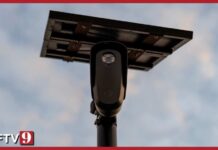
On August 31, 2026, the Florida Department of Transportation (FDOT) issued a memorandum revoking existing general-use permits for fixed ALPR installations — widely identified with Flock Safety cameras — within the right-of-way of the State Highway System. Agencies were given 30 days to remove the hardware; remaining devices would be taken down by FDOT, and new approvals for this use on state rights-of-way were suspended. This is a property and permitting decision: it governs state-controlled land flanking interstates, U.S. highways, and state roads, not the legality of ALPRs per se across Florida. Multiple outlets published the core terms of the memo and the timeline for removal, which local agencies immediately began to follow.
Governor Ron DeSantis publicly framed the move as a pushback against a “digital surveillance state,” pressing questions about who holds the data, how long it is retained, and what oversight exists over vendors and cross-agency sharing. The memo’s stated rationale cited a rapid proliferation of roadway deployments and “concerning reports of misuse,” a signal that the state assessed not just the device function but the consequences of network scale and behavior around it.
How ALPRs Work — And Why Scale Is the Crux
Automated license-plate readers are purpose-built cameras with optical character recognition tuned to capture plates in motion and convert them to machine-searchable strings. Two primary modes exist: “hotlist alerting,” when a scanned plate matches a wanted or stolen vehicle list, and “retrospective querying,” when investigators search historical scans for leads tied to a time, place, or pattern. Strictly speaking, a plate string identifies a vehicle, not a person, though linkage to registered owners or frequent-drivers is often only a database join away. The operational and privacy stakes are therefore not in a single capture, but in aggregation: throughput, retention, sharing, and secondary analysis determine whether a tool functions as a targeted alerting system or as a de facto movement history of millions of drivers.
Empirical reviews of ALPR effectiveness are mixed because outcomes turn on deployment density, use case, and policy. The National Institute of Justice (NIJ) has summarized that impacts depend on the volume and manner of deployment (mobile versus fixed), how data are accessed and saved, and how officers actually apply the system. Some studies show limited deterrent effects from visible patrol use; others document investigative value from large fixed networks in complex cases. These are not contradictions so much as boundary conditions: ALPRs help find the needle when a jurisdiction builds a big enough haystack, but that same haystack is precisely what inflames civil-liberties risk as data age and interconnect.
The Case for Removal on State Corridors
Florida’s highway network is uniquely leveraged infrastructure: high traffic yields maximum scan volume, and state rights-of-way offer standardized, long-line placement that converts discrete cameras into a mesh. FDOT’s permit revocation rests on two arguments. First, that saturation had accelerated — an “exponential increase” — beyond the state’s tolerance for unsolicited surveillance capacity on its land. Second, that misuse incidents and weak oversight norms around retention and data sharing had made vendor and agency assurances insufficient. The removal order’s 30-day fuse signals the state saw network density and governance gaps as present-tense risks, not theoretical ones.
President Trump’s administration has elevated debates over AI-enabled surveillance nationally, but the Florida turn is administrative, not rhetorical: control of the right-of-way is a blunt but lawful tool. By collapsing permits, the state dismantled the highest-throughput segments of ALPR infrastructure without adjudicating broader legality in municipalities or private property. Put differently: Florida didn’t outlaw license-plate readers; it evicted them from the shoulder where their impact — and risk — compound the fastest.
Law Enforcement’s Rebuttal: Guardrails, Not a Bulldozer
Florida sheriffs and police departments emphasize tangible casework: alerts that recover stolen vehicles, locate missing persons, and flag wanted suspects; retrospective searches that surface investigative leads. Volusia County Sheriff Mike Chitwood credited the systems with catching “murderers, burglars, and child predators,” alongside recent robbery cases, and criticized a blanket prohibition as “throwing the baby out with the bathwater.” Brevard County Sheriff Wayne Ivey endorsed a pause paired with “effective guardrails” — policy limits on access, retention, and sharing, rather than removal — a position echoed by agencies that stress administrative approval for data access and non-use for general population tracking. This is the crux of the counterargument: fix the rules, not the hardware footprint.
Their stance aligns with mainstream policing literature, which calls for documented use policies, audit trails, and finite retention. It also leans on a legal baseline: photographing plates visible from public roads generally does not require a warrant; constitutional concern intensifies when aggregated data facilitate long-term movement reconstruction across a city or region. The more a system collapses time and space into a searchable travel diary, the stronger the privacy claim — and the more persuasive the case for legislative, not just procedural, controls.
Where the Evidence Lands: Why Florida’s Scalpel Was the Right-of-Way
We should separate three questions that often get conflated. Do ALPRs help solve crimes? In many jurisdictions, yes — particularly when they can query large, clean datasets or receive timely hotlist hits. Does effectiveness increase with coverage and retention? Also yes, which is precisely what triggers civil-liberties escalation as datasets grow. Can policy guardrails mitigate the risk? To a point: strict retention, narrow sharing, independent audits, and transparent governance reduce abuse but do not neutralize the structural risk posed by dense, permanent, state-sited networks on the highest-volume roads.
Florida’s move reflects that tradeoff. By using property control rather than criminal law, FDOT curtailed the most potent nodes of a surveillance mesh while leaving room for narrower deployments elsewhere — for example, mobile units, case-specific placements, or cameras on local property under tighter policy regimes. Agencies lose some speed and serendipity; the public regains a margin of movement privacy on corridors that touch nearly every resident’s life. That redistribution of risk and capability is a policy choice, not a technological verdict, and it is defensible on the record the state assembled about growth and misuse.
LORIDA DOT REVOKES FLOCK CAMERA PERMITS ON STATE HIGHWAYS AMID MISUSE REPORTS AND PRIVACY CONCERNS
The Florida Department of Transportation has revoked all permits for automatic license plate readers (ALPRs) on state highway rights-of-way, citing an increase in reports of misuse… https://t.co/ZgAgMBxL1U pic.twitter.com/qOItfXiLrB
— THE WORLD CORRESPONDENT (@TheWorldCorresp) September 1, 2026
What Comes Next: Building a Durable Framework
Florida’s legislature now faces the hard part: writing rules that scale. If the state wants narrowly tailored ALPR benefits without rebuilding a mass-capture lattice on its highways, a durable framework would include: explicit siting limits tied to density and field of view; short retention for non-hit scans (measured in days, not months), with immutable logs and external audits; mandatory disclosure of vendor architectures and all data-sharing integrations; bright-line prohibitions on non-criminal tracking and secondary uses; and a warrant standard for retrospective queries beyond a brief buffer. Those guardrails track with recommendations from nonpartisan legal and policy research and would clarify when, where, and how ALPRs can operate without drifting into general-population surveillance.
Sources:
zerohedge.com, gadgetreview.com, cbs12.com, wesh.com, news-journalonline.com, x.com, gizmodo.com, wusf.org, floridatoday.com, wuft.org, tampabay.com, clickorlando.com, flocksafety.com, sheriff-okaloosa.org, wfla.com, gulfcoastnewsnow.com
© fixthisnation.com 2026. All rights reserved.