Pretrial publicity is a chronic hazard in high-profile prosecutions; the law treats it as a real threat to fairness, but it almost never justifies the most extreme sanctions. The Robinson–Kirk case is a textbook demonstration of that equilibrium: a judge punished a prosecutor for violating a gag order and fortified jury-selection safeguards, yet kept the death penalty and the case itself on track.
The Short Version
- Utah Judge Tony Graf held a prosecutor in civil contempt for violating a pretrial publicity order, finding a substantial risk of prejudice, and then tightened jury-selection protections.
- The court rejected the defense’s request to remove capital punishment as a remedy, calling that sanction disproportionate; the death penalty remains available if the prosecution prevails.
- At bindover, the judge found probable cause and ordered Tyler Robinson to stand trial in the killing of Charlie Kirk; prosecutors describe the evidence as “overwhelming.”
- This outcome aligns with the judiciary’s usual response to publicity problems: enforce gag orders, manage the venire, and proceed—reserving drastic remedies for the rare case of pervasive, inflammatory saturation.
What the court actually did—and why it matters
The rulings in this case are not contradictory; they are calibrated. Judge Graf found that a prosecutor’s media comments violated his pretrial publicity order and constituted civil contempt—because such extrajudicial statements pose a substantial likelihood of materially prejudicing the proceedings. He then imposed remedial measures designed to protect Robinson’s fair-trial rights: expanding voir dire and jury-selection safeguards to screen for bias. But when the defense asked the court to strike the death penalty as a sanction, Graf declined, deeming that remedy grossly disproportionate to the violation and leaving capital punishment available if the state proves its case.
This pairing—sanction plus tailored protections, without gutting the prosecution’s charging posture—is precisely how American trial courts have long managed publicity risk. The aim is prophylaxis, not punishment for its own sake. A fair trial requires an impartial jury; it does not require the absence of pretrial noise. The court’s role is to filter that noise out of the box, not to make it disappear from the world.
How courts handle prejudicial publicity as a rule
From the Supreme Court on down, appellate courts have recognized that intense, negative pretrial publicity can compromise impartiality, but they presume prejudice only in unusual circumstances—where coverage is so pervasive and inflammatory that it corrodes the adjudicative environment. The default toolkit is narrower and practical: rigorous voir dire, changes of venue where justified, continuances to let passions cool, sequestration in rare cases, and enforcement of gag orders when lawyers or officials edge into advocacy outside the courtroom. Empirical work supports this calibration: pretrial publicity exerts small but statistically significant effects on juror judgments, with stronger impacts when content is repeated and negative—enough to warrant management, not enough to justify routine case-ending sanctions.
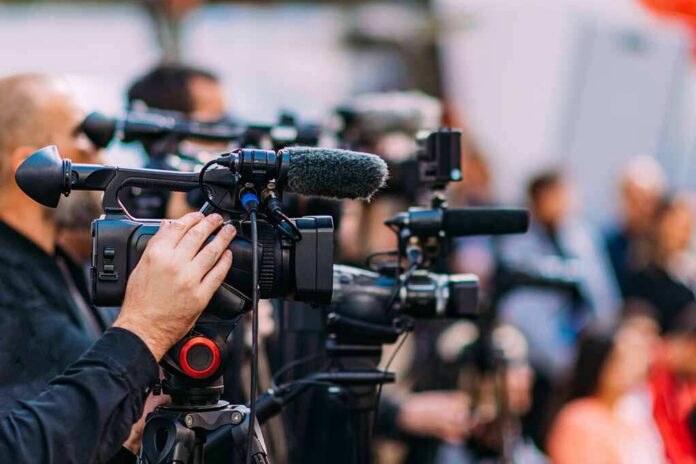
Gag orders exist to restrain the parties, not the press. When a prosecutor or defense lawyer speaks in a way that can taint a jury pool, contempt is a predictable response; it signals boundary enforcement without collapsing the prosecution. That is exactly what happened here, and it signals to lawyers on both sides that the court will guard the jury’s neutrality aggressively, while still moving the case forward.
The defense’s theory versus the remedy the judge chose
Defense counsel argued that prosecutors’ statements to media outlets violated the court’s order and prejudiced the venire, asking the court to remove the death penalty as a corrective. Graf accepted the premise—there was a violation with a real risk of prejudice—but rejected the proposed cure. Instead, he opted for measures that target the risk at its source: potential juror bias. By enhancing voir dire and other screening procedures, the court can identify and excuse would-be jurors whose views have been shaped by extrajudicial commentary, preserving the defendant’s Sixth Amendment rights without altering the statutory penalties that attach if the state proves an aggravated murder.
Judicial proportionality is not abstract here; it is doctrine and habit. Eliminating capital eligibility would go well beyond neutralizing publicity effects and into rebalancing the parties’ leverage. Courts reserve such drastic steps for governmental conduct that either renders a fair trial unattainable or amounts to structural due-process harm. A contempt finding coupled with targeted safeguards reflects that this record did not cross that threshold.
Why the case is still heading to trial
After a multi-day preliminary hearing, Judge Graf bound the case over: he found probable cause and ordered Robinson to stand trial. Prosecutors had urged exactly that outcome, asserting that the evidentiary record easily met not only probable cause but would be sufficient to persuade a jury beyond a reasonable doubt—a litigating posture that signals confidence in both the merits and the aggravating-factor theory required for capital eligibility. A bindover ruling is not a verdict; it is a threshold determination that the case belongs before a jury. But in a capital-eligible prosecution, it also confirms that the aggravation theory is at least legally cognizable at this stage.
Prosecutors have also argued that firing into a large crowd presents the “great risk of death” aggravator—an issue likely to be contested at trial if the case reaches a penalty phase. For now, the court’s posture is procedural, not predictive: it keeps the statutory framework intact so the jury can decide facts under robust instructions if the case gets that far.
UPDATE: Judge Tony Graf has ruled that all 7 counts against Tyler Robinson will be bound over for trial.
The seven counts are:
Aggravated Murder — Capital Felony
Felony Discharge of a Firearm Causing Serious Bodily Injury — 1st Degree Felony
Obstruction of Justice — 2nd…
— Brandi Siciliani (@brandisiciliani) September 2, 2026
What to watch next: venue, voir dire, and the record
The next inflection points are practical. First, voir dire: expect detailed juror questionnaires probing exposure to coverage, recall of specific claims, and strength of opinions formed. Second, potential venue adjustment or expanded strike capacity if the data show concentrated bias in the local pool. Third, the written contempt order and any subsequent filings could sharpen the boundaries of permissible party speech going forward—useful both for this case and as guidance in other high-salience prosecutions. Each of these moves keeps the Sixth Amendment at the center without upending the prosecution’s charge or penalty options.
Bottom line: firm guardrails, intact adjudication
The court’s dual message is clear. To the lawyers: stay inside the lines—speak through pleadings and in court, not to tilt the playing field through the press—or face sanctions. To the public and the parties: this case will be tried on admissible evidence before an impartial jury, not decided by commentary. That is how the system is designed to absorb the pressures of notoriety without sacrificing either fairness or accountability. In the Robinson–Kirk matter, the guardrails just got higher. The road to trial remains open.
Sources:
redstate.com, npr.org, usatoday.com, cnn.com, cbc.ca, foxnews.com
© fixthisnation.com 2026. All rights reserved.