The National Medal of Science and the National Medal of Technology and Innovation were built, by statute and executive order, to sit above the reach of ordinary political patronage — nominated by peers, vetted by standing committees, and signed off by a president only at the end of a process designed to insulate merit from favor. What happened at the White House’s “Science: A New Golden Age” Summit tests that design in a way no ceremony has before: every one of the six honorees had also, in some documented form, put money behind the man presenting the medal.
Key Points
- President Trump awarded the National Medal of Science to Elon Musk, Sergey Brin, Jensen Huang, and Lisa Su, and the National Medal of Technology and Innovation to Satya Nadella and Michael Dell, at an October 2026 White House summit.
- The White House framed the honors as recognition of “exemplary achievement and leadership in science and technology,” consistent with the medals’ founding purpose.
- Multiple outlets — CNBC, Reuters, The Hill, and a New Republic analysis — independently documented that all six recipients or their companies had financially supported Trump’s campaigns, inauguration, or affiliated initiatives, with figures ranging from hundreds of thousands of dollars to Musk’s reported $290 million-plus.
- Both the National Medal of Science and the Medal of Technology and Innovation run through nomination committees before reaching the president, raising the real question of how much presidential discretion shaped this particular slate.
- The recipients’ underlying achievements — in semiconductors, search, cloud computing, and aerospace — are genuine and well established, even as the donor pattern invites scrutiny of why these particular six, and not others, were chosen this year.
What Happened at the Summit
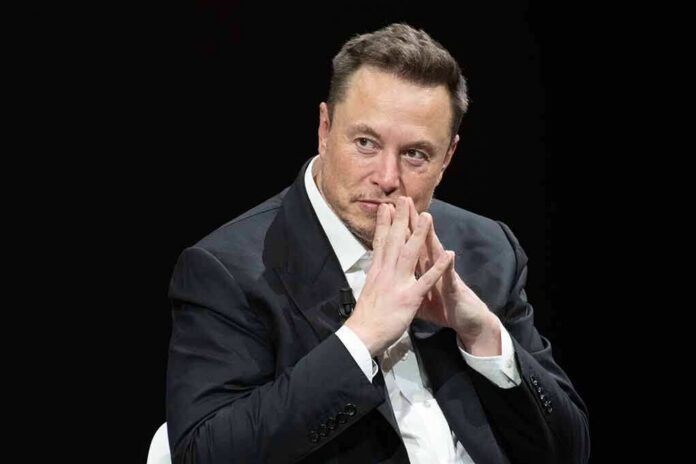
On October 8, 2026, Trump presented the medals during the administration’s “Science: A New Golden Age” Summit, calling the awards the nation’s “highest honors for exemplary achievement and leadership in science and technology” and singling out six recipients by name. Musk and Brin received the National Medal of Science alongside Nvidia’s Jensen Huang and AMD’s Lisa Su; Dell Technologies founder Michael Dell and Microsoft CEO Satya Nadella received the National Medal of Technology and Innovation. Trump reserved his most theatrical praise for Musk, calling him a “modern-day Thomas Edison” and a “national treasure” while crediting him with advancing American spaceflight and engineering. It marked the first time in his presidency that Trump had presented either medal, a ceremonial milestone outlets across the political spectrum noted uniformly.
How the Medals Were Built to Work
The National Medal of Science dates to 1959, created by an act of Congress and formalized two years later when President Kennedy signed Executive Order 10961 establishing a review committee administered through the National Science Foundation. The newer National Medal of Technology and Innovation, established by statute in 1980 and first awarded in 1985, runs through a separate, independent committee appointed by the Secretary of Commerce, which evaluates nominees from an open, competitive solicitation before forwarding recommendations to the president. Neither process is self-executing. Both end with a presidential signature, which means the committees narrow the field but the Oval Office makes the final call — a structure that has rarely drawn scrutiny because past slates rarely overlapped so cleanly with a single president’s donor rolls.
The Donor Pattern, Documented Across Outlets
This is where the story stops being a ceremonial footnote. CNBC reported plainly that “each of the awards recipients at Thursday’s summit has financially contributed, in some capacity, to President Trump or Republican campaigns and causes,” identifying Musk as Trump’s single largest 2024 backer and noting Brin’s post-inauguration contributions to the Republican National Committee and Huang’s funding of the White House ballroom project alongside Nvidia’s $1 million inauguration gift. The Hill independently confirmed Musk had put at least $250 million behind Trump’s 2024 campaign before the medal ceremony. A New Republic analysis, summarized by Yahoo, went further, tallying the six honorees’ combined political giving — across campaigns, the inauguration fund, the ballroom project, and allied super PACs — at roughly $6 billion. These are not isolated allegations from a single partisan outlet; they are consistent, specific, dollar-denominated findings corroborated by CNBC, Reuters, and mainstream wire reporting, which is a different category of evidence than generalized suspicion.
Weighing the Two Realities Honestly
Both things are true at once, and pretending otherwise does a disservice to readers. Musk’s SpaceX has genuinely rewritten the economics of orbital launch; Huang’s Nvidia chips underpin the current AI buildout; Brin co-founded the search engine that reorganized the internet; Su’s AMD clawed back relevance in semiconductors that many analysts had left for dead. None of that technical record is manufactured, and the White House’s citation language tracks real accomplishment, not invention. But the documented donation figures are large enough, specific enough, and corroborated by enough independent financial reporting that treating the selections as purely merit-driven requires ignoring a pattern no honest analyst would wave away. The fairer reading is that achievement was necessary but, in this particular slate, evidently not sufficient on its own — proximity to the president’s political fortunes appears to have narrowed the field as much as peer nomination did.
LATEST: Trump awards Elon Musk the National Medal of Science, honoring his contributions to technology and innovation
— Whales Watch (@WhalesWatch) October 9, 2026
Why It Matters Beyond One Ceremony
The lasting cost of this pattern isn’t to the six recipients’ reputations, which were secure well before Thursday. It’s to the medals themselves. Honors built on peer review and committee insulation retain their prestige precisely because recipients, across decades and administrations, have looked chosen for contribution to knowledge rather than to a campaign account. When a slate this uniformly tied to one president’s donor base receives his signature, the next administration — of either party — inherits a weaker instrument: an award easier to dismiss as patronage dressed in a ribbon, regardless of how deserving any single laureate may genuinely be.
Sources:
redstate.com, aljazeera.com, noticias.foxnews.com, yahoo.com, pbs.org, finance.biggo.com, foxnews.com, reginfo.gov
© fixthisnation.com 2026. All rights reserved.