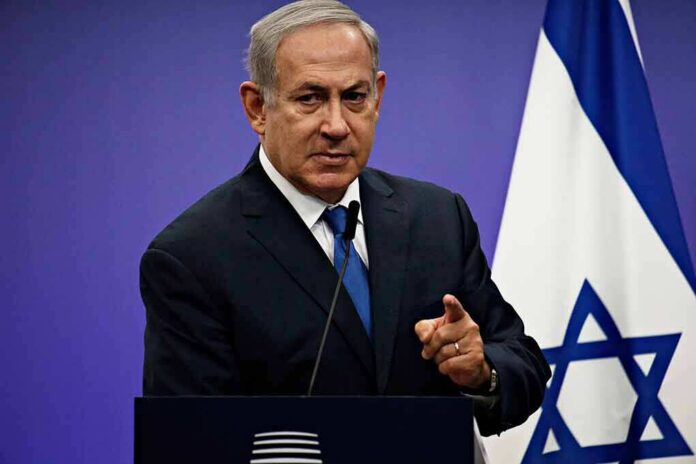
Elections that follow a national security calamity rarely adjudicate doctrine; they adjudicate responsibility. In Israel, October 7 sits at the center of that reckoning because multiple credible inquiries now converge on a simple, consequential judgment: the state failed its core duty to protect its citizens, and that failure was not only operational but also political.
At a Glance
- A civilian investigative commission explicitly faulted Benjamin Netanyahu’s leadership and process, citing ignored warnings and a breakdown in security decision-making.
- Israel’s state comptroller found the government lacked a binding national security strategy before October 7, attributing that gap to Netanyahu’s inaction.
- Security organs, including Shin Bet and the IDF, acknowledge grave internal failures; the failure chain spans institutions, not a single node.
- With no authoritative state commission report published in the provided record, accountability remains contested terrain shaping the election.
What the strongest investigations actually say
The most forceful documentary findings in the public domain come from two tracks that point in the same direction. First, the Civilian Commission of Inquiry into October 7 issued a report concluding the government “failed its primary mission,” stating that repeated warnings to the prime minister did not translate into serious threat deliberations and that Netanyahu “consistently undermined” national security decision-making, widening the gap between political and military echelons. The commission also emphasized a stark operational reality: Hamas’s invasion plan was “known in advance,” yet the IDF was not prepared to repel a mass incursion. While the commission is not a formal state body, its evidentiary claims are specific and square with institutional self-critiques inside the security establishment.
Second, Israel’s state comptroller—whose office is embedded in the state’s oversight architecture—found that Israel operated without an approved, binding national security policy leading into October 7. Drafts existed, but Netanyahu “did not complete what he began and did not bring it for approval,” leaving strategy effectively unenforceable; the comptroller’s bottom line is unambiguous: Netanyahu failed to adopt a binding strategic framework in the run-up to disaster. In systems terms, this is not a paperwork quibble; a missing top-level strategy deprives planners and commanders of a common frame to prioritize threat indicators, posture forces, and pre-authorize contingency responses.
How the operational failures fit with political responsibility
Intelligence and internal security services have documented their own lapses. Shin Bet’s investigation labeled October 7 a “colossal security failure” within the agency—an admission that the early-warning and interdiction layers were compromised. The IDF’s inquiry, reported by the Associated Press, found that the army misjudged Hamas’s intent, underestimated its capabilities, and was “wholly unprepared” for the scale and nature of the assault. These findings complicate any narrative that seeks to locate singular culpability in the prime minister’s office. They also, however, illuminate the distinction between operational failure and political accountability: militaries err; the political echelon is responsible for the system that anticipates, corrects, and hedges against those errors in time.
Netanyahu’s stated defense accepts failure while relocating its center of gravity. In formal responses to the comptroller, he argued that “the heart of the failure stems from the loss of intelligence and defensive superiority vis‑à‑vis Hamas,” and that the professional bodies advised a deterrence status quo—implicitly, that he followed expert recommendations. That contention is material; it reminds us that decision-making occurs in a fog of partial information and bounded options. Yet it sits uneasily alongside two concurrent facts: an external civilian commission that describes a structurally corrosive decision style at the top, and a state comptroller’s finding that the country lacked a binding strategy precisely when clarity of ends and means was most needed.
The missing state commission—and why that matters
Israel’s institutional norm after seismic shocks is to convene a state commission of inquiry with subpoena power; that is the forum that can compel testimony across the chain of command and publish canonical findings. In the materials here, that commission has not produced a final public report; disputes over forming one, and suggestions that its launch has been delayed, leave the record incomplete and politically contested. The absence does not negate the existing findings, but it does shape their persuasive authority and the electorate’s patience: civilian probes and agency self‑reviews illuminate pieces; only a state commission stitches the evidentiary fabric into an authoritative whole.
This is why the election conversation has hardened around accountability. Opponents pledge a government of “repair and reconstruction” that would begin by commissioning a formal inquiry; Netanyahu’s coalition has resisted or sequenced such a move behind ongoing war considerations, arguing that premature politicization would hinder the truth-finding process. In other democracies, this institutional choreography tends to determine not just who is blamed but whether the system learns. Delay rarely helps legitimacy.
Competing narratives of aftermath and recovery
On the other side of the ledger, Netanyahu’s supporters argue two propositions: first, that the military leadership’s analytic failure was decisive; second, that post‑attack strategic choices produced a rapid recovery and expanded deterrence. They cite cross‑border pressure on adversaries from Hamas to Hezbollah to Iran, and claim that had the government accepted early recommendations to halt operations, those gains would have been impossible. In public addresses marking the anniversary, Netanyahu has framed Israel as “stronger than ever,” crediting soldiers and commanders for “cutting off the arms of terror” and creating deterrent buffers—language that casts the premiership as steward of a hard‑won resurgence.
Both prongs warrant sober weighting. The IDF’s admission of analytic misreads is real and consequential. And it is true that political leadership sets the tempo and scope of cross‑theater action. But claims of “one of the greatest military comebacks in history” are, by their nature, rhetorical; their evaluation belongs to the same comprehensive forum that would judge pre‑attack decision‑making—because only a unified record can test whether post‑attack gains offset pre‑attack negligence or simply narrow a margin of error that never should have been squandered.
Israel retaliated against allies that broke over Gaza while pouring millions into foreign influence. Israeli-linked networks targeted Canadian politics and media, while figures tied to Israel trips became prominent voices in Alberta’s separation. #Cdnpoli https://t.co/v0CLTNJXFc
— Anonymous (@YourAnonCentral) October 2, 2026
What genuine accountability would look like
Accountability is not a slogan; it is a method. A state commission, properly empowered, would do five things. It would reconstruct the warning chain from mid‑2023 to October 7 using raw intelligence, duty logs, and cabinet minutes; weigh the structural consequences of governing without a binding strategy; map command-and-control in the first hours of the attack; interrogate the policy of calibrated deterrence and financial flows to Gaza, including Qatar’s role; and evaluate post‑attack decision quality against viable alternatives. That is the work that disciplines hindsight and converts outrage into institutional learning.
Until that record is assembled, the fairest synthesis from the evidence at hand is this. The political echelon presided over a system that entered October 7 with degraded strategic coherence; the security services missed, misread, and failed to blunt the operational blow; and the government then pursued a forceful retaliation that its supporters see as recovery and its critics see as proof of earlier failure. None of these statements absolves the others. They are the same picture at different resolutions—all necessary to keep in frame if the ballot is to be more than a referendum on anger.
Sources:
youtube.com, independent.co.uk, nbcnews.com, ynetnews.com, jpost.com, npr.org, timesofisrael.com
© fixthisnation.com 2026. All rights reserved.