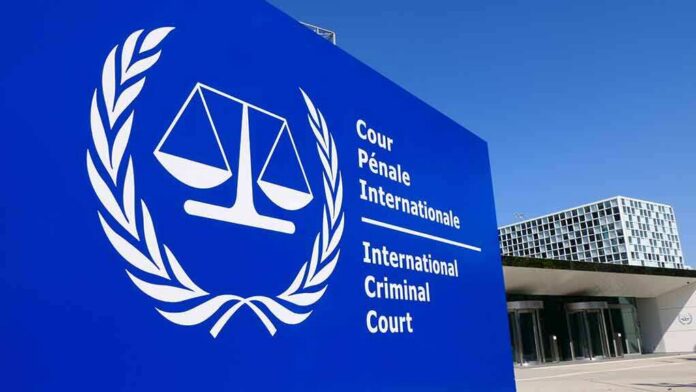
The fight between Washington and the International Criminal Court is not a dispute about facts on the ground in Afghanistan or Gaza — it is a decades-old argument over who gets to judge a superpower, and in 2025 that argument escalated from sanctioning individual officials to attempting to choke off the Court’s ability to function as an institution.
Key Points
- In February 2025, President Trump signed an executive order reviving and broadening sanctions authority against the ICC, and by June the State Department had designated multiple sitting judges and prosecutors by name, including officials from Uganda, Peru, and Benin.
- The sanctions permit asset freezes and U.S. entry bans not just on ICC personnel but on any foreign person who materially supports ICC investigations touching U.S. or Israeli nationals.
- The U.S. position rests on non-ratification of the Rome Statute and a formal “complementarity” objection; the ICC’s counter-position rests on Article 12(2)(a) territorial jurisdiction and an Appeals Chamber ruling that already addressed this exact argument.
- The Court says the sanctions threaten basic operations — banking, payroll, software, travel — for an institution with roughly 900 staff and 125 member states, while supporters of the U.S. position say no outside body may bind American personnel without Senate-ratified consent.
What the Sanctions Actually Do
Sanctions regimes against the ICC are not symbolic censure; they are financial warfare conducted through the Treasury Department’s Office of Foreign Assets Control. A designation blocks the target’s U.S.-touching assets, bars American persons and companies from transacting with them, and revokes or denies visas. Because so much of the world’s banking and cloud infrastructure routes through U.S.-regulated institutions, a designated ICC judge can find it difficult to hold a bank account, pay a mortgage, or travel internationally — not because any court convicted them of a crime, but because an executive order named them.
The February 2025 order widened the net beyond the Court’s own staff. It authorizes penalties against any foreign person — a witness coordinator, a contracted investigator, a software vendor — who “directly engages” in ICC efforts to investigate, arrest, or prosecute a protected person without that person’s home government’s consent, a category human rights monitors say sweeps in ordinary judicial cooperation. The June designations named specific sitting judges and a deputy prosecutor, marking the first time sanctions reached beyond the prosecutor’s office into the bench itself.
How Washington and The Hague Got Here
The United States signed the Rome Statute in 2000 but never sent it to the Senate for ratification, and the following administration formally withdrew that signature. For twenty years, every administration regardless of party has rejected the premise that the ICC can bind American military and intelligence personnel, a position crystallized in 2020 when the first Trump administration issued Executive Order 13928 against Prosecutor Fatou Bensouda over her Afghanistan inquiry. The Biden administration lifted those sanctions but did not resolve the underlying jurisdictional dispute. The 2025 order, formally Executive Order 14203, is best understood not as a new policy but as the reactivation and expansion of a dormant one, this time against a Court that had since issued arrest warrants touching Israeli officials as well.
Where the Legal Argument Genuinely Divides
This is the rare international dispute where both camps can point to black-letter text rather than mere grievance. The American case rests on consent: a state cannot be bound by a treaty body it never ratified into, and the U.S. argues it has already investigated its own personnel, which under the Rome Statute’s complementarity principle should bar ICC involvement entirely. The Court’s case rests on territory: Article 12(2)(a) grants jurisdiction when the alleged conduct occurred inside a state that did join the treaty, and Afghanistan acceded in 2003, regardless of the nationality of whoever is accused. The ICC’s Appeals Chamber considered and rejected the nationality objection directly, and the Prosecutor’s own findings concluded that U.S. domestic investigations never reached the senior officials who authorized the conduct under scrutiny — meaning, in the Court’s view, complementarity never applied in the first place.
Neither side’s reading is frivolous. The consent argument reflects a foundational premise of international law — that treaties bind signatories, not bystanders — and it commands support well beyond the Trump administration; Democratic and Republican administrations alike have resisted ICC jurisdiction over Americans for two decades. The territorial argument, meanwhile, is simply how the Rome Statute is written, and it is the same jurisdictional logic that lets the ICC prosecute non-member nationals for crimes committed on Congolese or Ukrainian soil. The dispute, in other words, is a genuine clash between sovereignty-based and territory-based theories of jurisdiction, not a case of one side ignoring plain text.
📰Reuters:
The United States has imposed extensive sanctions on the International Criminal Court (ICC), which could cut off the court's access to banking, insurance, and software services.
🔹 In response to the issuance of arrest warrants for Israeli officials, including… pic.twitter.com/2eAhJ1N1Op
— Alex kennedy (@Alexkennedy213) October 10, 2026
What the Institution Stands to Lose — and What the World Loses With It
ICC President Tomoko Akane has called the sanctions an effort “to obstruct an independent international court supported by more than half of the UN’s members,” and the Court says it will keep operating “on the basis of the law and the evidence” regardless of pressure. That defiance is easier to state than to sustain: 125 countries back the Court, but the U.S., Israel, and China do not, and research on state responses to the 2020 sanctions found that roughly two-thirds of member states issued supportive statements yet few took concrete steps to shield the Court financially, particularly those most economically dependent on Washington. Scholars tracking the fallout have also flagged a chilling effect reaching beyond The Hague — academics and legal researchers scaling back ICC-related work over fear of personal exposure to U.S. sanctions themselves.
The practical stakes are institutional survival, not abstract principle. A court that cannot bank, insure its staff, or hire investigators cannot prosecute anyone, regardless of the strength of its legal theory. Whether the Rome Statute’s architecture survives this pressure now depends less on which jurisdictional argument is correct and more on whether its 125 member states are willing to absorb the financial and diplomatic cost of defending an institution the world’s most powerful nation has decided to treat as illegitimate.
Sources:
cbsnews.com, state.gov, whitehouse.gov, icc-cpi.int, congress.gov, reuters.com, amnesty.org, dw.com, academic.oup.com
© fixthisnation.com 2026. All rights reserved.