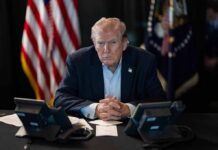
The central fact is not in dispute: during the Biden-era classified-documents investigation that culminated in the Mar-a-Lago search, FBI agents kept tabs on the movements of Melania and Barron Trump and ran a pen register/trap-and-trace on Susie Wiles’ phone, mapping her calls with Trump’s defense lawyers, campaign advisers, and several journalists. The records, released by a White House transparency initiative, describe standard investigative tools used in a politically supercharged context—raising enduring questions about scope and sensitivity even when content interception was not alleged.
At a Glance
- Released government records state agents monitored Melania and Barron Trump’s travel amid Mar-a-Lago search planning
- A pen register/trap-and-trace captured Susie Wiles’ call metadata in early 2023—not call contents
- Investigators mapped Wiles’ connections to at least 21 Trump-related lawyers and multiple journalists
- The activities were part of the classified-documents probe led by prosecutors later associated with Special Counsel Jack Smith
What the records show: surveillance methods and targets
The released documents, described by multiple outlets as originating from a White House Government Transparency Task Force, depict two distinct lines of collection. First, FBI messages during late May 2022 reflect close monitoring of Donald, Melania, and Barron Trump’s travel as agents planned the Mar-a-Lago search; reporting characterizes this as logistical tracking of movements rather than interception of communications. Second, in early 2023 investigators obtained a pen register/trap-and-trace on the phone of Susie Wiles—then a senior Trump political aide—which logged dialed and incoming numbers and call durations over several months, a technique that reveals network links but not conversational content.
According to the coverage, the Wiles pen-register returns were used to build a contact map that included at least 21 Trump-affiliated attorneys as well as several campaign advisers and at least five journalists, pointing to a broad social-graphing effort typical of complex investigations. One account adds that the FBI interviewed Wiles on April 7, 2023 and presented her with four pages of communications, consistent with a metadata-driven summary rather than transcripts. The materials are framed as part of the same classified-documents inquiry that followed the National Archives referral and led to the August 2022 search—tying collection to a live, high-consequence criminal probe rather than a free-floating fishing expedition.
How these tools work—and what they don’t capture
Two technical categories matter here. A pen register/trap-and-trace is a statutory instrument that compels a carrier to provide dialing, routing, and signaling information for a target line; it is not a wiretap. The output—numbers, timestamps, sometimes cell-site or IP signaling—enables investigators to infer relationships, identify potential co-conspirators, and sequence events, but it does not capture the content of calls or messages. By contrast, Title III wiretaps require a far higher legal showing and yield raw conversations; nothing in the described records alleges content interception in the Wiles matter. Former Special Counsel Jack Smith and his attorneys have publicly characterized toll records and similar metadata as common, lawful steps in complex conspiracies or obstruction probes, procured by subpoena or court order and used to corroborate testimony, timelines, and intent.
Travel monitoring sits on a spectrum from the mundane to the intrusive. At the routine end, agents assemble movement timelines from open sources, press pools, aviation schedules, and protective-service footprints; at the more intensive end, they may draw on license-plate readers, geofence warrants, or surveillance teams if a judge approves or an operation demands it. The reporting here describes agents “watching” the Trump family’s travel during search planning; the method and legal authority are not spelled out in the summaries, but the purpose—timing and operational security for a high-profile search—is plainly within the mechanics of major-case planning.
How we got here: the classified-documents investigation’s arc
The pathway from an archival referral to search and metadata collection is, procedurally, unremarkable even if politically explosive. After National Archives contacts, DOJ typically seeks voluntary returns, subpoenas, and security assessments; if compliance questions persist, agents build probable cause for a search, coordinate execution, and reduce operational risk by tracking principal movements. Mar-a-Lago’s August 2022 warrant marked the peak of that arc; by early 2023, the investigation’s lodestar had shifted to potential obstruction or concealment, where call-detail analysis often becomes central. Public statements by Smith later emphasized that toll records helped determine who contacted whom, when, and in what pattern, information that can corroborate or contradict witness accounts without exposing attorney-client content when minimization rules apply.
Within that structure, pen-register results on a political aide like Wiles supply connective tissue: which lawyers synchronized, which advisers clustered around decision points, which media contacts aligned with legal events. That these outputs included journalists and numerous defense attorneys is significant for sensitivity, but not unusual for an obstruction-focused map of relationships. The difference between sensitive and unlawful turns on legal process, minimization, and use constraints—a line these reports do not claim was crossed, while squarely documenting the breadth of the network assembled.
The line between narrow collection and perceived overreach
Why this still matters is the recurring American pattern: whenever federal investigators train surveillance tools on political figures, the public fight is less about whether surveillance occurred than about scope, process, and the propriety of mapping legally protected associations to pursue a criminal theory. History offers ample cautionary tales—from COINTELPRO to ad hoc political files—about investigative drift into political domains. Yet the modern framework distinguishes metadata subpoenas and pen registers from content interception and requires approvals proportional to intrusiveness. In recent testimony and filings, Smith’s team and associated counsel have argued that obtaining toll records is a routine, policy-consistent step, not a departure into political spying.
The Trump-case records sit at that intersection. On one hand, they document surveillance of a former first lady’s movements, awareness of a minor child’s travel, and systematic mapping of defense-counsel and press contacts—facts that will read as aggressive even to those conversant in major-case practice. On the other hand, they depict metadata collection rather than wiretaps, classic pre-search operational monitoring rather than covert bugging, and investigative aims linked to a specific classified-documents and obstruction inquiry rather than freewheeling political intelligence gathering. That dichotomy is the durable lesson: legality and sensitivity can coexist uncomfortably.
🚨 NEWLY RELEASED RECORDS SHOW BIDEN-ERA FBI TRACKED MELANIA AND BARRON TRUMP’S TRAVEL DURING MAR-A-LAGO PROBE: Declassified documents show federal investigators mapped the movements of Melania and Barron Trump while planning the 2022 search of Mar-a-Lago, as part of the…
— MDBayNews (@MDBayNews) October 6, 2026
What to watch: policy, precedent, and future cases
Three implications deserve sustained attention. First, pen-register and toll-record authorities will remain central to high-stakes federal cases because they compress months of human recollection into verifiable timelines; the policy challenge is ensuring minimization and privilege screening when call graphs traverse defense teams and newsrooms. Second, operational monitoring of principals’ movements during warrant execution is standard tradecraft, but investigators should expect heightened transparency demands when family members—especially minors—appear in planning threads. Third, as the government continues to publish historical case records through transparency initiatives, the public will see the guts of complex investigations more clearly; that sunlight can harden criticism of perceived overreach while also demystifying lawful, bounded techniques that stop well short of wiretapping.
Sources:
redstate.com, nypost.com, wfmd.com, dailymail.com, westernjournal.com, thegatewaypundit.com, thefederalist.com, edition.cnn.com, apnews.com
© fixthisnation.com 2026. All rights reserved.