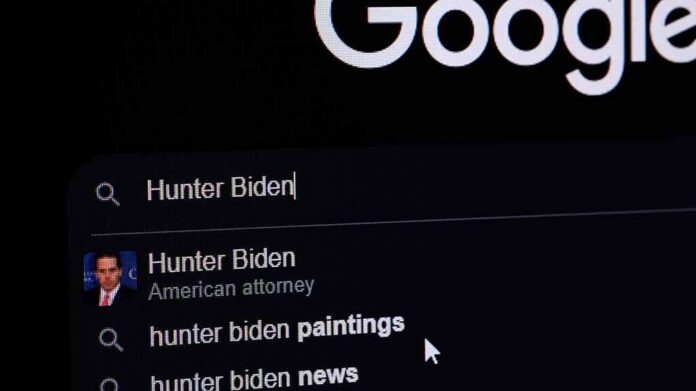
In modern American politics, a teasing line on a radio show can snowball into a week of “will-he-run” chatter—yet attention is not the same thing as a campaign, and the mechanics of viability are stubbornly immune to banter.
At a Glance
- Hunter Biden’s quip that he “may have to” run hinges on a host’s endorsement line—fodder for speculation, not a candidacy.
- Across venues, he has both entertained the idea and explicitly disclaimed interest in elected office, leaving a record that cuts both ways.
- No public evidence of a campaign apparatus—no exploratory committee, filings, or build-out—supports operational seriousness.
- This is a textbook case of the “imaginary primary,” where celebrity and media oxygen mimic viability without supplying it.
What Hunter Biden Actually Said—and Why It Caught Fire
The spark was a Catsimatidis radio exchange in which Hunter Biden replied, “If I get your endorsement, I may have to,” when pressed about a 2028 run. He also linked his public advocacy to addiction policy—“50 million Americans… suffering with their addictions”—a message with real constituency resonance, even if politically narrow. Multiple outlets quoted the recorded conversation, and The Hill separately captured him saying, “I haven’t made up my mind,” when asked the same question earlier. Those remarks kept the door ajar; they did not open a campaign headquarters. The Washington Examiner framed the line as a joke, not a declaration, while NDTV was explicit that he had not announced a bid or confirmed an intention to seek the nomination.
That ambiguity sits alongside sharper denials. In a BBC news feature tied to his interviews, Hunter Biden ruled out seeking elected office and dismissed the idea he’d one day run; other coverage quotes him saying he has “no aspiration” for office. If you take the record as a whole, the most concrete statements oppose a run; the more suggestive ones are conditional, conversational, and media-mediated rather than issued as formal intent.
Signals That Distinguish Speculation From a Real Campaign
Campaigns leave fingerprints. Even proto-campaigns do: exploratory committees, counsel of record, treasurer appointments, early-state travel with advance work, hired pollsters, donor call time, vendor retainers, and ballot-access counsel. None of that has surfaced here in the reviewed material. In fact, one Fox-linked segment highlighted the absence of any exploratory committee, reinforcing that the conversation is happening in media space, not organizational space. When a figure with name recognition hints at a run, news value is guaranteed; but viability lives in filings, staffing, and a calendar, not in virality.
Issue anchoring matters, but it is not sufficient. Addiction policy is a powerful and neglected portfolio and, in the right hands, an authentic governing throughline. It is not, by itself, a coalition map: no evidence here of how such a message would be integrated with economic policy, foreign affairs, judicial selection, or the party’s factional realities. Put differently, a relatable policy biography does not substitute for a campaign’s core architecture—fundraising pipelines, endorsements, primary sequencing, and message discipline across hostile media settings.
The Counter-Case: Denials, Tone, and the Gravity of Lived Biography
The cleanest contradiction to speculation is Hunter Biden’s own categorical statements to the BBC—no interest in elected politics—and other venues that quote the same posture. Those are specific and on the record; they outweigh a conditional radio quip in assessing intention. Media framings that the “may have to” line was joking or tongue-in-cheek reinforce the unserious reading; The Washington Examiner and NDTV both cast it in that light, and The Hill’s chronology places the flirtation alongside earlier hedging, not a pivot to a bid.
Beyond tone, his biography is a gravitational force. Supporters will argue credibility on addiction makes him an unusually empathetic messenger. Detractors point to scandal coverage, legal exposure, and the optics of a presidential pardon as disqualifying noise—amplified by partisan media and late-night derision. Whether fair or not, campaigns are waged in an environment of priors; those priors shape donor caution and elite gatekeeping long before voters are asked what they think.
The “Imaginary Primary”: How Media Oxygen Mimics Viability
What we’re watching is a textbook instance of the imaginary primary—the period when news and social platforms cover hypothetical contenders by persona and momentum frames in the absence of institutional signals. Political communication research has described how soft-news attention and front-loaded calendars encourage speculation; in effect, celebrity or notoriety is treated as a proxy for candidacy, while the quiet, costly work that makes campaigns real remains absent from public view.
The horse-race incentive structure rewards the moment a line goes viral, not the months it takes to build a compliance team. It also nudges donors and activists: time-series research has shown that perceived “surge” coverage can stimulate contributions, independent of policy content. The effect is strongest when a persona already commands outsized attention—precisely the case here. But attention is not infrastructure. It can even be a trap: a fortnight of memes can foreclose institutional patience if it hardens a narrative of unseriousness before a candidate lays any groundwork.
What Would Have to Happen to Make This Real
If Hunter Biden intended to convert speculation into a credible bid, the signals would be unambiguous. You would see legal and financial apparatus appear in public databases within days; veteran primary operatives hired in Iowa, New Hampshire, Nevada, and South Carolina; polling and analytics vendors with Democratic pedigrees onboarded; and a disciplined message that broadens from addiction to an integrated governing agenda. You would also expect elite cues—DNC power brokers, electeds, and aligned interest groups—testing the waters in background quotes or early endorsements. None of that appears in the record surveyed here.
Conversely, if the purpose of the media forays is to elevate issue advocacy, sell a book, or prosecute a reputational case in the court of public opinion, the current pattern—high-visibility interviews, combative commentary, selective will-they-won’t-they ambiguity—already serves that objective. It shifts the Overton window on what he can talk about without owning the obligations of a candidate. It also preserves optionality: a door left ajar keeps cameras interested; a door slammed shut ends the segment.
Bottom Line
On the evidence, “Hunter Biden 2028” is a media story, not a campaign story. The record contains a playful conditional line about running, a sincere issue frame around addiction, and multiple explicit denials of political ambition. It contains no public trace of the machinery that converts notoriety into ballot presence. As a case study in how the imaginary primary manufactures drama from celebrity oxygen, it is nearly perfect. As a case study in how campaigns are built, it is empty. That difference—not the week’s clips—tells you what to believe next.
Sources:
yahoo.com, mediaite.com, thehill.com, ndtvprofit.com, bbc.com, pbs.org, rekko.ai
© fixthisnation.com 2026. All rights reserved.