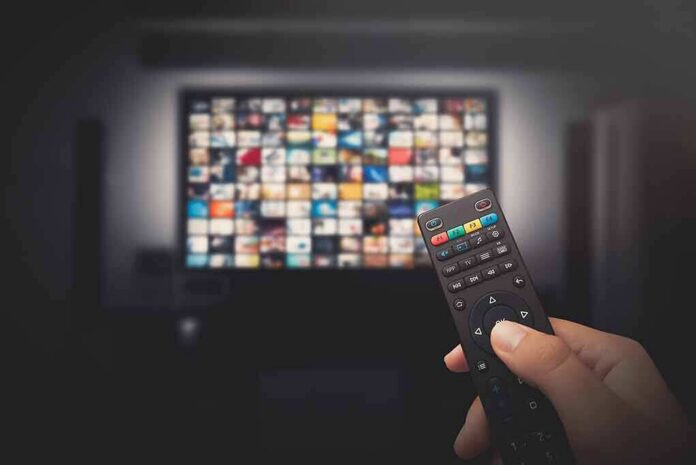
Smart TVs don’t just show you content; many are designed to learn what appears on their screens and route that intelligence into advertising and measurement pipelines—an architecture anchored by Automatic Content Recognition (ACR), enforced once by regulators, embraced by major brands, and debated today on the narrow ground of consent quality, not whether collection occurs.
The Short Version
- ACR is a built-in identification system that fingerprints on-screen content—apps, broadcast, and even HDMI sources—to log what you watch and when.
- The 2017 Vizio case established the modern baseline: TV viewing data is sensitive; collection requires prominent disclosure and affirmative opt-in consent.
- Major platforms publicly document ACR programs and user controls, but the fight is over defaults, clarity, and friction—not existence.
- ACR data fuels audience measurement and targeted ads across devices; manufacturers frame it as anonymized and optional, while critics call it household surveillance.
What ACR Is and How It Works
Automatic Content Recognition is a passive sensing layer woven into many smart TV platforms. It periodically samples pixels and/or audio from what’s on the screen, computes a compact “fingerprint,” and compares it against a reference database to identify programs, ads, channels, or games. Unlike app-level analytics, ACR sits below the app layer; it can observe content from broadcast tuners and external inputs (e.g., a Blu‑ray player or a game console) because it operates at the display plane. Manufacturers and their ad-tech partners use the resulting records—program identity, channel or app, timestamps, and session duration—to build viewing histories, deduplicate ad exposures, and target future advertising. Samsung describes this directly: when opted in, its Viewing Information Services generate signatures that allow capture of certain information regarding viewership on the TV. Roku’s ACR policy is even more explicit, noting that enabling “Use info from TV inputs” lets Roku collect what you watch and when you watch it from antenna and connected devices—programs, commercials, channels, date, time, and duration.
This architecture matters because it persists across inputs and—depending on implementation—can function even when you largely avoid built‑in apps. In practice, the boundary between “smart” and “dumb” usage blurs; a TV used as a display for external HDMI sources may still feed ACR if the system remains enabled. That breadth is why ACR has become the spine of connected‑TV measurement and advertising.
The Enforcement Precedent That Set the Rules
The turning point was the 2017 enforcement action against Vizio. The Federal Trade Commission and New Jersey alleged that Vizio’s Inscape ACR tracked viewing on 11 million TVs without adequate consumer knowledge or consent, with the software “turned on by default”. The stipulated order required prominent disclosures, affirmative express consent for collection and sharing of viewing data, and deletion of historical data collected before March 1, 2016—effectively declaring TV viewing history sensitive and off-limits without opt‑in. The case reverberated across the industry: it demonstrated that burying ACR in generic privacy policies would not satisfy regulators and that defaults matter. Vizio, for its part, emphasized that it had not paired viewing data with names or contact details, underscoring a recurring industry stance that linkage is “aggregate” or “anonymized”. The legal line, however, was drawn on consent quality and disclosure, not solely on identity fields.
Why that still matters: the Vizio case remains the clearest public articulation of a regulatory baseline for smart TV telemetry—consumers must be clearly told, and they must affirmatively agree. Subsequent brand policies and setup flows generally reflect that lesson, at least on paper, by introducing named toggles, setup prompts, and opt‑out/withdraw controls.
What Today’s Major Platforms Admit—and Promise
Post‑Vizio, leading platforms document ACR, often in separate policies or support pages. Samsung’s support materials describe opt‑in viewing information services and explain that ACR generates unique signatures to capture certain viewership information. Roku publishes a dedicated ACR service policy describing the scope across antenna and connected devices, and its privacy policy explains how to withdraw consent via settings (Privacy → Smart TV Experience). This visibility is not trivial—before 2017, default‑on telemetry with minimal disclosure was the crux of enforcement. Today, the written record shows controls exist; the debate is whether real‑world implementations meet the spirit of “affirmative, informed” consent.
Manufacturers also emphasize how ACR data is used. They position it as anonymized audience measurement and personalization—frequency capping, content recommendations, and ad attribution. Vizio’s contemporaneous statement to that effect is representative: the company said the program did not pair viewing data with name or contact information and that the government did not allege otherwise. Yet advertisers don’t buy “identity” per se; they buy reach, frequency, and modeled households. Even without direct names, stable device identifiers, IP address co‑residence, and cross‑device graphs can connect screens to people in practice. That is why the disclosure and control layer—the human choice—is the fulcrum.
Where the Real Disagreement Lives: Consent, Defaults, and Friction
Across brands, controls exist but are not uniform. Some vendors expose a single master setting labeled “viewing information services” or “Smart TV Experience,” while others split consent into multiple agreements—one enabling ACR’s data collection, another governing interest‑based advertising. In Samsung’s case, studies and product strings indicate on‑screen consent for both viewing‑information services and interest‑based ads, suggesting explicit choices at setup or in settings. Roku documents that users can withdraw ACR consent in device settings, aligning with the post‑Vizio consent model.
Critics argue these controls are often buried, inconsistently named, or presented amid other essential setup steps, turning a nominal opt‑in into a practical default. The strongest published record here is uneven: we have primary documents that ACR exists and that toggles exist; we do not, in this record set, have standardized, multi‑brand measurements of how often ACR ships enabled by default today or the rate at which consumers successfully opt out. That evidentiary gap keeps the dispute focused on adequacy—are choices clear, revocable, and free of penalty—rather than on a claim that all TVs collect without any control. The 2017 case shows what’s unacceptable; the present shows a spectrum of compliance polish, with consumer experience varying by brand and model.
Implications: Household Profiling and the Business Model of the Screen
ACR’s commercial logic is straightforward: TV makers sell hardware at aggressive price points, then monetize attention. ACR supplies ground truth for what was on screen, second by second, enabling advertisers to verify exposures, suppress repeat ads, and link TV viewing to outcomes elsewhere. Roku’s policy language about identifying programs and commercials across inputs is a concise articulation of the measurement value proposition. For platforms with their own ad businesses, this data ties into wider cross‑device graphs—phones, tablets, streaming sticks—by way of IP address, account logins, and partner integrations. The industry’s preferred framing—“anonymized, aggregated”—does not eliminate targeting power; it describes how the system sells predictions without handing over your name.
This has two consequences for households. First, fine‑grained TV viewing is no longer ephemeral; it is a durable input into ad decisioning. Second, control is a moving target. Even when a vendor cleanly implements opt‑in, firmware updates, new setup flows, or newly added services can re‑present or reshape choices. Experienced users can manage this; many households will not. That asymmetry is the core reason the Vizio precedent elevated disclosure and opt‑in from courtesy to requirement.
Not surprising, but still wild.
Researchers demonstrated a compromised LG Smart TV could listen even when it looked OFF.
It can also identify devices on your network and track what you watch via ACR.
Here’s how to stop your TV from spying on you. https://t.co/TjsYsnwPhE
— Crypto_Marina | λ | (@Crypto_marina) September 18, 2026
Practical Control: What Actually Stops ACR
If your objective is to prevent ACR collection on a given TV, there are three levers. First, do not enable the vendor’s ACR or “viewing information services” at setup; if already enabled, use the device’s privacy menu to disable or withdraw consent—on Roku, for example: Settings → Privacy → Smart TV Experience → deselect Automatic Content Recognition. Second, review advertising settings separately; some platforms separate data collection from ad personalization, and both may need to be addressed. Third, consider architectural choices: using an external streaming device and bypassing the TV’s home screen can reduce the number of entities collecting data, though it shifts telemetry to the device maker. The only categorical solution is to disconnect the TV from the network; everything else depends on the diligence of both vendor and user.
What Better Evidence Would Settle
Two kinds of evidence would move this debate from rhetoric to calibration. On the technical side, reproducible network tests across major brands—before and after disabling ACR, after firmware updates, and across inputs—would quantify how faithfully controls work. On the policy side, vendor-side data maps and retention schedules would clarify what identifiers are stored, how long, and with whom they are shared. The Vizio action provided that clarity once; the industry at large has yet to supply the same level of verifiable detail for all platforms.
Bottom Line
Smart TV ACR is real, documented by the platforms that run it and by a regulatory case that defined how it must be disclosed. The live question isn’t whether screens watch back; it’s whether the way you’re asked to agree—defaults, wording, revocability—meets the standard of meaningful consent. If you value keeping your viewing history out of ad-tech systems, use the controls each vendor provides, verify them after updates, and accept that, absent a network disconnect, you are managing risk more than eliminating it.
Sources:
dwt.com, samsung.com, conductatlas.com, androidauthority.com, therecord.media, docs.roku.com, kelleydrye.com
© fixthisnation.com 2026. All rights reserved.