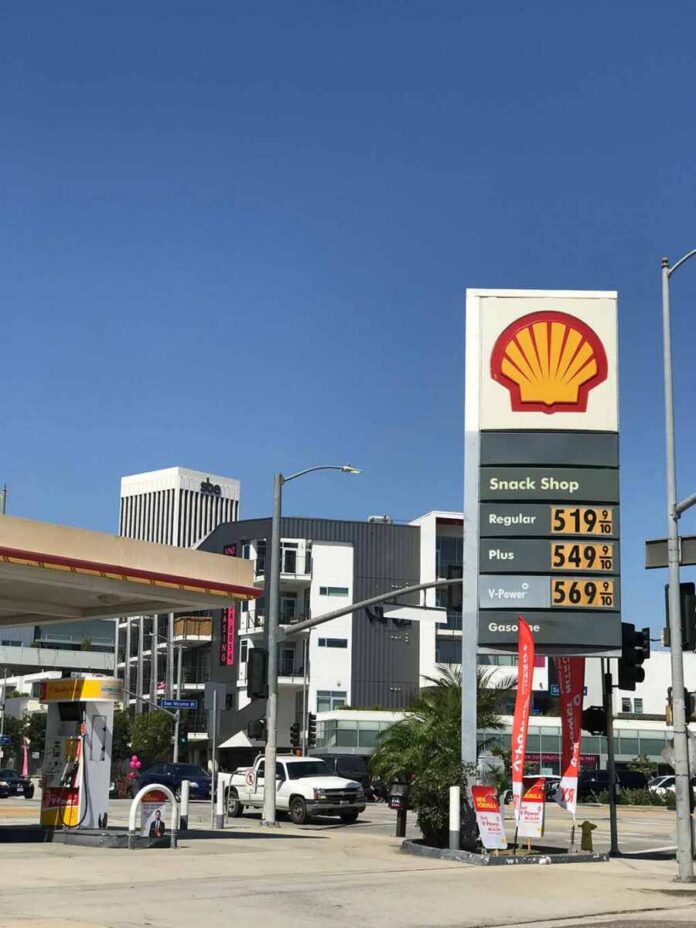
When fuel becomes the bottleneck for a state’s economy, governors reach for the fastest levers they control: suspend rules that constrain supply and ease the movement of product. Texas’s diesel emergency follows that playbook in full, using statewide disaster powers to put more diesel where it’s needed and to cut near‑term logistics costs for the sectors that run on it.
At a Glance
- Texas issued a disaster proclamation covering all 254 counties in response to a diesel shortage and soaring prices.
- The order temporarily allows dyed (off‑road) diesel to be used on Texas roads and preserves the tax distinction between dyed and road fuel.
- Weight limits for fuel, agricultural, and timber hauls were raised to speed deliveries and reduce per‑mile costs.
- Texas sought federal flexibility, asking EPA to waive certain diesel-spec rules to broaden usable supply.
What the Texas disaster proclamation actually does
Governor Greg Abbott’s proclamation declared a statewide disaster tied to a diesel fuel shortage and price surge, certifying the shortage as an imminent threat to public health and safety. The order executes three concrete moves. First, it authorizes the temporary use of dyed diesel—normally restricted to off‑road equipment—on Texas highways. Second, it lifts certain state oversize and overweight restrictions for qualifying loads, allowing gross vehicle weights up to 95,000 pounds for fuel, agricultural, and timber shipments. Third, it triggers a request to EPA to permit broader diesel specifications temporarily, including relief from Texas Low Emission Diesel (TxLED) constraints to the extent federal law allows. Each step targets a friction point: product eligibility, transport capacity, and regulatory blending limits that can strand molecules on the wrong side of a spec line when markets are tight.
Two legal nuances matter. Allowing dyed diesel on-road does not erase the underlying motor fuels tax—Texas did not convert dyed product into taxed highway fuel. Rather, enforcement and penalties tied to on‑road use are suspended under disaster authority while the tax code’s structure remains intact. And while Texas can relax state rules and enforcement, any shift in federal sulfur or emission specifications relies on EPA waivers; the proclamation explicitly routes through that federal gate where necessary.
How these levers ease a diesel squeeze
In tight markets, the constraint is rarely crude; it is the right molecule in the right place with the right paperwork. Dyed diesel is chemically the same as on‑road ultra‑low sulfur diesel when it meets 15 ppm sulfur, but the red dye signals off‑road status and a different tax treatment. Suspending Texas’s on‑road prohibition turns stranded off‑road volumes—sitting in farm co‑ops, construction yards, and terminal tanks—into usable road fuel without waiting for incremental refinery output or new deliveries. That is the fastest supply injection a governor can enable because it reclassifies existing barrels rather than creating new ones.
Raising weight limits has a complementary effect. Heavier allowable loads mean fewer trips for the same delivered gallons, which reduces per‑unit freight cost and shortens the time from rack to retail. In a shortage framed by both availability and price, squeezing logistics efficiency matters; when a tanker can move an extra several thousand pounds per run, terminal queues and driver hours translate more directly into retail supply. For agriculture and timber—diesel‑intensive sectors with seasonal windows—higher weight ceilings can prevent a supply constraint from becoming a missed harvest or mill shutdown.
The federal piece: why an EPA waiver request sits in the middle
Markets get gummed up by product specifications. Texas’s TxLED requirements and federal ultra‑low sulfur diesel rules define blending, sulfur ceilings, and distribution boundaries; when inventories run low, these guardrails can strand otherwise usable product that is close to spec but not quite there. Texas asked EPA Administrator Lee Zeldin for time‑limited flexibility on applicable diesel specifications to broaden the eligible pool of gallons that can be distributed as highway diesel in-state. This is not unusual. During Hurricane Harvey in 2017, EPA waived certain Texas diesel provisions to keep road fuel moving statewide—an instructive precedent for why governors pair state actions with federal waivers when the pinch is acute.
The logic is straightforward: a temporary, geographically bounded waiver converts near‑spec product held behind a compliance fence into lawful highway fuel, buying time for refineries, pipelines, and terminals to rebalance. Without that step, dyed‑diesel flexibility and weight-limit increases solve only part of the problem—distribution—while the refinery-and-rack side remains constrained by spec scarcity.
Why Texas uses disaster powers for fuel and how we got here
Texas has used emergency authority to manage energy distribution shocks before. Wildfires, hurricanes, and localized infrastructure outages have previously triggered temporary suspensions around dyed diesel use and transport rules. That continuity matters for two reasons: it shows the legal tools are well worn, and it clarifies intent—these are administrative relief valves, not structural energy policy changes. In each case, the objective is to smooth a transient mismatch between demand and compliant supply, especially for transportation and agriculture where diesel is not optional; it is the operating fluid for the state’s freight, harvest, and emergency response apparatus.
In this episode, the governor framed the relief in practical, cost‑focus terms: farmers and truckers can access more usable fuel and move heavier loads, which should reduce costs on the farm, on the road, and at retail checkout. While the proclamation itself is the controlling instrument, contemporaneous agency pages and reporting align on the measures taken and their stated purpose, with the Texas Division of Emergency Management serving as the operational hub for disaster declarations and associated suspensions.
WaPo: Texas Governor Declares Emergency on Fuel Prices
Texas Gov. Greg Abbott (R) declared a statewide disaster Monday to address high fuel prices, allowing expanded use of dyed diesel, raising the allowable weight for certain truck loads, and suspending some federal diesel…
— Politics & Poll Tracker 📡 (@PollTracker2024) September 28, 2026
What to watch as the measures run
Three signals determine effectiveness. First, eligible gallons: how much dyed diesel and near‑spec product actually enter the on‑road market under the temporary rules. Second, logistics throughput: whether the higher weight limits translate into shorter rack-to-retail cycles and fewer dry‑runs at stations that serve truckers and farm fleets. Third, pricing transmission: if spot and rack prices soften, do retail prices, particularly in rural counties and along freight corridors, follow within normal lag windows. The state action is designed to influence all three, but the heaviest lift—expanding the usable product pool—hinges on the scope and duration of any federal waivers granted.
The durable lesson: emergency flexibility is a bridge, not a strategy
Diesel markets swing on refinery availability, seasonal maintenance, export pulls, and distribution chokepoints. When prices spike or inventories thin, governors can widen lanes and temporarily redefine what counts as compliant road fuel; those moves keep trucks rolling and harvests on schedule. But they do not add refining capacity, nor do they substitute for longer‑term coordination among refiners, pipelines, and regulators on specification harmonization and contingency planning. Texas’s proclamation is an assertive use of legitimate emergency authority to buy time—turning inventory trapped by rules into usable fuel and pushing more pounds per trip. In a crunch, that is exactly what these powers are for.
Sources:
dallasexpress.com, kxan.com, theeagle.com, tdem.texas.gov, timesnews.net, yahoo.com
© fixthisnation.com 2026. All rights reserved.