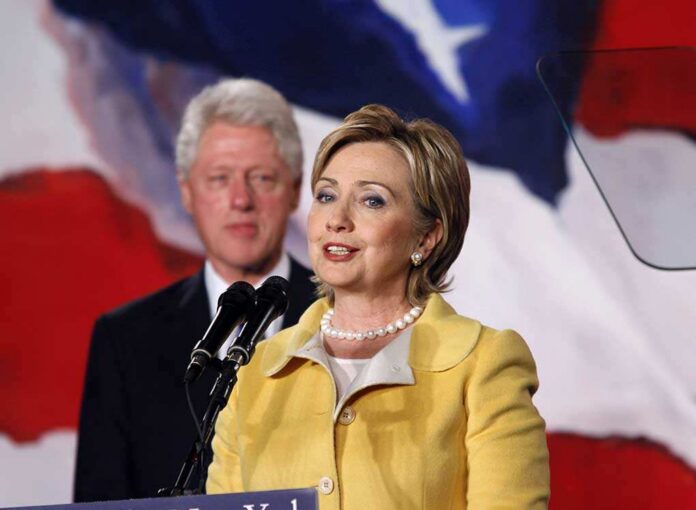
After months of subpoena drama, House investigators just put the Clintons on camera—hours of sworn testimony now online for the public to judge.
Quick Take
- The House Oversight and Government Reform Committee released full video depositions of Hillary Clinton (Feb. 26, 2026) and Bill Clinton (Feb. 27, 2026) on March 2, 2026.
- The interviews are tied to the committee’s ongoing investigation into Jeffrey Epstein-related files and government handling of that information.
- Bill Clinton previously failed to appear for a scheduled deposition in January 2026, prompting a committee vote to advance contempt proceedings before he later complied.
- Hillary Clinton denied ever meeting Epstein and argued the inquiry was being used to distract from mentions of President Donald Trump in Epstein documents.
Oversight Republicans Go Public With Full Deposition Footage
House Oversight and Government Reform investigators publicly released the full, closed-door video depositions of former Secretary of State Hillary Clinton and former President Bill Clinton on March 2, 2026. The committee framed the release as part of its investigation into Jeffrey Epstein’s files and related government actions. Both depositions run more than four hours, giving voters an unfiltered look at how two of the most powerful Democrats of the modern era answered questions under oath.
The timing matters because these were not casual interviews or friendly cable-news sit-downs. The committee used its House Rule 10 investigative authority and standard deposition procedures, with staff and members conducting structured rounds of questioning. Under committee rules described in the record, releases require approval from the chairman and ranking member. That process is central to why the footage is significant: it formalizes the testimony and makes later disputes over “what was said” harder to spin.
Subpoena, No-Show, and the Contempt Pressure That Forced Compliance
Bill Clinton’s appearance came only after a months-long enforcement path that many Americans wish Congress used more often, regardless of party. The committee issued a subpoena in August 2025 and later scheduled a deposition for January 13, 2026. Clinton failed to appear. On January 21, 2026, the committee voted to report contempt. A rescheduled notice followed on February 19, leading to Clinton’s eventual February 27 deposition under agreed conditions.
Those agreed terms were unusually explicit and help explain why the committee opted for full public release. The arrangement included video recording and no time limit, with logistics confirmed through email. In practical terms, that means viewers see sustained questioning rather than curated clips. It also underscores a broader accountability point: when Congress applies consistent subpoena pressure—rather than protecting political favorites—witnesses who once seemed untouchable can be compelled to show up and answer.
What Hillary Clinton Said: Denial of Meeting Epstein and a Trump Pivot
Hillary Clinton’s testimony, recorded February 26, centers on denials and a political counterattack. She denied ever meeting Jeffrey Epstein, according to reporting based on the deposition video, and she argued the committee’s focus was meant to distract from references to President Donald Trump in Epstein documents. That claim may resonate with Democrats looking to redirect attention, but it does not answer the committee’s core purpose: what Clinton-world figures knew, when they knew it, and what government entities did with Epstein-related information.
The depositions are also a reminder of why the public distrusts elite institutions when transparency is delayed until it becomes unavoidable. Epstein’s crimes and Maxwell’s conviction have fueled years of questions about powerful networks and selective accountability. While the released footage does not, by itself, announce new criminal findings, it places sworn statements on the record and invites follow-up. That’s a normal—and constitutional—function of congressional oversight, not an “extra-legal” maneuver.
Why the Video Release Matters: Transparency, Deepfake Concerns, and Public Trust
The committee and related coverage pointed to a practical reason for publishing the footage quickly: preventing manipulation and misinformation, including potential deepfake edits. In a media environment where short clips can be weaponized, full-length video gives the public context—questions, pauses, and the exact wording of answers. For voters who are tired of selective leaks and narrative laundering, raw footage is closer to the accountability model Americans expect from a government that claims to serve them.
Oversight Committee Releases Bill and Hillary Clinton Deposition Videos – United States House Committee on Oversight and Government Reform https://t.co/JkPqVFRp6a
— IslandGirl57 (@Island_Girl_57) March 2, 2026
Several big questions remain unanswered based on currently available material. The investigation is ongoing, and the public has not been told what additional witnesses, documents, or enforcement steps may follow. The sources available so far also do not provide independent expert analysis from academics or neutral investigative bodies, leaving most interpretation to primary-source viewing and partisan media framing. Still, the immediate takeaway is clear: Congress forced testimony from powerful figures, and Americans can now watch it for themselves.
Sources:
Oversight Committee Releases Bill and Hillary Clinton Deposition Videos