The contest over the 2020 election was never just about who won; it was a stress test of the American system’s ability to separate fact from fiction under pressure—and it clarified how political actors now weaponize falsehood not merely to spin outcomes but to claim power they did not earn.
The Short Version
- The claim that Donald Trump won the 2020 election has been examined repeatedly by courts, election officials, and federal agencies and found to be false; no credible evidence of outcome-changing fraud surfaced.
- Alexandria Ocasio-Cortez (AOC) has built a critique that links election denial to a broader strategy of division and distraction that, in her view, enables corruption and economic exploitation.
- Since 2020, a rise in defamation and election-disinformation litigation has created real legal consequences for knowingly false claims about voting systems and procedures.
- The durable lesson is less about personalities than incentives: election denial mobilizes a base and monetizes outrage, while institutions struggle to counter lies at the speed they spread.
What AOC Is Actually Arguing—and Why It Resonates With Part of the Electorate
In speeches and interviews, AOC has treated Trump’s insistence that he won in 2020 as more than a personal delusion. She casts it as a deliberate tactic: use a simple, emotionally potent falsehood to divide the public, redirect attention from material grievances, and delegitimize lawful authority. Her rhetorical frame is populist—but inclusionary rather than exclusionary—arguing that elites profit from conflict while ordinary voters absorb the costs in higher prices, worse healthcare access, and diminished bargaining power. She ties that frame to midterm strategy by urging Democrats to confront not only the falsity of election claims but the underlying structural grievances those claims exploit.
Whether one embraces or rejects her policy program, the political mechanics of her argument hold up: when trust collapses, narrative entrepreneurs—politicians, media outlets, influencers—can substitute identity-affirming claims for evidence. That dynamic makes contesting specific falsehoods necessary but insufficient; the deeper task is rebuilding the conditions under which shared facts have standing.
The Evidence on 2020 Fraud Claims: What Survived Scrutiny
Across dozens of lawsuits in multiple states, the Trump campaign and aligned plaintiffs failed to present verifiable, outcome-changing fraud to judges—including judges appointed by Trump. The lawsuits were dismissed, claims were withdrawn, or evidence was found wanting. Federal and state agencies—Department of Justice, FBI, the Cybersecurity and Infrastructure Security Agency—and bipartisan state officials likewise reported no evidence of widespread fraud. Recounts and audits in battleground states confirmed certified results.
Some allegations sounded forensic—vote-switching machines, dead voters en masse, “suitcases” of ballots in Georgia—but none withstood examination. The much-hyped promise that newly declassified intelligence would validate the narrative yielded no proof of foreign manipulation of vote tallies or outcomes, as independent reviews documented. The bottom line is unambiguous: the election-denial theory did not meet the burden of proof in courts or audits, and repeated re-checks have not changed that conclusion.
Why Falsehood Endures When Facts Are Clear
It’s tempting to assume that enough debunkings will extinguish a lie. They rarely do. The modern information economy rewards attention capture; once a false narrative binds to identity and community, it can outcompete official corrections. Post-2020, the incentive structure proved durable: repeating the “stolen election” claim energized loyal audiences, translated into fundraising, and created a persistent media market for outrage—even as institutional rebuttals stacked up.
This is the terrain AOC points to when she describes division as a strategy rather than a byproduct. Her case is that when politics becomes a culture-war referendum, accountability for material governance—jobs, prices, healthcare, public safety—recedes behind symbolic conflict. Whether one accepts her causal chain in full, the persistence of election denial, years after exhaustive refutation, reflects how identity and incentive can overpower empirics in real time.
Courts, Defamation Law, and the Changing Cost of Disinformation
One post-2020 shift is legal. Defamation and election-disinformation cases have proliferated, not only against media figures but also against those who amplified specific, provably false claims about identifiable people and companies. Dominion Voting Systems’ high-profile defamation cases are illustrative of the costs when allegations cross from vague rhetoric into demonstrably false factual assertions about private entities. More broadly, advocacy groups have turned to the courts to deter repeat actors and to signal that there are consequences for fabrications that damage reputations and corrode election administration.
Separately, courts have drawn a line between core political speech and intentionally false statements about voting procedures. The latter—falsehoods about when, where, or how to vote that can deter participation—are increasingly recognized as regulable without intruding on substantive political debate. That doctrinal clarity matters because it targets the species of lie most likely to depress turnout or sow chaos in the mechanics of elections, rather than criminalizing heated argument about candidates or policy.
Inside the Democratic Counter-Strategy: Facts Plus Material Politics
AOC’s midterm playbook, such as she articulates it, pairs a full-throated rejection of election denial with a pivot to material stakes: wages, healthcare access, housing costs, and the corrosion of public services. The theory is blunt: refute the lie, then address the vacuum it tried to fill by delivering on tangible concerns that cut across partisan lines. Her approach sits within a broader Democratic debate—how to knit together a multi-racial working class while retaining suburban, college-educated gains—yet the connective tissue is consistent: a campaign about lived outcomes is harder to hijack with procedural fictions.
Critics contend that her economic program is too leftward to win swing constituencies, and conservative media often meets her claims with skepticism or derision. That is politics as usual. What matters for our purposes is whether the counter to disinformation is purely rhetorical. It isn’t. Durable trust is built by competency that voters can feel: efficient services, reliable elections, transparent processes, and policies that improve daily life. Campaigns can argue values; governance has to show work.
Where the Real Disagreements Remain
On the facts of 2020, there is little legitimate dispute left: the courts, audits, and agencies converged, and outcome-changing fraud was not found. The live disagreements are about narrative and remedy. One camp emphasizes resilience of institutions and the sufficiency of post-hoc corrections; another, including voices like AOC’s, argues that institutions must go further—structurally insulating election administration from partisan interference, modernizing audits, hardening communications against procedural misinformation, and pairing all of it with policy delivery that makes bad-faith narratives less attractive.
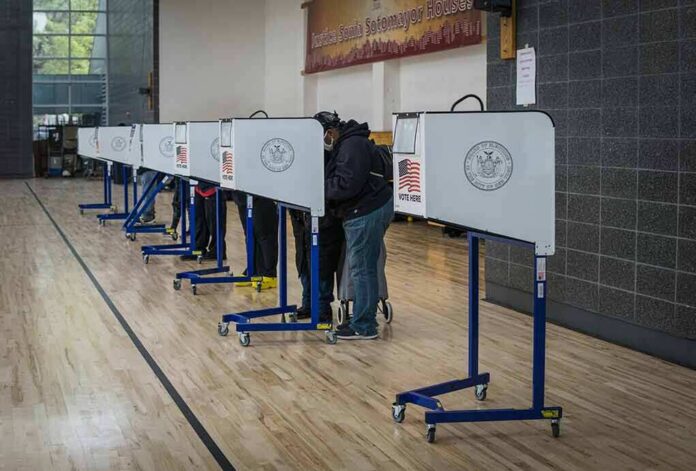
A narrower but important debate concerns transparency versus security. Proposals for independent, technical audits of voting systems are appealing when they promise to “prove a negative,” but they must be designed to protect ballot secrecy, system integrity, and chain-of-custody. States already conduct logic-and-accuracy testing, risk-limiting audits, and post-election canvasses; expanding these in ways the public can easily understand may yield more trust than bespoke, one-off “audits” that can be co-opted into spectacle.
AOC’s core argument is defensible: news organizations are not obligated to carry a presidential address live when there is a substantial, evidence-based reason to expect it will be used to spread false claims about election fraud or voting systems. Trump’s Thursday address is…
— Lucky Mendez (@lucky_mendez3) July 14, 2026
What This Means Going Forward
First, expect claims like “we really won” to recur after any closely fought election. The tactic is portable, and the business model that supports it is now mature. Second, the legal environment will continue to tighten around precision-targeted lies—especially those that name private actors or mislead voters about procedures. Third, the most effective political antidote to election denial pairs procedural rigor with material delivery. You cannot fact-check your way out of a trust deficit built on unlivable realities; you have to govern your way out of it.
The enduring lesson of 2020 is not only that institutions held, but why they were forced to. They prevailed because specific people—state and local administrators, judges, line workers, sometimes under threat—followed the law and the evidence. If defending democracy requires heroism every cycle, we have designed it poorly. The work now is to normalize truth-telling as the path of least resistance: systems that are transparent by default, audits that are legible to non-experts, enforcement that is swift and evenhanded, and politics that leaves less oxygen for the fiction that losing can be willed into winning.
Sources:
news.yahoo.com, npr.org, pbs.org, nytimes.com, dw.com, campaignlegal.org, bbc.com, facebook.com, bhfs.com, en.wikipedia.org
© fixthisnation.com 2026. All rights reserved.