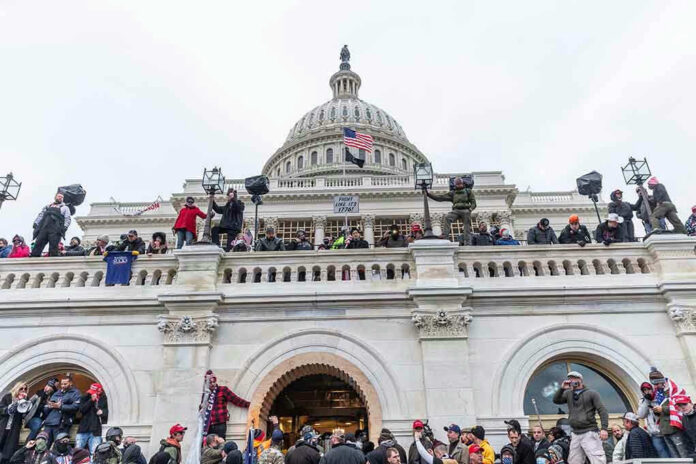
A new fight over January 6 records is feeding a bigger battle over what Washington still wants to keep hidden.
Quick Take
- House Republicans say the former January 6 Select Committee did not preserve all of its records.
- Reporting says more than 100 encrypted files were deleted before the House changed hands.
- Official archives still show the committee’s final report and many supporting materials are public.
- The dispute now centers on what was saved, what was deleted, and what remains sealed.
Records Fight Over January 6 Evidence
House Republicans say the former January 6 Select Committee failed to preserve all of its work. A report said a digital forensics team recovered 117 deleted documents, while the new committee received about two terabytes of records instead of the nearly four terabytes former Chairman Bennie Thompson had estimated[2]. Rep. Barry Loudermilk also said the Select Committee did not archive all records as required by House rules[1].
That gap matters because the debate is not just about paperwork. It goes to whether Congress kept a full record of a major national probe. Loudermilk’s claims also said some witness transcripts and depositions were sent to the White House and Department of Homeland Security, but not archived with the Clerk of the House[1][2].
What Is Public, and What Is Not
The other side of the story is important. The official Government Publishing Office page shows the committee’s final report and supporting materials are publicly available, including videos, transcripts, and other documents[5]. Lawfare also argued that the committee released a large public record and that some sensitive material was withheld to protect witnesses and avoid exposure of law enforcement details[3].
That makes the core dispute narrower than some social media posts suggest. The public record is real and substantial. Still, the House Republican complaint is not about the report alone. It is about whether all raw materials, interview records, and deleted files were kept in the first place[1][3][5].
White House Limits and Archival Delays
The fight also reaches beyond Congress. In January 2024, the White House offered unredacted January 6 transcripts to Republicans, but only under conditions that protected witness anonymity and blocked release of operational details[4]. That showed the administration was willing to share more, but not at the price of exposing sensitive information.
For readers frustrated by years of selective transparency, the larger problem is simple. Once records go to the National Archives, some may stay sealed for decades under existing rules[1]. If the government wants trust, it should not make Americans guess what was kept, what was lost, and why the record is incomplete.
Sources:
[1] Web – Five Years Of Secrets: Motion Filed To Expose Hidden J6 Evidence The …
[2] Web – WHAT ARE THEY HIDING? Jan 6 Committee Sealed All …
[3] Web – Republicans say Jan. 6 panel withheld evidence. It’s complicated
[4] Web – Evaluating the Jan. 6 Committee’s Evidence, in Full – Lawfare
[5] Web – White House offers unredacted Jan. 6 transcripts to GOP — with …
© fixthisnation.com 2026. All rights reserved.