Donald Trump turned a skipped television address into a fresh fight over power, speech, and the limits of broadcast control.
Quick Take
- Trump called for ABC and NBC to lose their broadcast licenses after they did not air his primetime address about election security.
- He said the networks were part of a “plot” and accused them of protecting fraud and giving him unfair coverage.
- Broadcast licenses come from the Federal Communications Commission, but legal experts say the government cannot punish stations for editorial choices.
- The dispute fits a long pattern of Trump attacking major news outlets and using license threats as political leverage.
Trump’s Demand After the Broadcast Snub
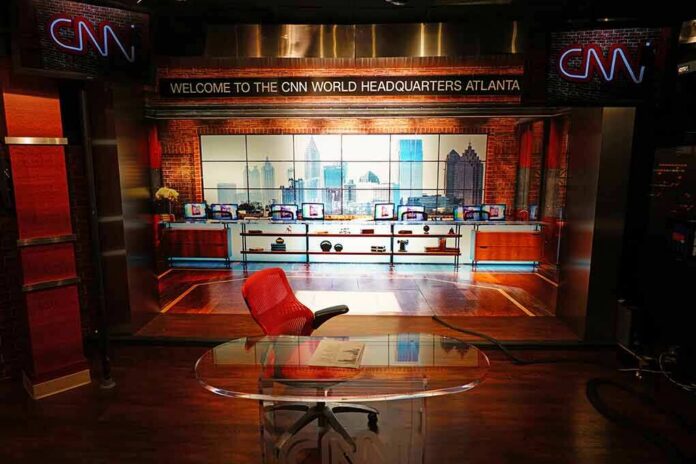
Trump used his July 16 primetime speech to attack ABC and NBC for refusing to carry it live. He said their choice proved they did not want viewers to hear his claims about election fraud and election security. He then argued that “fraud like this should mean a revocation of their licenses,” turning a programming choice into a direct challenge to the networks’ place on public airwaves.
The speech was not a small side note in his message. Trump framed the networks’ refusal as proof of a larger media plot against him. He also repeated the claim that broadcasters use public airwaves without paying for them, a familiar line in his attacks on television news. That argument is politically sharp, but it does not answer the legal question of whether he can force coverage.
A Familiar Trump Tactic
This was not an isolated burst of anger. Trump has repeatedly threatened broadcast licenses when coverage turns against him, and he has singled out ABC and NBC before. In earlier remarks and posts, he called them biased, claimed most of their coverage was negative, and urged regulators to punish them. Reuters also reported that he told ABC to lose its license after a reporter pressed him on Jeffrey Epstein-related questions.
That pattern matters because it shows intent. Trump has not just complained about bad headlines. He has kept reaching for the same remedy: revoke the license. For readers who care about plain American common sense, that should raise a simple alarm. A president can criticize the press all day. He cannot turn that dislike into a government penalty for airtime decisions.
What the Law Actually Allows
The legal barriers are steep. The Federal Communications Commission licenses broadcast stations, but experts say it cannot revoke a license simply because a network chose not to air a political speech or because officials dislike its reporting. Brookings has said the commission lacks authority to pull a license based on a particular newscast, and USA Today reported that First Amendment experts called Trump’s demand unconstitutional.
That is the core tension in this story. Trump speaks as if public airwaves give him a right to be carried live. The law says otherwise. Broadcasters do not surrender editorial judgment when they hold a license, and the government does not get to decide what counts as newsworthy. If that rule ever broke, every politician would want the same weapon.
Why the Fight Keeps Growing
The larger story is bigger than one speech. Trump’s attacks on ABC and NBC sit inside a broader push against major media outlets he sees as hostile. NPR reported that regulators under his orbit were already reviewing major broadcasters, which made his words sound less like empty bluster and more like pressure with a live political edge. That is why the episode drew such fast attention from journalists and legal experts alike.
For conservatives who value ordered government, the issue should be easy to understand. A president can demand better coverage, answer hostile questions, or argue his case in public. He should not try to punish networks for declining to serve as his megaphone. That line protects everyone, not just the media. Once the state can punish coverage it dislikes, the target never stays fixed for long.
Sources:
mediaite.com, reuters.com, theguardian.com, npr.org, cnbc.com, politicalwire.com, brookings.edu, nytimes.com
© fixthisnation.com 2026. All rights reserved.