When cameras migrate from hands to faces, the social contract of public space changes: bystanders lose the ability to notice, refuse, or step out of view, and that is why regulators are beginning to treat AI glasses not as a quirky gadget but as a privacy infrastructure problem.
At a Glance
- Norway plans temporary, location-based limits on AI/smart glasses to curb non-consensual recording in public venues while allowing private use.
- The government’s rationale targets context of use—parks, schools, healthcare, and events—rather than ownership, signaling a scoped, interim approach.
- Assistive benefits are real, especially for people with disabilities; the policy debate is over where and how to manage bystander consent, not whether the devices should exist.
- Europe’s trajectory treats wearables as subject to data-protection principles developed for bodycams and CCTV, adapted to pervasive, harder-to-detect capture.
What Norway is actually proposing
Norway’s government has said it will seek a temporary prohibition on using AI-enabled glasses in specific public places—where strangers congregate and where vulnerable activities occur—citing the ease with which the devices can record people who have not agreed to be filmed. The contemplated list includes parks, beaches, museums, shopping centres, concerts, sporting events, schools and kindergartens, playgrounds and youth clubs, gyms and swimming pools, and healthcare facilities. Private use, and use where others are not at risk of being captured, would remain lawful. The move is not a blanket ban; it is a pause in sensitive contexts while the state evaluates the technology and whether permanent rules are warranted.
This framing matters. It treats risk as situational, not universal. A family documenting a hike is one thing; an inconspicuous, networked camera in a clinic waiting room is another. The proposal builds on earlier signals from Oslo that smart glasses need tighter governance, potentially including limits on facial recognition in public spaces—again, aimed at features that transform casual recording into biometric surveillance.
How these devices work—and why bystander consent is hard
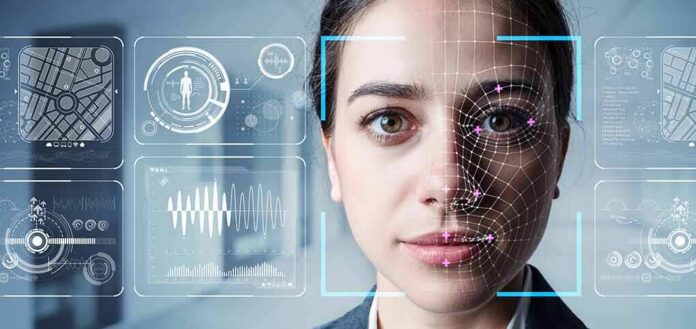
Modern AI glasses collapse three capabilities into a single, social-looking object: continuous imaging and audio capture; on-device or cloud inference that can extract identity and context; and frictionless sharing. Some models advertise capture indicators and explicit user activation—voice or tap—along with policies to disable cameras if the indicator is obscured. Responsible use guidance tells wearers to power down in sensitive settings. All true, and all useful for owner behavior. But bystander control is the crux: people near the lens cannot reliably audit whether recording is on, whether faces will be recognized later, or whether data is leaving the device altogether.
European data-protection doctrine is not agnostic about that asymmetry. Regulators have long held that video recording of identifiable people triggers obligations to inform data subjects and, for certain categories like biometrics or health data, to obtain explicit consent or meet strict legal bases. Those principles emerged in body-camera and CCTV cases and have been reiterated in guidance from national and EU authorities: when collection is direct and identifiable, Articles 13/14 GDPR duties attach; household exemptions for purely private use do not stretch to systematic capture of the public for later processing; and processing sensitive data tightens the screws further. The Norwegian trajectory sits squarely in that lineage.
The case for temporary, place-based limits
Why a temporary, zoned approach instead of permanent, universal rules? First, adoption and use-patterns are in flux; officials are choosing to bound the riskiest contexts—children’s spaces, healthcare, changing areas, large events—while they study empirical harms and technical safeguards. Second, place-based norms are legible to the public and enforceable by venue operators already managing “no filming” rules; layering a clear device category into that toolkit is administratively workable. Third, it hedges against overreach: the state avoids outlawing ownership or benign private use while still protecting bystanders in spaces where consent is impracticable or vulnerability is high.
Critics will note, fairly, that the record in Norway lacks a detailed public incident log showing widespread abuse. That is not unusual with emerging tech: by the time misuse is statistically undeniable, norms—and market penetration—have calcified. European privacy law explicitly accepts precaution in high-risk contexts, especially where children or health data are involved. A time-limited measure in specified venues is a proportionate way to gather evidence without conceding the terrain to fait accompli adoption.
Real benefits exist—so the line-drawing must be careful
Advocates for disabled users emphasize that AI glasses can be transformational: navigation assistance, scene description, text recognition, and translation can significantly expand independence for blind or low-vision people. Public authorities abroad have framed these devices as assistive technologies when deployed with safeguards, urging responsible design and user etiquette rather than outright bans. Manufacturers likewise tout capture indicators, user-initiated recording, and storage controls, and they instruct wearers to switch off in sensitive places.
Those points are not a refutation of Norway’s approach; they are a design brief for exemptions and accommodations. A well-crafted temporary rule can carve out uses that do not threaten bystander privacy—for instance, offline-only assistive modes with no camera activation in prohibited zones, or approved accessibility profiles that meet technical standards around local processing, obvious recording cues, and the absence of biometric identification. The point is not to deny capability but to constrain the vectors that externalize risk onto non-consenting strangers.
What meaningful safeguards would look like
Three categories of safeguard deserve priority. Technical: immutable, conspicuous recording indicators; hardware interlocks that prevent capture when indicators are disabled; default-off in geofenced sensitive spaces; and verifiable logs showing when, where, and what modalities were active. Legal: clear duties to inform, limits on onward transfer, heightened bases for any biometric processing, and strong remedies for surreptitious capture. Social and operational: venue signage that sets expectations, staff authority to require deactivation, and transparent exemptions for assistive uses that meet an auditable standard. Europe’s regulators have been moving in this direction for other video devices; glasses simply tighten the tolerances because they are harder to notice and easier to normalize.
Manufacturers should also confront the bystander problem directly. Owner-centric privacy controls are necessary but insufficient. A durable market will require credible answers to two questions bystanders will keep asking: can I tell when I am being recorded, and can I prevent it here? If the honest answer is often “no,” expect more jurisdictions to follow Norway’s lead.
Norway is planning a temporary ban on smart glasses in some public places, amid rising global concern at the spread of the AI-enabled recording devices.
The Oslo government is planning a bill to prevent the use of the camera-enabled spectacles in parks, beaches, museums,…
— Mike Alderson FRSA (@OpenEyeComms) October 6, 2026
Where the debate goes next
Norway’s limited, temporary curbs are neither a culture-war salvo nor a technophobic reflex. They are a procedural bridge between old notice-and-consent assumptions and a future where recording is ambient, wearable, and inferential. Expect the policy to iterate as evidence accumulates: usage data in restricted zones, compliance rates for capture indicators, feasibility of geofencing, and the practicality of assistive carve-outs. If vendors can demonstrate robust, verifiable bystander safeguards without gutting utility, the regulatory center of gravity will move toward coexistence rather than prohibition. If not, the logic of data protection—especially around children, health, and biometrics—will keep pushing toward firmer limits in shared spaces.
Sources:
foxnews.com, reuters.com, abcnews.com, euronews.com, straitstimes.com, enca.com, ua.news, firstpost.com, esafety.gov.au
© fixthisnation.com 2026. All rights reserved.