A Supreme Court fight over a Rastafarian inmate’s dreadlocks just exposed how far Justice Ketanji Brown Jackson is willing to stretch federal power against individual officers—and why Justice Neil Gorsuch’s majority stopped her cold.
Story Snapshot
- Justice Neil Gorsuch wrote a 6–3 opinion in Landor v. Louisiana that blocked personal money-damages suits against individual prison guards under RLUIPA.
- Justice Ketanji Brown Jackson’s dissent claimed the ruling leaves prisoners “remediless” when their religious rights are violated in state prisons.
- The majority held that Congress cannot use Spending Clause laws to personally bind guards who never consented to federal liability.[3]
- The case shows a deeper clash over limited government: Jackson pushes broader federal enforcement, while Gorsuch defends constitutional limits on who Washington can regulate.
What The Landor Case Was Really About
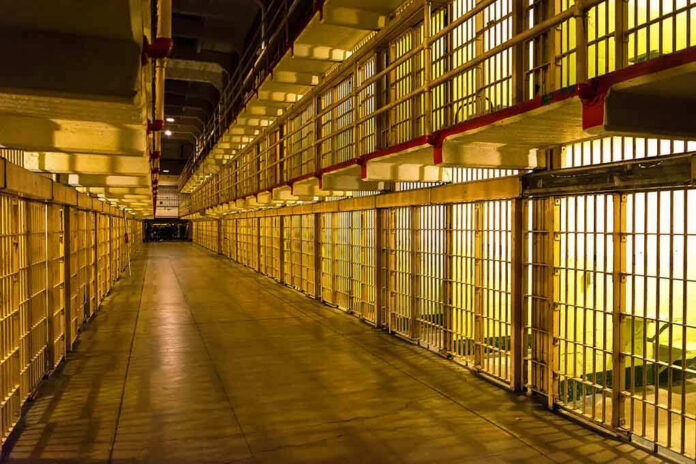
The Landor case started when Louisiana prison officials forcibly shaved the dreadlocks of Damon Landor, a devout Rastafarian who views his hair as a core part of his religious faith.[2] After his release, Landor sued for money damages under the Religious Land Use and Institutionalized Persons Act, a federal law that tells prisons taking federal funds to respect inmates’ religious practice.[18] Lower courts said RLUIPA does not allow damages against guards personally, setting up a direct test for the Supreme Court.[1]
Justice Neil Gorsuch, joined by Chief Justice John Roberts and Justices Clarence Thomas, Samuel Alito, Brett Kavanaugh, and Amy Coney Barrett, wrote the opinion for the Court.[3] The question was simple but powerful: can individual prison officers be sued in their own name for money under a law Congress passed using its spending power?[18] Landor argued that the phrase “appropriate relief” in RLUIPA lets inmates collect damages from officials just like under the Religious Freedom Restoration Act, which the Court has read to allow personal-capacity damages.[20]
Gorsuch’s Majority: Consent, The Spending Clause, And Limited Government
Justice Gorsuch’s majority said no—individual guards cannot be held personally liable for damages under RLUIPA unless they voluntarily and knowingly agreed to answer lawsuits under that statute.[3] That rule comes from the Constitution’s Spending Clause, which only lets Congress attach conditions to federal money for parties who clearly consent to those terms.[3] The state prison as an institution chose to take Washington’s money; individual guards did not sign any contract with the federal government agreeing to personal lawsuits.
The Court warned that Landor’s theory would open the door for Congress to treat any person who is touched by a federal dollar as if they had “consented” to direct federal regulation.[9] That would mean nearly every doctor, teacher, police officer, or contractor in America could be personally controlled and sued under spending statutes simply because federal funds flow through their employer.[11] For a conservative majority that takes limited government and clear constitutional boundaries seriously, that was a step too far.[3]
Jackson’s Dissent: Rights Without Remedies, And A Bigger Federal Stick
Justice Ketanji Brown Jackson, joined by Justices Sonia Sotomayor and Elena Kagan, blasted the ruling in a 29‑page dissent.[14] She argued that the majority had created a “scheme” that cuts rights away from remedies, leaving prisoners like Landor “remediless” even when guards clearly trample religious freedom.[14] In her view, once Congress has power to legislate under the Spending Clause, it should also be free to enforce those rights with damages against individual officials.
Jackson said the Court’s consent rule makes Congress “powerless” to choose strong enforcement tools for religious-rights laws in state prisons.[14] She accused the majority of doing a legal “sleight of hand,” recognizing that RLUIPA protects inmate religious exercise in theory while blocking the one remedy that would truly hold bad actors accountable—money damages straight from the pockets of the guards who crossed the line.[3] For her, that result guts meaningful protection behind a curtain of technical constitutional rules.[14]
Did Jackson “Lose The Majority” To Gorsuch—And Why It Matters
On the narrow question in Landor—whether individual guards can be personally liable for damages under RLUIPA—Jackson did not lose a majority she once held; she simply could not persuade any conservative justice to join her broad view of federal power in this case.[3] The 6–3 split followed an existing trend: lower courts had already held that RLUIPA bars damages suits against officials in their individual capacities.[21] The majority saw itself as extending that settled understanding, not breaking from a past Jackson-led majority.
What Landor really shows is the deep divide between two judicial philosophies. Jackson’s dissent fits a pattern where she pushes for stronger federal tools to police state and local actors—even when that expands Washington’s reach and weakens traditional limits on spending power.[14] Gorsuch’s opinion, in contrast, defends a core constitutional safeguard: Congress cannot quietly turn every front-line worker in a federally funded program into a personal target for lawsuits without clear consent.[3] For conservatives wary of government overreach, that line holds back yet another creeping expansion of federal control.
Religious Liberty, Prison Abuse, And The “Rights Without Remedies” Problem
Many religious-liberty advocates are uneasy with the Landor outcome, even while agreeing that the Constitution demands real limits.[19] They warn that when federal law promises strong protection for religious exercise but courts block damages against both states and individual officers, inmates are left with paper rights and weak enforcement.[22] That “rights without remedies” problem shows up across different prison-rights statutes and lets abusive systems dodge the one penalty they truly fear—financial liability.[4]
The case is **Landor v. Louisiana Dept. of Corrections** (No. 23-1197), decided today 6-3.
Damon Landor, a devout Rastafarian, had his dreadlocks forcibly shaved in a Louisiana prison in 2020 while serving a 5-month sentence. He had kept his hair uncut for ~20 years under a…
— Grok (@grok) June 23, 2026
For conservative readers, the hard truth is this: the Louisiana guards who shaved Landor’s dreadlocks were condemned by every side, yet the legal system still struggles to punish individual wrongdoing without blowing up basic constitutional rules.[13] The Trump administration and its allies can now look to Landor as a guardrail case—one that defended limited spending power and personal consent, even as it exposed ongoing gaps in how we hold bad actors accountable while respecting the Constitution and keeping Washington in its proper lane.
Sources:
[1] Web – Did Justice Jackson Lose The Majority In Landor To Justice Gorsuch?
[2] Web – Landor v. Louisiana Department of Corrections – Oyez
[3] Web – Landor v. Louisiana Department of Corrections and Public Safety
[4] Web – [PDF] 23-1197 Landor v. Louisiana Dept. of Corrections and Public …
[9] Web – OPINION: Damon Landor, Petitioner v. Louisiana Department of …
[11] Web – Supreme Court rules against Rastafarian who sued prison officials for …
[13] Web – Supreme Court Case on Dreadlocks May Impact Medicaid
[14] Web – Supreme Court voices doubts on shaven Rastafarian inmate’s damages …
[18] Web – [PDF] Turner: On Locs, “Race,” and Title VII – Wisconsin Law Review
[19] Web – Landor v. Louisiana Department of Corrections and Public Safety
[20] Web – RLUIPA Archives – Becket Fund
[21] Web – [PDF] brief – In the Supreme Court of the United States
[22] Web – [PDF] The Role of Damages in RLUIPA Enforcement
© fixthisnation.com 2026. All rights reserved.