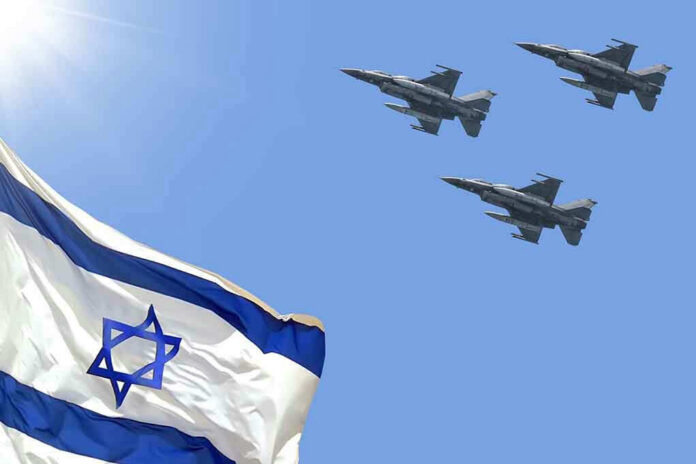
Israeli Prime Minister Benjamin Netanyahu has declared Israel is facing “complex and challenging days” as President Trump threatens military strikes against Iran’s nuclear program, marking a dramatic end to decades of shadow warfare and pushing the Middle East toward open confrontation.
Story Snapshot
- Netanyahu warns Iran of “unimaginable” retaliation while ending Israel’s covert “campaign between wars” doctrine in favor of overt deterrence
- Trump masses military forces in the region and threatens strikes if Iran rejects a new nuclear deal, with indirect talks scheduled for February 26 in Geneva
- Israeli security cabinet prepares for potential multi-front war involving Hezbollah, Hamas, and Iranian proxies across Lebanon, Gaza, Syria, and Iraq
- June 2025 saw a 12-day direct Israel-Iran war after diplomatic talks collapsed, with US forces joining strikes on Iranian underground nuclear facilities
Trump’s Strength Reshapes Middle East Deterrence
Netanyahu addressed Israel’s Knesset on February 23, 2026, emphasizing unprecedented military coordination with the Trump administration while warning Tehran’s ayatollahs of severe consequences for any aggression. This represents a fundamental shift from Israel’s previous policy of covert operations against Iranian targets to public declarations of readiness for direct conflict. Netanyahu specifically highlighted that the US-Israel alliance has never been closer militarily, a stark contrast to the hesitancy many conservatives witnessed during the previous administration’s approach to Iran. This is the kind of American strength that protects our allies and deters enemies.
Nuclear Standoff Reaches Critical Juncture
President Trump proposed a nuclear deal in May 2025 demanding Iran completely abandon uranium enrichment, which Iranian Supreme Leader Khamenei immediately rejected. Trump has since built up substantial US military forces throughout the Middle East and issued clear warnings about retaliation if Iran refuses diplomatic solutions. The third round of indirect US-Iran talks is scheduled for February 26 in Geneva, but prospects for agreement remain limited. Iran’s uranium enrichment has reached near-weapons-grade levels, creating an existential threat that Israel views as intolerable and that undermines regional stability.
June 2025 War Marked Turning Point
After diplomatic talks collapsed in June 2025, Israel launched large-scale attacks targeting Iran’s military leaders, nuclear scientists, and nuclear facilities. The resulting 12-day direct war saw US forces joining Israeli strikes on underground Iranian nuclear sites, while Iran responded with drones and missiles targeting Israel. This marked the first open military confrontation between the nations, ending decades of shadow warfare conducted through proxies and covert operations. The conflict emerged following years of failed attempts to revive the disastrous 2015 nuclear deal and Iran’s continued support for terrorist proxies including Hezbollah and Hamas.
Multi-Front War Scenario Threatens Regional Stability
Israel’s security cabinet met on February 22, 2026, to assess risks associated with potential US strikes on Iran and the likelihood of Hezbollah entering any broader conflict. Netanyahu’s government is preparing for scenarios involving simultaneous threats from Lebanon, Gaza, Syria, Iraq, and potentially the Persian Gulf. Israeli defense officials warn that a massive Iranian missile and drone barrage could overwhelm Iron Dome defenses, threatening civilian populations. Iran’s Defense Minister has threatened US bases throughout the region as legitimate targets, while Iranian proxies maintain substantial military capabilities. Energy markets face disruption risks from any Gulf escalation, potentially impacting global oil prices and economic stability.
Netanyahu’s February 19 speech at an IDF officer cadet graduation ceremony formally announced the end of Israel’s “Mabam” doctrine, which emphasized covert campaigns between wars rather than open confrontation. This doctrinal shift reflects Israel’s assessment that deterrence requires public declarations of military readiness backed by demonstrated US support. While Iran’s Foreign Minister claims a “good chance” exists for diplomatic solutions, Tehran simultaneously threatens retaliation and calls Israel a “cancerous tumour.” The contrast between Trump’s clear-eyed approach to Iranian aggression and the previous administration’s appeasement policies demonstrates how American leadership directly impacts our allies’ security and ability to defend themselves against radical Islamic terrorism.
Sources:
Netanyahu says Israel facing ‘challenging days’ with Iran-US tensions
2025–2026 Iran–United States negotiations
Israeli security cabinet meets amid rising tensions over possible US strike on Iran
US, Iran to hold talks Thursday as Tehran claims ‘good chance’ of diplomatic solution