A Midtown hate-crime assault captured on surveillance video is now heading to a 2026 jury trial, testing whether New York can deter the kind of street-level antisemitism many Americans feel elites have allowed to metastasize.
Story Snapshot
- A man identified as Mohamad Soumah, 28, was arrested after an alleged January 2025 assault on three visibly Jewish men near 34th Street and 7th Avenue in Manhattan.
- Prosecutors have pursued hate-crime enhancements, citing alleged antisemitic slurs and the suspect’s Iranian-flag T-shirt as evidence of motive.
- As of April 2026, the case remains active in Manhattan Supreme Court, with jury selection expected in May 2026 and bail previously denied.
- The incident lands amid a documented post–Oct. 7 surge in antisemitic incidents in New York City, driving higher security costs and community anxiety.
What Happened in Midtown—and Why the Video Matters
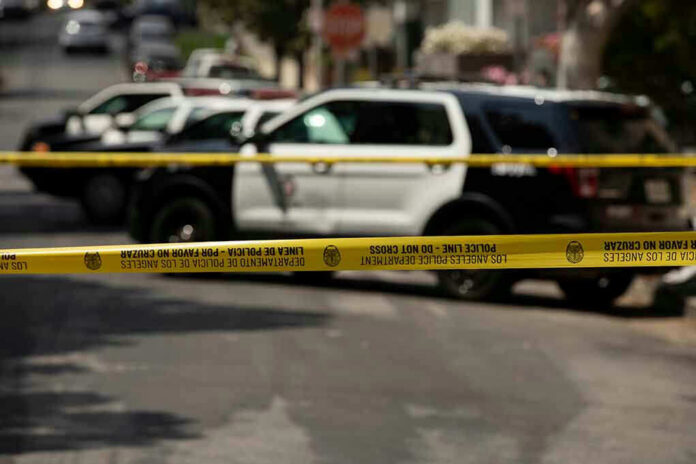
Police and reporting described the incident as unfolding around 7:30 p.m. on Jan. 9, 2025, near West 34th Street and Seventh Avenue, a crowded area by Herald Square. Witness accounts and victim statements said the attacker targeted three men who were visibly Jewish, striking them in succession and allegedly shouting antisemitic slurs. Surveillance footage, later circulated publicly, helped identify the suspect and supported a rapid arrest in Queens the next day.
The video is significant because it narrows factual disputes that often cloud street-assault cases: who initiated contact, how many victims were involved, and whether the assault looked targeted. For prosecutors, clear footage also reduces reliance on partisan narratives that can form instantly online—where some observers default to “it’s all politics,” while others downplay hate-crime allegations until a conviction. In practice, video evidence tends to shape plea leverage, motion practice, and juror perception.
The Case Heading Into 2026: Charges, Enhancements, and Competing Explanations
Court reporting in the research summary indicates Soumah was arraigned on Jan. 13, 2025, on three counts of assault alongside hate-crime enhancements, and he pleaded not guilty. Bail was denied. As of April 2026, the prosecution is still pressing the hate enhancement, and the court has reportedly allowed key video evidence while a psychiatric evaluation did not produce an insanity defense. Jury selection was expected to begin in May 2026.
Public statements summarized in the research frame the central dispute narrowly: prosecutors point to alleged slurs and symbolism—an Iranian-flag shirt—as signals of intent, while the defense argues mental-health issues rather than bias motivated the attack. That difference matters legally because hate-crime enhancements elevate the state’s burden to show bias motive, not simply violence. The available research does not establish any formal operational tie to a foreign government—only that motive and symbolism are contested in court.
Why This Incident Resonates: Public Safety, Faith, and a Breakdown of Trust
New York City’s antisemitism spike after Oct. 7, 2023 is the broader backdrop for why this single assault became a flashpoint. The research cites major increases in reported antisemitic incidents, alongside higher synagogue security spending and increased tips to police after the story spread. For many conservatives, the frustration is less about one suspect and more about whether local governance can keep basic order—or whether ideological capture and prosecutorial caution have weakened consequences for targeted street violence.
Liberals often argue that hate-crime enforcement must avoid stereotyping immigrants or ethnic communities, and groups such as CAIR have warned against conflating symbols with guilt. That concern is legitimate in principle: equal protection requires the same evidentiary standard regardless of politics. At the same time, the victims’ visibility as Orthodox Jews highlights a real civil-rights problem: when people can be attacked for how they worship or dress, freedom of religion becomes theoretical rather than lived—especially in cities that promise pluralism.
Policy and Political Pressure Points: What Could Change After the Verdict
The research points to tangible aftershocks: added security costs, heightened vigilance, and the possibility of new hate-crime legislation. Some proposals described in the research appear politically charged and are not detailed enough here to evaluate on the merits, but the direction is clear: lawmakers may respond either by expanding surveillance and registries or by tightening criminal penalties and enforcement priorities. The conservative-friendly litmus test is whether reforms improve safety without creating broad, bureaucratic powers ripe for abuse.
Maniac in Iranian flag T-shirt pummels three Jewish men in NYC hate crime: sources https://t.co/XetI2wcOrp pic.twitter.com/3seh63x9AL
— New York Post (@nypost) April 27, 2026
The most grounded takeaway is practical rather than partisan: the justice system will be judged on basic competence—swift investigation, transparent evidence, consistent charging, and an outcome that fits the proven facts. With Republicans controlling Washington in 2026, federal messaging may emphasize law-and-order and domestic security, but New York’s day-to-day enforcement remains largely local. If the public concludes that visible hate violence draws inconsistent consequences, distrust in institutions will deepen across the spectrum.
Sources:
Maniac in Iranian flag T-shirt pummels three Jewish men in NYC hate crime: sources
NYTimes.com (NY region report on the incident)