A foreign national security chief quietly bought nearly half of a Trump-linked crypto venture days before Inauguration Day—then the UAE scored major U.S. AI chip access that had been restricted under Biden.
Story Snapshot
- Reports say associates of UAE national security adviser Sheikh Tahnoon bin Zayed approved a $500 million deal for a 49% stake in World Liberty Financial, a Trump family-linked crypto firm, signed January 16, 2025.
- Coverage describes at least $187 million from the first $250 million payment going to Trump-affiliated entities, while $31 million went to entities tied to Middle East envoy and WLF co-founder Steve Witkoff’s family.
- The investment targeted a company described as pre-product beyond token sales, raising questions—especially because the deal reportedly excluded rights to future token revenue.
- After the deal, Sheikh Tahnoon reportedly met with Trump and Witkoff, and the administration later approved significant advanced AI chip transfers to the UAE despite prior national-security concerns.
What the reported deal says—and why the timing matters
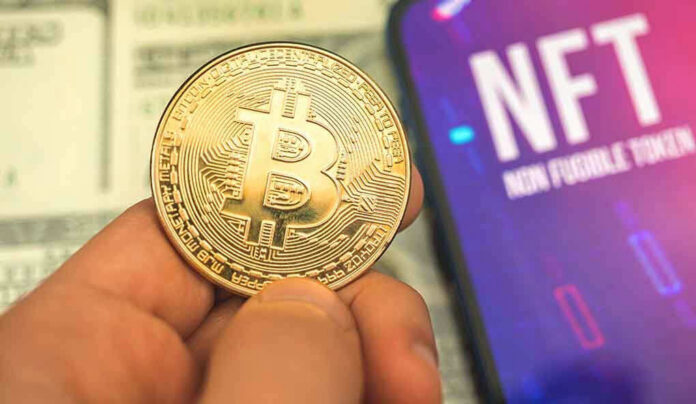
Reporting centered on a January 16, 2025 agreement in which an investment vehicle linked to associates of Sheikh Tahnoon bin Zayed Al Nahyan agreed to pay $500 million for a 49% stake in World Liberty Financial, a crypto venture tied to the Trump family. The agreement was reportedly signed by Eric Trump four days before President Trump’s second inauguration. The proximity to a transfer of executive power is the core reason the story landed like a political thunderclap.
Several outlets summarizing the Wall Street Journal’s findings emphasize the money flows inside that transaction. They report that of an initial $250 million payment, $187 million went to Trump-affiliated entities DT Marks DEFI LLC and DT Marks SC LLC, and that at least $31 million went to entities tied to Steve Witkoff’s family. Those figures matter because Witkoff was not only a co-founder of WLF but also a U.S. Middle East envoy, blending business and diplomacy in a way critics immediately pounced on.
A pre-revenue crypto venture, a huge valuation, and unanswered questions
The same coverage says WLF had no real product at the time beyond raising about $82 million from WLFI token sales, while the new investor’s deal reportedly excluded rights to future token revenue. That structure is unusual enough to trigger skepticism, even without politics involved, because it complicates the basic question: what exactly was being purchased for $500 million? The reporting does not prove a quid pro quo, but it clearly explains why many readers see red flags.
Defenders cited in the reports reject the corruption narrative and stress formal separation. The White House position described in the coverage is that President Trump’s assets were held in a trust managed by his children and that he acted in America’s interests, not personal ones. A source described as close to Tahnoon also says the investment was reviewed for months and was not discussed with Trump. Those denials are important context, and they also highlight what remains unverified publicly.
AI chips, national security, and the post-Biden policy shift
The policy backdrop is where the story collides with the concerns many constitutional conservatives already have about global leverage over American decision-making. The UAE had sought U.S. advanced AI chips during the Biden years but faced restrictions tied to national-security concerns, including scrutiny around G42 and alleged China links. After Trump’s election win and the reported deal, the administration approved significant chip access—described as a framework allowing up to 500,000 advanced chips annually, with later approvals including about 35,000 chips for G42.
Reports describe multiple White House meetings in early 2025 involving Sheikh Tahnoon, President Trump, and Witkoff. They also describe a May 8, 2025 Treasury pilot to fast-track certain UAE-linked foreign investment reviews. None of that proves a direct trade—money for chips—but it does create the kind of timeline that fuels suspicion and partisan warfare. In Washington, “appearance of influence” can be almost as damaging as influence itself.
Political reactions—and what’s provable versus what’s rhetoric
Prominent Democrats used the reporting to argue the deal was an ethical earthquake, with quoted reactions describing “mind-blowing” corruption. Conservative readers should separate two questions: what is documented and what is alleged. The reporting consistently supports several hard points—deal date, stake size, reported payment allocations, and subsequent chip approvals. What it does not establish, based on the summaries provided, is direct evidence that President Trump personally negotiated terms or explicitly conditioned U.S. policy on the investment.
Still, the broader lesson is political, not personal: foreign money seeking U.S. policy outcomes is not a left-right issue, and it’s not “woke” versus “anti-woke.” It’s sovereignty. If a foreign security official can buy a massive stake in any sitting president’s orbit—no matter the party—Americans should expect opponents, allies, and bureaucracies to test how much leverage that purchase buys. Transparent rules, bright lines, and enforceable guardrails protect the presidency itself.
Sources:
Trump sold ‘spy sheikh’ $500m stake in family crypto empire
UAE ‘spy sheikh’ buys $500m stake in Trump crypto venture
Who is ‘spy sheikh’ Tahnoon bin Zayed Al Nahyan? Donald Trump crypto deal, AI chips