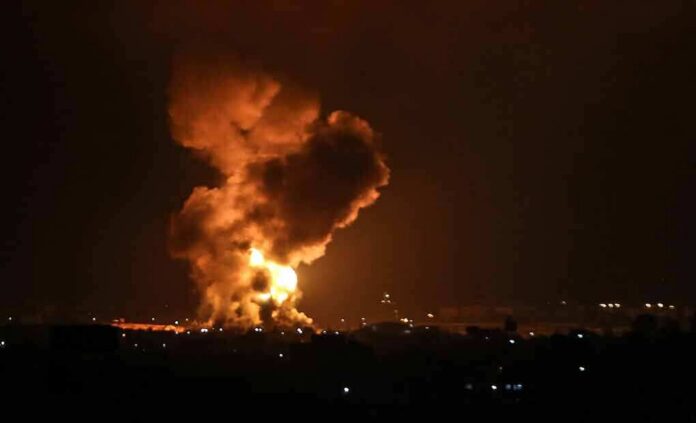
Ukraine’s deep-strike drones just lit up Moscow’s main refinery, and Russia is threatening a wider war.
Story Highlights
- Ukrainian drones hit the Gazprom Neft Moscow refinery, sparking fires and flight disruptions [4].
- Moscow’s mayor confirmed damage inside the capital; Ukraine posted video and framed it as payback [2].
- Drone strikes on Russian oil sites have surged in 2026, curbing fuel output, according to data cited by Reuters [4].
- Russia vows escalation while Kyiv signals long-range reach and pressure on the war economy [2][20].
Moscow Refinery Hit Confirms Ukraine’s Long-Range Reach
Moscow Mayor Sergei Sobyanin said a Ukrainian drone damaged the Gazprom Neft Moscow oil refinery, the region’s largest fuel supplier, and reported no injuries at the site [4]. Ukraine’s president shared video of a fireball strike and called it a “just response” to Russian attacks. He said the Moscow region felt Ukraine’s long-range capabilities [2]. The refinery has been hit more than once this week, emphasizing Kyiv’s ability to reach far beyond the front and target energy infrastructure that funds Russia’s war machine [2][20].
Reuters reported the refinery processed 11.6 million tons of crude oil and produced millions of tons of gasoline and diesel in 2024, underscoring its importance to Moscow’s fuel supply [4]. Since early 2026, drone attacks on Russian refineries have doubled, leading to full or partial shutdowns and reduced output, based on official statistics and industry reporting cited by Reuters [4]. Independent and regional outlets also described fires at the Kapotnya facility and other fuel sites, along with airport disruptions around Moscow as defenses engaged waves of drones [2][20].
Escalation Cycle: Energy Targets And Retaliation Threats
Ukrainian messaging ties these strikes to deterrence and leverage. Kyiv has intensified hits on oil refineries, depots, and logistics nodes to drain Russia’s war finances and stretch air defenses [20]. Russia frames the attacks as grounds for harsher retaliation, continuing a pattern where both sides hit energy assets to raise costs and shape public morale. That cycle has defined recent months as each strike brings counterstrikes, and infrastructure damage piles up across both countries [4][20].
This dynamic is not new in the war. Open-source and broadcast reports describe one of the largest recent drone barrages against Moscow and nearby facilities, including the Kapotnya refinery and fuel loading sites. Fires and debris affected areas near Sheremetyevo International Airport. Ukrainian leaders highlighted ranges beyond 500 kilometers, pointing to growing precision and persistence in these long-range drone operations against strategic targets inside Russia [19][20].
Competing Claims And The Record On Attribution
Ukraine has, at times, denied specific attacks while claiming others, and United States officials previously assessed with low confidence whether top Ukrainian leaders authorized a 2023 drone incident at the Kremlin, reflecting the fog of covert action. That earlier review said specialized Ukrainian units likely carried it out but did not pin direct approval on the president, showing how attribution can be murky even when activity is suspected or observed [9]. In the latest Moscow refinery strike, however, Ukraine’s public posts signaled ownership and intent [2].
For readers at home, the take-away is simple: energy infrastructure is now a front line. When drones hit a major refinery, it strikes at the core of Russia’s fuel supply and budget. Russia’s promise of escalation means more pressure on Europe’s fragile markets and more risk of miscalculation. Clear goals, tight rules of engagement, and hard limits against drawing America into another open-ended conflict remain vital for U.S. interests and for keeping fuel and inflation in check here at home [4][20].
Why This Matters For U.S. Security And Your Wallet
Higher risk in Russian oil output can ripple into global prices. Reuters linked the 2026 refinery strike surge to reduced gasoline, diesel, and jet fuel output in Russia, a top exporter, which can lift costs worldwide if disruptions persist [4]. Americans have felt the pain from past energy shocks. Stable supply and a strong dollar help families, truckers, and farmers. That means Washington should press for de-escalation while backing strict border security, domestic energy production, and a clear-eyed foreign policy that avoids nation-building and blank checks abroad [4].
Ukraine Drone Strikes On Moscow.
In a shocking escalation of the Ukraine conflict, Kyiv unleashed nearly 200 drones on Moscow in what is being called one of the largest attacks on the Russian capital since the war began. While the main target was the Kapotnya oil refinery, which… pic.twitter.com/JHhMUcS12v
— BritMatters 🇬🇧 (@britmatters) June 18, 2026
Conservatives should watch two things now. First, whether Russia’s promised escalation widens strikes on civilian grids, which could drive new refugee flows and global energy swings. Second, whether Ukraine keeps focusing on true war assets, like refineries and depots, which may shorten the war’s funding stream. Prudence, strength, and energy independence at home remain the best shield for American families against foreign shocks and the inflation that follows them [4][20].
Sources:
[2] Web – Ukraine strikes Moscow oil refinery amid large-scale drone attack
[4] YouTube – Major Gazprom Neft refinery in Moscow damaged amid …
[9] Web – After Ukraine’s second drone strike in three days on Moscow’s …
[19] Web – Russian strikes against Ukrainian infrastructure – Wikipedia
[20] YouTube – Moscow faced one of the largest drone strikes yet | Military Mind
© fixthisnation.com 2026. All rights reserved.