A sweeping Trump proclamation has reopened vast Pacific waters to American fishermen, and the usual activist groups are already racing to shut it down in court.
Story Snapshot
- Trump’s Pacific proclamation restores U.S. commercial fishing access in monument waters that Obama-era rules had locked away from American fleets.[9][3]
- Supporters say the move will boost seafood production, cut dependence on foreign imports, and help struggling island and coastal communities.[6][3]
- Environmental groups sued, claiming the order “illegally” weakens protections and violates the Antiquities Act, setting up another constitutional showdown.[7]
- Federal fishery councils stress that reopened areas stay under strict science-based limits and do not touch the most sensitive nearshore habitats.[1][2]
Trump Reopens Pacific Waters Americans Were Locked Out Of
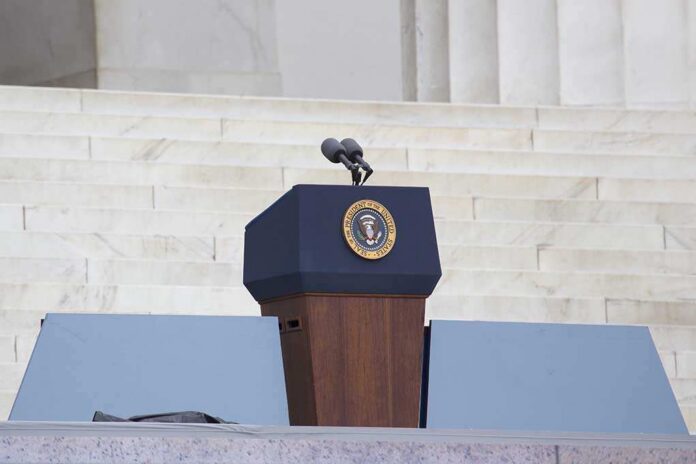
President Donald Trump’s proclamation, “Unleashing American Commercial Fishing in the Pacific,” reverses sweeping Obama-era bans that had shut U.S.-flagged boats out of huge stretches of our own waters.[9][3] Under Barack Obama, the Pacific Remote Islands Marine National Monument expansion blocked commercial fishing across more than 400,000 square miles, removing them from all forms of entry, including American fleets that had fished there for decades.[7][3] Trump’s order restores access for U.S. boats while keeping the monument’s legal status in place.[9]
According to the White House fact sheet, commercial fishing had been completely prohibited within the Pacific Remote Islands Marine National Monument boundaries, even for highly regulated American vessels that already follow strict quotas, gear rules, and bycatch protections.[9] The proclamation reopens these distant offshore zones to U.S.-flagged commercial fishing, not foreign fleets, aligning with the administration’s “America First Fishing Policy.”[6] Supporters frame this as giving American workers back the waters that past presidents “appropriated and withdrew from all forms of entry.”[7]
How the Policy Links to Seafood, Jobs, and American Samoa
The Trump administration argues that restoring commercial fishing in the Pacific is about food security and economic fairness, not corporate giveaways.[9][3] The White House notes that around 90 percent of seafood eaten in the United States is imported, creating a trade deficit of billions of dollars per year while American boats sit tied up.[4] By reopening monument waters, the proclamation aims to boost domestic catch, strengthen seafood supply chains, and support shore-side jobs in processing, shipping, and support services.[9][3]
Island communities stand to gain the most from this change. The Western Pacific Regional Fishery Management Council said the proclamation will “allow two major U.S. fisheries in the Pacific Ocean back into U.S. waters,” and stressed that fleets based in American Samoa and other U.S. islands rely heavily on access to these zones. Lawmakers allied with the council describe these waters as “needed indigenous fishing waters” that local fleets historically used, only to see them locked up under monument expansions that lacked clear scientific justification for banning well-managed commercial fishing.[6]
Regulations, Sustainability, and What Really Reopens
Reopening does not mean a free-for-all. The same federal fishery laws and science-based limits that govern other U.S. waters still apply inside the monument boundaries.[1][2] The Western Pacific Regional Fishery Management Council emphasizes that any fishing in these areas will operate under existing permit rules, reporting requirements, gear restrictions, area closures, catch limits, and protected species safeguards.[2] In the Pacific Islands Heritage Marine National Monument, for example, fishing is recommended only from 50 to 200 nautical miles around Jarvis and Wake Islands and Johnston Atoll; nearshore waters from 0 to 50 nautical miles would remain off-limits.[1][2]
That layered approach undercuts claims that Trump “removed” all protections. Council leaders explain that this is “not about removing monument protections – it’s about restoring sustainable fishing in limited areas under fishery regulations the Council has developed over decades.”[1] For other Pacific monuments, including Rose Atoll, Marianas Trench, and Papahānaumokuākea, their recommendation similarly targets offshore zones and specific fisheries, while leaving the tightest coastal protections and many existing closures in place.[2] In other words, the monument label stays, but blanket bans on American fishermen are replaced with targeted, enforceable fishing rules.
Legal Showdown: Activists Invoke the Antiquities Act
Predictably, environmental litigation groups responded by suing to stop the proclamation, even before the new fishing rules are fully implemented.[7] Earthjustice, representing groups including the Conservation Council for Hawaiʻi and the Center for Biological Diversity, filed a lawsuit in federal court in Hawaiʻi arguing that Trump’s action “threatens to destroy one of the world’s last healthy and wild ocean ecosystems.”[7] They claim the Antiquities Act allows presidents to create and protect national monuments, but not to “strip vital protections” such as prior commercial fishing bans once they are in place.[7]
🎣🇺🇸 President Donald Trump signed a proclamation restoring commercial fishing access to large portions of protected Pacific waters as part of the administration's "America First Fishing Policy."
The White House says the move will support American fishermen, create jobs and… pic.twitter.com/vYQYrnohUl
— THE INFORMANT (@TheInformantUSA) June 11, 2026
The case goes beyond fishing and into core constitutional ground. Plaintiffs say Trump exceeded his authority by scaling back restrictions inside a monument, an argument similar to past fights over land monuments in the West.[7] Supporters respond that allowing strictly regulated U.S. fishing in offshore zones does not erase the monument or its purpose, and that the Constitution does not give environmental groups a veto over how a president balances conservation with the livelihoods of American citizens.[6][1] The courts will now decide whether restoring limited economic use inside a monument is unlawful, or a legitimate exercise of executive power.
Sources:
[1] Web – Restoring American Commercial Fishing in the Pacific
[2] Web – Shrinking Oceanic Protections and the Expansion of Commercial …
[3] Web – Press Release-Clarifying Impact of President Trump’s Action on …
[4] Web – Presidential Proclamation — Pacific Remote Islands Marine …
[6] Web – WPFMC recommends reopening marine monuments to commercial …
[7] Web – President Trump Restores Pacific Fishing Waters
[9] Web – US District Court hears legal arguments opposing Proclamation to …
© fixthisnation.com 2026. All rights reserved.