In the Charlie Kirk murder case, the most consequential tension is not between prosecution and defense narratives about motive, but between strong circumstantial and forensic links to Tyler Robinson and a still‑uncertain ballistic connection to the rifle recovered near the scene.
Key Points
- Investigators recovered a high-powered bolt-action rifle near the campus, with Robinson’s DNA reportedly on the gun, its ammunition, and a towel encasing it.
- The charging documents allege that Robinson selected Kirk because of his political identity, positioning the case as a targeted political assassination with death‑penalty exposure.
- A federal ATF analysis of the bullet fragment from Kirk’s autopsy was inconclusive, creating an evidentiary gap on whether that specific rifle fired the fatal shot.
- The evidentiary record remains open: multiple hearings, redacted transcripts, and pending FBI testing leave key aspects of the case—especially ballistics and intent—still in flux.
From a single shot to a capital case: what is actually known
The case began with a single, distant rifle shot that killed Charlie Kirk while he was speaking at Utah Valley University, followed by a rapid federal and local response that treated the incident as an assassination from the outset. Authorities quickly focused on a lone gunman firing from more than 100 yards away, a scenario consistent with a deliberately staged attack rather than a spontaneous confrontation. Within a day, investigators reported locating a high-powered bolt-action rifle—initially described as a Mauser 98 or.30‑06 bolt-action—in wooded terrain adjacent to campus, along the route they believed the shooter used to flee. That recovery, combined with surveillance footage, foot impressions, and palm or forearm prints, formed the backbone of an early evidentiary case linking a specific weapon and a specific suspect to a carefully planned ambush.
Subsequent charging documents from the Utah County Attorney’s Office filled in the picture with more detail: prosecutors allege Robinson’s DNA was found on the rifle’s trigger, on the fired cartridge casing, on two unfired cartridges, and on a towel used to wrap the firearm. They also describe Robinson surrendering at the Washington County Sheriff’s Office approximately 33 hours after the shooting, after an intensive manhunt. Those documents, echoed in coverage by PBS and other outlets, frame the case not simply as aggravated murder but as a targeted killing of a political figure, with sentencing enhancements tied to motive and identity.
Ballistics, DNA, and the problem of an “inconclusive” bullet
The strongest physical evidence currently described in public records is DNA, not ballistics. According to statements attributed to FBI Director Kash Patel, DNA recovered from the towel encasing the rifle matches Robinson, and additional DNA links him to a screwdriver found on the rooftop from which investigators believe the shot was fired. Media reports further note that investigators found bullet casings near the rifle with messages etched into them referencing anti‑fascism and meme culture, consistent with a politically inflected motive. Taken together, these elements tie Robinson to the weapon’s handling, to the suspected firing position, and to paraphernalia that appears ideologically motivated.
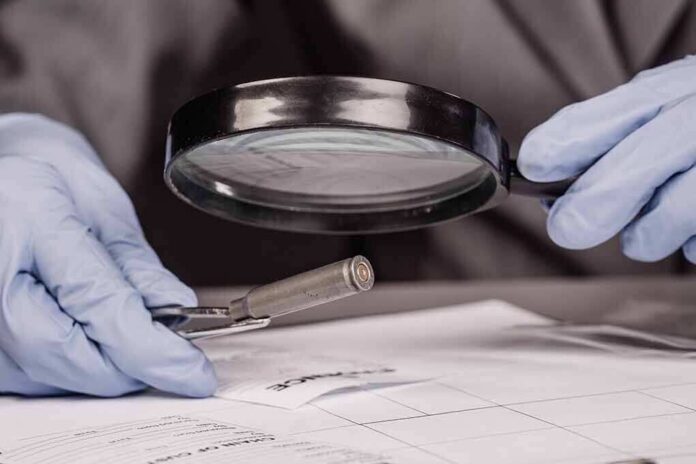
Yet the critical question—whether that rifle fired the bullet that killed Charlie Kirk—remains technically unresolved. In late March 2026, defense filings disclosed that an analysis by the Bureau of Alcohol, Tobacco, Firearms and Explosives could not conclusively match the bullet fragment recovered during autopsy to the rifle found near the scene. In other words, the ATF examiner reported that the fragment did not contain enough microscopic detail to say that its markings were consistent or inconsistent with that specific gun; forensic experts consulted by PolitiFact and PBS emphasized that “inconclusive” is a common outcome when fragments are damaged or incomplete, and that it does not exonerate the firearm or the suspect.
Prosecutors have responded by both underscoring the limits of that word and looking to additional testing. A spokesperson for the Utah County Attorney’s Office explained that an inconclusive result “does not imply that the rifle did not discharge the bullet,” but simply that the available fragment cannot answer the question either way. Court filings indicate the FBI is conducting further comparative bullet analysis and bullet lead analysis, which could provide more clarity, especially if additional fragments or cartridge evidence are available. For now, the ballistic line from rifle to fatal wound is an evidentiary gap: circumstantial evidence and DNA make the rifle central to the case, but science has not definitively stitched it to the bullet that struck Kirk.
Intent, identity, and the “political assassination” frame
Where the ballistics are tentative, the prosecution’s theory of motive is unequivocal. The charging document alleges Robinson “intentionally selected” Charlie Kirk because of his identity and political expression, invoking Utah’s targeted‑victim and hate‑crime‑style enhancements. Prosecutors and law enforcement officials have publicly claimed that Robinson harbored animus toward Kirk, adhered to a leftist ideology, and expressed a desire to kill him in text messages and in a note recovered after the shooting. Media reports describe a text to a romantic partner in which Robinson allegedly said he targeted Kirk because he “had enough of his hatred.” Utah’s governor has called the killing a “political assassination,” and the case is consistently described as such in national and international coverage.
This framing matters legally and politically. In the American criminal system, proving intent—especially a specific intent tied to political identity—can justify both harsher sentencing and, in some jurisdictions, distinct statutory enhancements. Here, prosecutors have already signaled their intent to seek the death penalty, a choice that both reflects the gravity they assign to the offense and amplifies public scrutiny of the evidence. It aligns with a broader pattern in the United States: politically motivated killings are statistically rare, accounting for roughly 0.07 percent of homicides since 2020, yet they attract disproportionate attention and are often used to illustrate or indict the state of political polarization.
From a historical and comparative perspective, the Kirk case sits at the intersection of two well‑documented trends. On one hand, threats and attempts against political figures have risen sharply; data from the U.S. Capitol Police show threats against members of Congress increasing roughly tenfold from 2016 to 2021. Scholars of terrorism and political violence note that contemporary attacks are increasingly carried out by self‑radicalized individuals rather than organized groups, often animated by online rhetoric and grievance. On the other hand, rigorous analysis shows that actual politically motivated murders remain rare outliers in the larger homicide landscape. That combination—heightened perceived danger, low absolute frequency—helps explain why prosecutors lean into the language of political assassination and why the defense is determined to pick apart its evidentiary foundation.
The defense strategy: contesting narrative, interrogating evidence
Publicly, Robinson’s defense team has focused less on offering an alternative narrative of the shooting than on challenging how the state presents its case and how the media amplifies it. They have requested sealed evidence and limits on cameras and audio in key hearings, arguing that extensive, emotionally charged coverage will taint the jury pool and effectively try Robinson in the court of public opinion before a verdict. Defense filings stress that ubiquitous descriptions of Robinson as an “accused assassin” and visuals of him in shackles risk cementing a presumption of guilt, a concern that trial courts and appellate courts routinely confront in high‑profile cases.
On the evidentiary front, the defense has scored at least one notable point: surfacing the ATF’s inconclusive bullet report and pressing for delays to digest an “enormous amount” of discovery that includes complex forensic analyses. They have actively sought to cross‑examine Robinson’s romantic partner—a key witness for the prosecution’s intent theory—and attempted to compel testimony from his roommate, Lance Twiggs, to explore alternative accounts of Robinson’s movements and communications. Although Judge Tony Graf denied the motion to compel Twiggs, leaving certain hearsay evidence to stand without that witness’s direct testimony, the motions themselves signal that the defense is preparing to challenge both the intent narrative and the chain of events the state will present.
Where the defense remains relatively quiet in the public record is on the core physical evidence. There is no indication yet of a competing ballistics analysis suggesting the rifle could not have fired the fatal shot, nor of a counter‑forensic report challenging the DNA findings on the towel, cartridges, or screwdriver. Likewise, the defense has not disclosed text or digital evidence that contradicts the prosecution’s portrayal of political motive. That silence does not mean such evidence does not exist; it does mean that, at this stage, the state’s physical and digital trail is more fully articulated than the defense’s alternative explanation.
Closed hearings, redacted transcripts, and public uncertainty
One reason the evidentiary landscape feels uneven is procedural. The crucial probable cause and sealed motion hearings have unfolded behind significant restrictions, with only redacted transcripts later released to the public. Judge Tony Graf authorized the release of an 80‑page transcript of an October 24 hearing with only 246 words redacted—primarily to protect sensitive witness information—but the audio remains partially withheld. That transcript reportedly confirms key elements of the state’s narrative: the manhunt, Robinson’s eventual surrender, and at least one officer’s testimony about hearing a single gunshot and responding. Yet those redactions and the absence of a full audio or video record mean that the precise wording of witness descriptions, the emotional tenor of testimony, and some chain‑of‑custody details are not fully available to outside scrutiny.
As the preliminary hearing proceeds, much of the substantive argument over evidence is happening in real time in the courtroom, while the broader public pieces together the case from curated transcripts, press releases, and live commentary streams. That dynamic amplifies the power of framing: media outlets emphasizing Kirk’s status as a conservative activist and the prosecution’s pursuit of the death penalty shape the story as a political crime drama; social media creators amplify moments that fit pre‑existing narratives about political violence, polarization, or law‑enforcement competence. For readers trying to understand the case on its merits, the key is to separate what is proven, what is probable, and what is still just alleged.
Where the case stands—and what will decide it
At this stage, several points are well‑supported by the available evidence. Charlie Kirk was killed by a single rifle shot fired from long range while he was speaking on campus. A bolt‑action rifle, believed by investigators to be the weapon used, was recovered nearby, wrapped in a towel and accompanied by cartridge casings with political inscriptions. Tyler Robinson’s DNA has been linked to the towel, the rifle’s components, and a tool found at the suspected firing position. He surrendered to authorities after more than a day on the run and has been charged with aggravated murder and related offenses, with prosecutors signaling a capital case.
Other points remain open. The ATF’s ballistics work has not yet provided a definitive match between the bullet fragment and the rifle, with an “inconclusive” finding that neither clears nor condemns the gun. The full scope of Robinson’s digital communications, his personal writings, and his political beliefs—as they bear on intent—will depend on further evidentiary disclosures and cross‑examination. And the defense has yet to present, in public filings or hearings, a cohesive alternative narrative that explains the physical evidence while denying guilt.
Ultimately, the case will not turn on headlines about political assassination alone, but on a granular assessment of physical traces, digital records, and human testimony: how tightly the DNA and movement evidence tie Robinson to the act of firing, whether further ballistics work firm up or weaken the rifle’s centrality, and how convincingly the state can show that Kirk was targeted for who he was, not simply where he happened to be. In a legal environment rightly wary of both politicized violence and politicized prosecutions, the integrity of that evidentiary chain—not the rhetoric around it—will determine whether this single gunshot is judged in court as a capital political assassination or something else.
SITREP: Day 1 of Tyler Robinson Hearing: Prosecutors Start Building Case Against Charlie Kirk’s Alleged Killer
A five-day preliminary hearing began today in Provo, Utah, for 23-year-old Tyler Robinson, charged with assassinating Charlie Kirk last September.
Prosecutors opened… pic.twitter.com/84StrQvgVY
— MJTruthUltra (@MJTruthUltra) July 6, 2026
Sources:
washingtontimes.com, ksl.com, facebook.com, atty.utahcounty.gov, youtube.com, pbs.org, abc3340.com, ktxs.com, cnn.com, wlrn.org, warontherocks.com, themedialine.org, cato.org, journalofdemocracy.org
© fixthisnation.com 2026. All rights reserved.