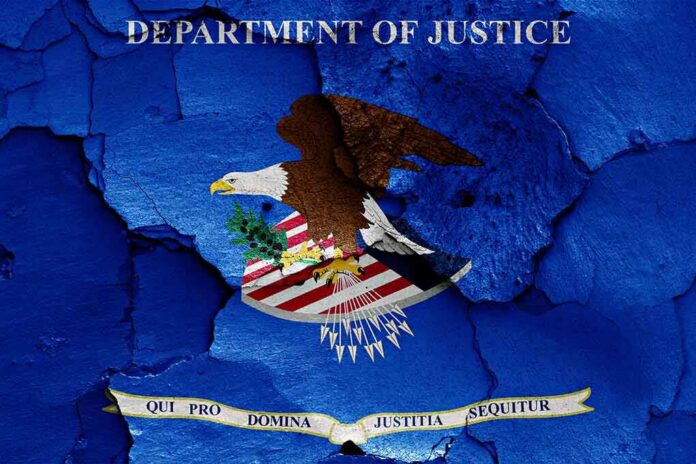
Grand jury subpoenas are not political tweets; they are legal instruments that tell you when prosecutors believe there is a definable set of records worth testing against federal law. The question in this controversy is not who shouted loudest about conflicts, but what the documentary trail shows about why federal prosecutors examined a political consulting firm once co-owned by the judge’s daughter in President Trump’s New York hush-money case—and what that scrutiny does and does not prove.
The Short Version
- A federal grand jury subpoena to Authentic Campaigns in August 2024 indicates prosecutors had a factual basis to examine the firm’s internal communications with major Democratic clients.
- The investigation’s status later appeared unresolved publicly, and no charges have been reported against the firm or Loren Merchan.
- Authentic Campaigns and its leadership deny any role or influence in the Trump hush-money proceedings and reject claims of fundraising off the trial as false.
- Judicial-ethics guidance and a New York advisory opinion concluded Judge Juan Merchan did not need to recuse because his daughter’s business was not before him and its fortunes were not affected by the case outcome.
What the subpoena tells us—and what it doesn’t
The most concrete, nonrhetorical development in this saga is the reported grand jury subpoena served on Authentic Campaigns in August 2024 by the U.S. Attorney’s Office in the Northern District of Illinois. According to contemporaneous reporting based on the document itself, prosecutors sought broad internal communications, including with high-profile Democratic clients, signaling a live inquiry into whether the firm’s work implicated federal offenses or improper conduct connected to political fundraising and communications around the Trump hush-money matter. Subpoenas at that level require neither probable cause nor public explanation; they do, however, reflect a prosecutorial assessment that documentary evidence could clarify disputed facts. That threshold, while lower than the standard for charges, is not trivial. It is the government saying: show us the records so we can test the theories.
From there, the evidentiary trail splits in two directions. On the one hand, press accounts describe resistance and negotiation over scope—again, normal grand jury practice—reporting that the firm retained sophisticated counsel and that the U.S. Attorney’s Office continued document-gathering for months. On the other, by the time later reporting looped back to the issue, the public status of the investigation was unclear and no additional subpoenas to Authentic Campaigns or its principals had been identified; no charges were known to have been filed. Those two facts can both be true: prosecutors can have enough basis to dig, and the digging can end without a public case.
The ordinary world of political consulting—and why it looks suspicious in a storm
Authentic Campaigns is, by all visible accounts, a mainstream digital consulting shop—list-building, ad placement, fundraising creative, and the mechanics of modern persuasion for Democratic clients. That activity is not only legal; it is ubiquitous across both parties. ABC News’ summary of the firm’s work tracks exactly with how most digital firms make money and measure value—acquiring responsive donor files, optimizing online media, and running conversion funnels to move small-dollar supporters to act. In a normal election cycle, those operations are plumbing, not politics. But in a highly polarizing case, the same routine entries—client names, invoice totals, creative that references the news—can be recast as evidence of something larger. That is why grand juries ask for internal communications: to see if the banality of normal business holds up under documentary scrutiny or if there are links to prohibited conduct hidden in the wiring.
Importantly, those who allege an influence loop between the New York hush-money courtroom and a Chicago consulting firm must survive a simple test: does any record show improper communication with the court, the prosecutors, or witnesses? Denials from the firm’s founder, Mike Nellis, are categorical—no role, involvement, or influence in the judicial proceedings; claims of “tens of millions” raised off the trial are “unequivocally false”. Such denials don’t end an investigation, but they do shift the burden back to evidence. At the time of the latest reporting, none of the public material describes a document or testimony that contradicts those denials.
Recusal, conflicts, and the law’s distinction between proximity and influence
The appearance of impropriety is a psychological phenomenon; recusal is a legal standard. Judicial ethics frameworks make that distinction explicit. The guideposts used by advisory bodies and courts separate a relative’s ordinary business dealings from a proceeding’s direct interests or parties. The New York State Advisory Committee on Judicial Ethics reportedly concluded Judge Juan Merchan did not need to recuse because the case before him did not involve his daughter or her firm and nothing suggested the outcome could affect them. Broader ethics literature reiterates the same line: a spouse’s or relative’s general business relationships, absent a concrete tie to the case, usually do not compel disqualification. That does not settle every debate in the court of public opinion, but it does state the law’s view of when proximity tips into conflict.
Why that matters here is straightforward. Even if a political firm’s clients capitalized on media attention around a criminal case—as many do across the spectrum—campaign fundraising premised on public events is not in itself a conflict of interest for a judge unless there is a direct financial or strategic stake that bears on the matter he is deciding. The ethics threshold is about the case’s integrity, not the optics of American campaign culture, which monetizes every headline.
What a grand jury can do in this domain
Grand juries are built for exactly this: testing allegations that live in shadowy inferences against a stack of emails, invoices, and message drafts. They can compel production, hear sworn testimony, and, if needed, enforce compliance through contempt. The point is not to settle Twitter arguments but to verify whether communications crossed lines—coordinating with government actors improperly, misrepresenting material facts to donors, laundering contributions, or otherwise violating federal statutes that govern political money and truthful solicitation. The legal line does not punish persuasive messaging; it punishes fraud, undisclosed coordination where the law requires separation, or schemes that move money in prohibited ways. A subpoena aimed at internal correspondence is a rational mechanism to detect any of that. It is not proof that any of it occurred.
There is also a constitutional frame worth keeping in mind. In Trump v. Vance, the Supreme Court underscored that no person—including a president—is categorically beyond the reach of a grand jury subpoena, reinforcing the principle that documentary evidence is the coin of the realm in testing contested narratives. That posture lends institutional legitimacy to investigative steps in politically charged matters, while simultaneously demanding prosecutorial restraint when the facts don’t add up to a chargeable offense.
Competing narratives and the evidence-weighted view
On one side, investigative reporting and the existence of a federal grand jury subpoena anchor the claim that prosecutors had cause to examine Authentic Campaigns’ records. That claim rests on the strongest available type of nonpublic fact in such matters—a subpoena with described scope and a U.S. Attorney’s Office willing to pursue it. On the other side, the firm’s denials are unequivocal, and the known public record does not document a contradiction. Later reporting states the status of the probe was unclear and notes no additional subpoenas or charges. The judicial-ethics assessment rejects the leap from familial proximity to legal conflict. Taken together, the evidence supports two firm conclusions: there was a real federal inquiry into the firm’s communications, and, as of the latest public accounts, nothing from that inquiry has ripened into charges or required recusal.
That is not a paradox. It is how responsible systems work. Prosecutors test allegations by looking at the records. If the records don’t substantiate a legal theory, the process ends with no case. The subpoena’s existence explains why the examination happened; the absence of charges explains why allegations about influence remain allegations, not findings.
What to watch going forward
The reputational economy of American politics ensures that any familial tie near a high-profile case will be mined for narrative advantage. The legal system, by contrast, will ask narrower questions: Did anyone falsify, coordinate improperly, or defraud? Expect that divergence to persist. Practically, three developments would change the evidentiary landscape: a public filing summarizing grand jury activity; litigation over subpoena compliance generating court orders or opinions; or a charging document naming specific statutes and factual predicates. Short of that, further denials from the firm and continued silence from prosecutors point to a familiar endgame—investigation closed, no public action.
Sources:
thegatewaypundit.com, newsday.com, timesnownews.com, nypost.com, businessinsider.com, factcheck.org, newsweek.com, govinfo.gov
© fixthisnation.com 2026. All rights reserved.