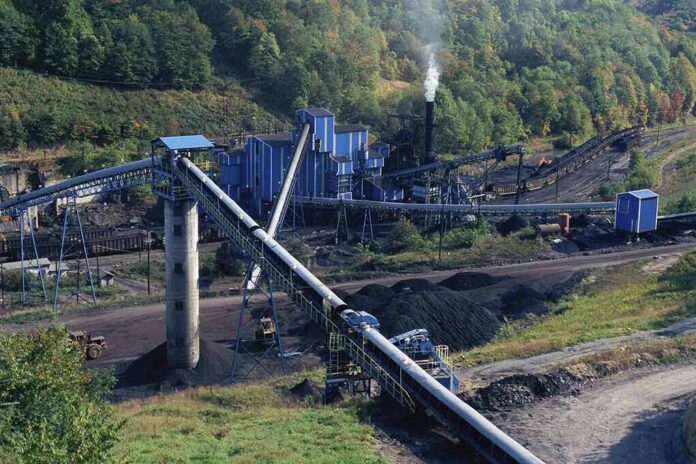
The significance of Kemmerer is not that one town is swapping one power plant for another; it is that the American coal-to-nuclear transition is finally being tested as a real industrial strategy, with concrete permits, steel in the ground, and a utility-scale design meant to supply both firm power and local economic continuity.
Key Points
- Kemmerer, Wyoming is the site of TerraPower’s Natrium project, an advanced nuclear plant being built near a retiring coal facility.
- The project has moved beyond speculation: the Nuclear Regulatory Commission authorized construction, and TerraPower announced the official start of construction on Kemmerer Unit 1.
- The plant is designed as a 345-megawatt reactor paired with thermal storage that can raise output to 500 megawatts for load following.
- What makes the story consequential is the wager behind it: that advanced nuclear can replace some of the economic and grid value lost when coal retires.
Why Kemmerer Matters as a Coal-to-Nuclear Case
Kemmerer has become a proving ground for a very specific idea: that a fossil-fuel town can preserve part of its industrial identity by hosting a new kind of power asset rather than simply watching the old one disappear. TerraPower’s own Wyoming materials say it is building its first reactor near the site of a retiring coal facility in Kemmerer, and federal energy materials describe the project as part of a push for next-generation nuclear plants and jobs in Wyoming. That is why Kemmerer matters beyond its population size. It is not just a construction site; it is a template claim. If the project works, it suggests that existing energy towns can be repurposed rather than abandoned.
The local fit is unusually strong. TerraPower chose Kemmerer in part because the town already had energy infrastructure, a utility workforce, and the physical legacy of coal generation. Reporting and official materials repeatedly connect the project to the retiring Naughton plant and to the prospect of reusing skills, land, and transmission assets that would otherwise be stranded. In industrial terms, that matters more than rhetoric. New power projects are expensive; siting them where grids, roads, and workers already exist can shorten the path from announcement to operation, even if it does not eliminate the technical risks that come with first-of-a-kind nuclear design.
What the Natrium Design Is Intended to Do
The Natrium reactor is not a conventional light-water plant dressed up in new branding. It is a sodium-cooled fast reactor paired with energy storage, designed to provide steady baseload output and, when needed, temporarily increase power to meet demand peaks. The commonly cited output profile is 345 megawatts of electricity with the ability to boost to 500 megawatts through storage, which is precisely the sort of feature that makes the design attractive to utilities managing variable demand and a changing generation mix. In practical terms, TerraPower is selling not just nuclear energy, but dispatchability: the ability to shape output rather than merely produce it.
That distinction is central. Coal plants were valuable not only because they generated electricity, but because they supplied firm power on demand and often anchored local employment for decades. A successful advanced reactor in Kemmerer would need to approximate that reliability function while also offering a cleaner, newer industrial footprint. TerraPower’s pitch is that Natrium can do both. The project’s scale, its storage system, and its integration with a coal-retirement site are all designed around that proposition, which is why the plant has been described as an “advanced nuclear” demonstration rather than a simple replacement facility. Demonstration is the operative word. The technology is meant to prove something as much as it is meant to power something.
The Regulatory Milestones Show Real Progress, Not Just Marketing
In energy, especially nuclear energy, credibility is built in layers of permission. TerraPower has crossed several of those layers. NRC materials show the agency reviewed the Kemmerer Power Station Unit 1 application, and the NRC later authorized issuance of the construction permit for TerraPower’s subsidiary, US SFR Owner, marking the first commercial reactor construction approval in roughly a decade. TerraPower also reported completion of the environmental impact statement for the Natrium project, with no adverse environmental finding in its announcement. Those milestones matter because they separate a real project from a concept paper. A plant that has passed environmental review and received a construction permit has entered the realm of regulated industrial execution.
Still, regulatory approval is not the same as operating success. That distinction is easy to miss in public discussion, especially when the language of “firsts” and “historic milestones” dominates. A construction permit means the project may proceed toward building the nuclear island; it does not mean the reactor is generating electricity, nor does it prove the plant will meet every economic promise attached to it. For readers trying to assess the project soberly, this is the crucial boundary. The evidence supports the conclusion that Kemmerer is a genuine, progressing nuclear build. It does not yet support a claim that the project has already delivered the full economic transformation its backers envision.
The Economic Promise Is Real, But It Remains a Future Tense Claim
Kemmerer’s appeal lies in a simple industrial hope: that a coal town can keep its place in the regional energy economy by swapping fuels rather than losing the energy business entirely. Marketplace reporting described the project as a potential source of 250 long-term jobs and 1,600 temporary construction jobs, while local coverage and union sources framed it as a major transition for the town and the workforce that has long depended on coal and gas. That kind of promise is powerful, especially in a rural community where a single large plant can shape tax revenue, school funding, household incomes, and civic identity.
But the economics of first-of-a-kind energy projects are unforgiving. Jobs announced at groundbreaking are not the same as jobs sustained over decades, and projected operating costs are not the same as measured performance in the field. The public record now supports the existence of the project, the federal backing, and the regulatory pathway; it does not yet show whether Natrium will fully replicate the broad economic role coal once played in Kemmerer. That is not a flaw in the reporting. It is the nature of the enterprise. The plant is being built because supporters believe advanced nuclear can close that gap. Until it operates, that belief remains a justified but unproven industrial thesis.
BIPARTISAN PROGRESS IN WYOMING
AMERICA BUILDS A REACTOR AGAIN
On March 4, 2026, the Nuclear Regulatory Commission approved the first construction permit for a commercial nuclear reactor in nearly a decade, and the first ever for this new class of advanced reactor.
The Natrium… pic.twitter.com/SI2YMNN2hd— 𝕀𝕟𝕕𝕖𝕡𝕖𝕟𝕕𝕖𝕟𝕥 𝕋𝕚𝕞𝕖𝕤 ℕ𝕖𝕨𝕤 (@IndTimesNews) August 9, 2026
What This Project Means for the Broader Energy Transition
Kemmerer’s deeper importance is that it exposes the real structure of the modern energy transition: not a clean swap from one fuel to another, but a struggle to preserve reliability, local employment, and grid value while changing the technology underneath. That is why advanced nuclear keeps returning to the center of policy arguments. Wind and solar are indispensable, but they do not by themselves solve the problem of always-available power; coal solved that problem at enormous environmental cost; and gas solves it with less cost but still with carbon. A successful Natrium plant would offer another answer, one that is politically attractive in places like Wyoming because it is tied to industrial continuity rather than wholesale social disruption.
The project is also a reminder that first-of-a-kind energy systems advance through patience, not slogans. Kemmerer has moved through site selection, permitting, environmental review, financing support, and construction in sequence, which is why it now stands as one of the most consequential energy projects in the West. If it ultimately performs as intended, it will matter not only because it is nuclear, but because it demonstrates a method: use existing energy towns, existing transmission corridors, and a workforce with power-plant experience to host the next generation of firm electricity. If it falls short, the lesson will be equally important. Either way, Kemmerer is no longer just a coal town with a future in doubt. It is an industrial test case for what reliable power may look like after coal.
Sources:
youtube.com, terrapower.com, powermag.com, en.wikipedia.org, reuters.com, nrc.gov, world-nuclear-news.org, utilitydive.com, wyoenergy.org, facebook.com
© fixthisnation.com 2026. All rights reserved.