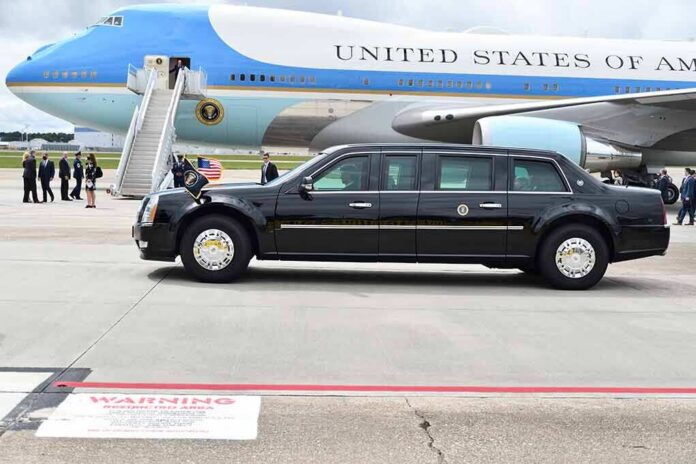
The real story here is not the melodrama of a “secret flight”; it is the security architecture of presidential travel under threat, and how a routine aircraft change can mutate into a far more elaborate narrative once classified details meet selective reporting.
Intro Header
- The core fact that is well supported is a mid-trip aircraft change: Trump left Turkey on the older Air Force One after officials judged the situation dangerous.
- The stronger reporting points to a credible Iranian-proxy threat and a Secret Service recommendation, not to a public, documentary record of the full ground choreography.
- The “catering truck” detail comes from later reporting and is more specific than the earlier accounts, but it remains less publicly documented than the plane swap itself.
- The dispute is therefore not whether there was a security-driven change; it is how covert and how operationally intricate that change actually was.
What Is Firmly Established
Multiple mainstream outlets converged on the same basic event: Trump departed Turkey on the older presidential aircraft after U.S. officials judged there was a credible threat tied to Iranian proxy forces, and the Secret Service advised the switch. The Guardian, CBS News, NPR, USA Today, and the New York Times video summary all describe an aircraft swap grounded in security concerns rather than convenience or optics.
That matters because the first-order fact is not in serious doubt. Presidential aviation is not casual transport; the older VC-25A carries defensive systems and countermeasures that the newer Qatar-donated jet had not yet fully matched, which is why the security rationale repeatedly centers on readiness, survivability, and command continuity rather than on symbolism or presidential preference. In other words, the plane change is explainable on pure protective grounds even before one reaches the more sensational claims.
How the Security Decision Makes Sense
To understand the reporting, it helps to separate aircraft from operation. The aircraft is the machine; the operation is the movement plan around it. When outlets say the older plane was used, they are describing an outcome. When they say the Secret Service recommended the change, they are describing the protective logic: use the platform with the most mature defensive package when threat reporting elevates the risk profile.
That logic fits the broader pattern in presidential security. The presidency is protected not by one dramatic response but by layered decisions—advance work, threat assessment, aircraft selection, route management, communications control, and, when necessary, misdirection. The public usually sees only the visible endpoint, because the machinery that produces it is normally hidden by design. This is why early coverage often stops at the plane swap; the operational details that would let readers reconstruct the exact movement are precisely the details security agencies are least inclined to publish.
Where the Story Becomes More Specific—and Less Certain
The later reporting is more ambitious. The New York Times account described a more elaborate ruse: officials allegedly used a catering cart to move Trump to a military aircraft, and Reuters-linked coverage summarized the Washington Post as saying a third plane, a C-32A, was involved. That is a materially different claim from “he switched planes.” It implies a deliberate concealment sequence on the ground, not just a change in which aircraft carried him across the next leg of the trip.
Here the evidentiary burden rises sharply. A real plane swap is supported by multiple outlets and by Trump’s own public acknowledgment that he would fly on the older aircraft “for old time’s sake.” The catering-cart allegation, by contrast, depends on a narrower reporting chain and, in the material provided here, lacks released ramp footage, movement orders, or operational logs that would confirm the choreography. That does not make it false; it makes it a claim that remains much more dependent on source confidence than on public documentation.
Why the “Catering Truck” Detail Captures Attention
The appeal of the catering-truck version is obvious. It converts a security precaution into a cinematic extraction, complete with deception, decoy movement, and a hidden military flight. But that narrative power is exactly why it should be handled carefully. The earlier reports established a serious threat environment and an aircraft change; the later account adds a precise mechanism that is not equally documented in the public record. Those are not equivalent levels of proof.
There is also a simpler explanation that fits the known facts: the newer jet’s security status was still incomplete, so the Secret Service chose the older aircraft as the safer platform and managed the public-facing narrative accordingly. CNN and other outlets noted that officials framed the decision in terms of broad security concerns and, in some accounts, said there was no specific new threat to Trump’s life. That narrower framing supports caution; it does not, by itself, prove the catering-cart sequence.
The Real Point of Disagreement
The genuine dispute is not over whether Trump flew part of the return on the older Air Force One. That is widely reported and internally consistent across the major coverage. The dispute is over the degree of secrecy: whether the movement was simply a precautionary substitution, or whether officials executed a more elaborate ground transfer designed to keep even staff and press unaware that Trump had changed aircraft.
At present, the first account is the sturdier one because it is supported by converging mainstream reporting and by Trump’s own remarks. The second account is plausible enough to merit attention, but it is not yet equally anchored in public primary evidence. In national-security reporting, that distinction is decisive. A true core event can be real while the most dramatic operational embellishment remains unproven, and readers should not be asked to collapse those two levels of confidence into one.
Washington Post: Trump flew secretly out of Turkey last month on an alternate military aircraft amid an Iranian assassination threat, while the White House publicly said he was aboard Air Force One.
The operation turned the presidential jet into a decoy. Journalists and some… https://t.co/69hAXBNP1x
— Vantage Point (@VPNewsHQ) August 11, 2026
What This Means Going Forward
Future clarity, if it comes, will likely come from records rather than rhetoric: Secret Service movement logs, flight plans, aircraft tail-number data, ramp surveillance, and whatever intelligence summary prompted the recommendation in the first place. Until then, the public will mostly be left with a layered story: a confirmed security-driven plane swap at the center, and a more cinematic transfer narrative at the edges.
That is how these stories usually evolve. The core fact is often real early, because someone saw the aircraft move. The operational explanation arrives later, if at all, because that is where classification, source protection, and political sensitivity intersect. The responsible reading, for now, is straightforward: Trump’s Turkey departure was handled as a security event, and the public evidence strongly supports the aircraft swap itself; the catering-truck claim is the part that still needs harder proof before it can be treated as settled fact.
Sources:
thegatewaypundit.com, theguardian.com, npr.org, usatoday.com, youtube.com, cbsnews.com, timesofisrael.com, nytimes.com
© fixthisnation.com 2026. All rights reserved.